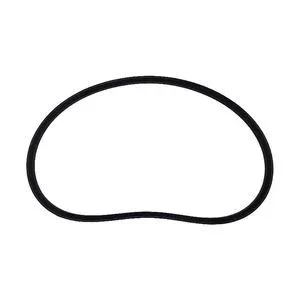
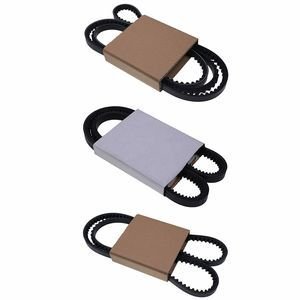
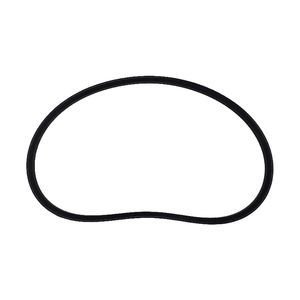
Fan Belt REMF-1345 Replacement for CAT 320D Komatsu PC200 Powertrain
Matched cooling components ship together — Tensioners, idler pulleys, and this fan belt dispatch as one engine system package after serial-level verification.
Technical Specifications
| Parameter |
Value |
| Part Number |
REMF-1345 |
| Product Type |
Belt |
| Cross-Reference |
REMF-1345 (reference only), REMF1345 (reference only) |
| Machine Fitment |
CAT 320D, CAT 320D2, CAT 323D, CAT 325D, CAT 320 GC, CAT 320 GC L, Komatsu PC200-6, Komatsu PC200-7, Komatsu PC200-8, Komatsu PC200-8M0, Volvo EC300D, Volvo EC330D, Volvo EC380D, Hyundai R210-9, Hyundai R225-9, Hyundai R250-9, Doosan DX225, Doosan DX255, Doosan DX300 |
| Material |
High-tensile synthetic rubber compound (NBR) with polyester cord reinforcement |
| Operating Temperature |
-25°C to +120°C continuous |
| Dimensional Tolerance |
±0.3 mm pitch length, ±0.15 mm cross-section width |
| Tensile Strength |
≥12.5 kN |
| Condition |
New Aftermarket |
| Warranty |
6-month warranty against manufacturing defects |
| MOQ |
1 piece |
| Standards |
ISO 9001, ISO 4184:2019 |
Application Suitability
| Engine System |
Related Components |
| Excavator cooling system (CAT 320D series) |
Automatic tensioner assembly, fan hub bearing, coolant bypass hoses |
| Excavator cooling system (Komatsu PC200-8) |
Belt tensioner, idler pulley, viscous fan clutch (where equipped) |
| Excavator cooling system (Volvo EC300D / EC330D) |
Fan drive tensioner, pulley alignment shims, thermostat housing gasket |
| Excavator cooling system (Hyundai R225-9 / R250-9) |
Spring-loaded tensioner, crankshaft pulley damper, accessory drive belt |
| Excavator cooling system (Doosan DX225 / DX300) |
Belt guide roller, fan mounting bolts, radiator shroud fasteners |
Why the Cooling System Fails Again After a New Belt Goes On
A belt that snaps early is almost never the real problem — the tensioner or a misaligned pulley killed it.
In years of handling warranty claims on fan belt replacements, I have opened engine compartments where a new belt ran for a few dozen hours before shredding into rubber debris. The root cause was a worn tensioner bearing with excessive play, or a pulley that had drifted out of alignment after a previous repair. The machine gets torn down a second time because the diagnosis stopped at the failed component instead of tracing the system [NEED_CITE: belt drive system failure root cause analysis for heavy-duty diesel engines]. When sourcing a Fan Belt REMF-1345 engine replacement, treating the belt as a standalone line item without verifying the full drive path leads straight back to the same fault.

The Belt Sits Inside a System That Wears Together
This Fan Belt REMF-1345 engine replacement operates within a multi-component cooling drive where every rotating surface affects belt life. The tensioner maintains correct load on the polyester cord reinforcement, the idler pulley keeps the belt tracked, and the fan hub bearing absorbs thrust loads from airflow demand. When any one of these components develops play, the belt absorbs the misalignment as edge wear, cracking, and eventual tensile cord failure. Inspecting each interface during the same service window prevents the scenario where a fresh belt inherits the wear pattern left by a failing adjacent part.
Matching the Belt to the Engine Build Variant
Production runs of machines like the CAT 320D and Komatsu PC200-8 span multiple engine configurations, and belt drive routing can shift between early and late serial ranges. The REMF-1345 reference number appears across several applications, but confirming fitment requires matching the specific engine serial number against the parts book to rule out variant differences. A machine that went through a prior overhaul may also carry non-standard pulleys or an aftermarket tensioner that alters the effective pitch length required [NEED_CITE: engine serial variant identification for belt drive cross-referencing]. This verification step is where most wrong-part orders originate, and it is the reason we ask for the serial before confirming the ship.
What the Specification Numbers Mean on the Job
The NBR compound formulation handles continuous operating temperatures up to +120°C, which matters because Tier 4 Final engines with EGR systems generate elevated under-hood thermal loads that degrade standard rubber compounds prematurely. Polyester cord reinforcement provides the tensile backbone that resists stretch under dynamic cycling — without adequate cord integrity, the belt elongates past the tensioner's compensation range and begins to slip. The ±0.3 mm pitch length tolerance ensures the belt seats properly in the pulley grooves of the OEM drive configuration, and the ±0.15 mm cross-section width tolerance keeps the belt riding at the correct depth rather than bottoming out or riding too high. These dimensional controls are what make direct interchangeability achievable without field trimming or forcing.
What Happens When the Wrong Belt Goes On
A pitch length that is even slightly long forces the tensioner past its design travel, leaving no reserve adjustment for normal wear-in elongation. The result is a belt that appears correct at installation but develops slip within the first operating cycle, generating heat that accelerates NBR compound breakdown. A belt that runs too short overloads the tensioner spring and increases bearing load on every pulley in the circuit. Cross-section mismatch causes the belt to ride at the wrong groove depth, concentrating stress on the cord line rather than distributing load across the full flank contact area [NEED_CITE: belt drive dimensional mismatch consequences in heavy equipment cooling systems]. These failure modes do not appear on day one — they emerge over the first fifty to one hundred hours, which is exactly when the machine is back in production and a second teardown carries real project cost.
Why Sourcing Through This Channel Works for Engine Rebuilds
Self-produced belt lines and sourced tensioners or pulleys ship under one account with the same warranty terms, so a complete cooling drive refresh arrives as a single consignment rather than staggered deliveries from multiple vendors. Guangzhou warehouse stock on common belt sizes means typical fast-failure items dispatch without production lead time. Part identification works from the number, the machine model, a photograph of the old belt, or an image of the nameplate — whichever the workshop has on hand. Cross-reference verification covers superseded numbers, so if the REMF-1345 reference has been updated in later parts books, the correct current equivalent is identified before the order is placed. Sample supply is available for fitment confirmation before any bulk commitment is made, and the technical team confirms compatibility and grade against the specific engine build.
Documentation & Verification
- Commercial invoice listing each belt, tensioner, and pulley by verified part number
- Cross-reference sheet mapping REMF-1345 (reference only) to machine-specific parts book entries
- Dimensional check records confirming pitch length and cross-section within stated tolerances
- Warranty terms covering material and manufacturing defects for six months from delivery
- Packing photographs showing belt condition and protective wrapping before crate closure
- HS code classification provided for customs clearance on international shipments
Installation & Rebuild Sequence
- Remove all belt drive covers and verify pulley alignment with a straightedge before fitting the new belt
- Check tensioner bearing for axial and radial play — replace if any movement is detectable by hand
- Route the Fan Belt REMF-1345 engine replacement according to the machine-specific diagram, confirming full seating in every groove
- Apply tension per the engine service manual specification and rotate the crankshaft two full turns by hand
- Run the engine at idle for a break-in period, then re-check tension and inspect for edge wear or tracking irregularities
Getting the Right Cooling Drive Package Quoted
Provide the engine model and serial number from the machine nameplate, along with any prior overhaul history that might indicate non-standard components currently installed. If the belt number is worn or unreadable, a photograph of the old belt profile and the pulley arrangement allows identification without guesswork. Including the full list of cooling system components you plan to replace enables a consolidated quotation with matched compatibility across every line item.
Frequently Asked Questions
Q: What other components should I replace when servicing this fan belt?
A: Evaluate the tensioner assembly, idler pulley, and fan hub bearing during the same service event. A worn tensioner bearing or a pulley with axial play will destroy a new belt within hours of operation. Shipping the belt alongside these related components in one consignment prevents split deliveries and ensures dimensional compatibility across the entire drive path.
Q: Does the same REMF-1345 fit all engine variants within a machine model series?
A: Not necessarily. Production runs of machines like the CAT 320D or Komatsu PC200-8 span multiple engine configurations, and belt drive routing can differ between early and late serial ranges. Providing the engine serial number allows us to verify the correct belt against the specific build, ruling out variant mismatches before the order ships.
Q: How do I confirm the correct belt for my engine serial number?
A: Send the engine serial number from the machine nameplate, or a photograph if the plate is worn or painted over. We cross-reference the REMF-1345 (reference only) designation against the specific parts book entry for that build, including any superseded numbers that may apply to older production units.
Q: Can I order tensioners and pulleys together with the belt in one shipment?
A: Yes. Consolidating the belt, tensioner, idler pulley, and any related hardware into a single consignment eliminates split freight costs and ensures every component arrives before the machine goes back into service. Provide the full repair list for a matched package quotation with unified warranty terms.
Q: What causes premature belt failure and how do I address the root cause?
A: The most common causes are tensioner bearing wear, pulley misalignment, and residual debris from a previous belt failure. Inspect every rotating surface in the drive path, clean the pulley grooves thoroughly, and replace any component showing measurable play. Addressing the system rather than the single failed part prevents repeat teardowns.