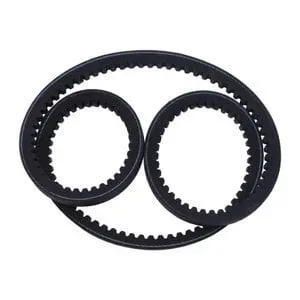
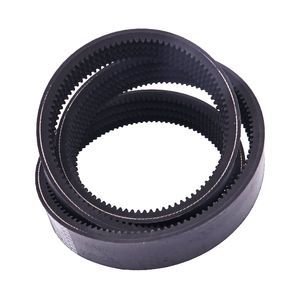
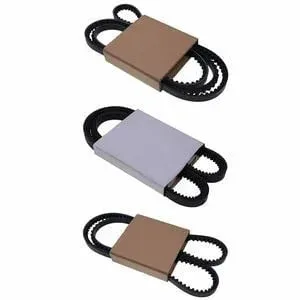
Matched Cooling Sets — Every belt ships with verified tensioner and pulley cross-references so your rebuild stays on schedule without mismatched arrivals.
Technical Specifications
| Parameter |
Value |
| Part Number |
6718730 |
| Product Type |
Belt |
| Cross-Reference |
6718730 (reference only) |
| Machine Fitment |
5600, 773, S150, S160, S175, S185, S205, T180, T190 Skid Steer Loader |
| Condition |
New Aftermarket |
| Material |
High-tensile polyester cords, heat-resistant rubber compounds |
| Application |
Engine cooling fan drive for skid steer loaders |
| Warranty |
3-12 months against manufacturing defects |
| Manufacturing Standard |
ISO-certified facility |
Application Suitability
| Engine System |
Related Components |
| Cooling fan drive |
Belt tensioner assembly, idler pulley, fan hub bearing |
| Accessory drive circuit |
Alternator pulley alignment, crankshaft damper condition |
| Overheat prevention loop |
Thermostat housing gasket, radiator cap, coolant hoses |
Why the Cooling System Fails Again After a Belt Swap
A new belt alone does not fix the fault that snapped the old one.
In my years working through engine rebuilds across Southeast Asian job sites, I have seen cooling belts replaced only to fail again within weeks. The root cause usually sits in a seized tensioner bearing, a misaligned idler pulley, or coolant contamination degrading the rubber compound from the inside. An engine cooling system replacement fan belt must be installed alongside a full diagnosis of the drive circuit, or you are simply resetting a countdown to the next breakdown [NEED_CITE: common causes of premature v-belt failure in diesel engines]. Skipping the tensioner check turns a planned maintenance event into a repeat failure that costs the machine another day on the rack.

How This Belt Fits the Bobcat Cooling Circuit
This belt drives the engine cooling fan that pulls air through the radiator during continuous heavy lifting and grading cycles. On Bobcat 5600 and 773 loaders, as well as the S-series and T-series skid steer range, the fan belt is the single link between crankshaft output and thermal management. When it slips or snaps, coolant temperature climbs rapidly under load. A proper engine cooling system replacement fan belt restores designed airflow, but only if the entire drive path — tensioner arm travel, pulley groove wear, fan clutch operation — is confirmed serviceable at the same time.
Matching Tolerance and Grade Across Rebuild Components
During a full engine overhaul, piston-to-cylinder clearance grades and bearing shell sizes must match the crankshaft journal history. The same discipline applies to the belt drive. A replacement belt installed on a pulley with worn grooves will ride lower in the sheave, generating heat that degrades the rubber compound prematurely. I once saw a workshop in Jakarta order pistons, liners, and rings from three separate sources, only to discover the oversize grades did not match when the block was already open. The same principle holds for the accessory drive: confirm the tensioner spring rate and pulley diameter are compatible with the belt length before closing the hood [NEED_CITE: belt drive system matching tolerances for mobile diesel engines].
What the Material Specification Means Under Load
The high-tensile polyester cord construction resists stretch under the continuous cyclic loading that a cooling fan imposes during summer operations. Heat-resistant rubber compounds maintain grip on pulley grooves even when ambient temperatures push coolant systems toward their design limits. These material choices matter because a skid steer working a demolition site generates sustained thermal load far beyond intermittent use. The belt must sustain flexing across thousands of cycles without cracking at the rib root or losing tensile integrity. This is where cheap compound substitutions reveal themselves — through glazing, fraying, or sudden cord separation mid-shift.
The Cost of Skipping Adjacent Component Inspection
Replacing only the belt while ignoring a marginal tensioner is the most common reason for repeat cooling failures on skid steer sites. A tensioner that has lost spring force allows the belt to slip under peak fan load, generating enough heat to accelerate rubber degradation. A misaligned pulley wears the belt edge unevenly, leading to rib separation that looks like a material defect but is actually an installation geometry problem. Workshops that skip the ten-minute pulley spin check end up pulling the same guard off again before the month is out [NEED_CITE: belt drive diagnostic checklist for mobile equipment maintenance].
Why Sourcing Through This Channel
Every belt leaves our Guangzhou warehouse with a cross-reference sheet confirming compatibility across superseded part numbers, so you never guess whether an older listing still applies. Selected product lines are manufactured in our own facility while the remainder comes from ISO-certified partners — both carry identical quality control and warranty terms. We accept orders from a single piece upward, which matters when one machine is down and you cannot meet a bulk threshold. Our technical team verifies engine serial variants before dispatch, catching the situation where a mid-production engine change altered the belt length by a few millimeters. Sample units ship ahead of bulk commitments so your workshop can confirm fitment on the actual machine before the full order moves.
Documentation & Verification
- Commercial invoice and packing list itemizing each belt by part number and destination machine.
- Part compatibility sheet listing 6718730 as a cross-reference for identification only.
- Dimensional inspection record covering belt length, rib profile, and cord tension verification.
- Warranty terms document specifying coverage period and manufacturing defect conditions.
- Packing photographs showing belt condition and labeling before crate closure.
- HS code classification and customs documentation support for international clearance.
Installation & Rebuild Sequence
- Route the belt around crankshaft pulley first, then fan hub, following the diagram specific to your Bobcat engine variant.
- Verify tensioner arm travel is within specification before applying belt load; a weak spring causes immediate slip.
- Spin each idler pulley by hand to detect bearing roughness that will destroy the new belt within hours.
- Check pulley alignment with a straightedge across the drive plane; offset greater than visual tolerance causes edge wear.
- Run the engine at idle for initial seating, then re-check tension after the first thermal cycle.
- Record belt installation date and hour meter reading in the machine service log for future interval tracking.
Request a Compatibility Confirmation
Provide your Bobcat engine model and serial number so we can verify the correct belt length variant for your specific production run. If the nameplate is worn or painted over, send a photograph of the existing belt routing and pulley arrangement. Include any previous rebuild history that might indicate non-standard tensioner or pulley substitutions. We will return a confirmed compatibility sheet with cross-reference details before any order commitment.
Frequently Asked Questions
Q: What other engine cooling components should I replace along with the fan belt?
A: We recommend inspecting the belt tensioner assembly, idler pulley bearings, and fan hub for play or roughness. If the machine has accumulated significant hours, replacing the tensioner as a matched set with the belt prevents premature repeat failure. Our compatibility sheet lists the related component part numbers for your specific Bobcat engine serial so you can quote the complete cooling circuit in one pass.
Q: How do I confirm the correct belt variant for my specific Bobcat engine serial?
A: Send us the engine model and serial number, or a photograph of the existing belt and pulley arrangement if the data plate is unreadable. Production changes across the S150 through S205 range introduced subtle length differences that affect routing. We cross-reference your serial against our fitment database and return a confirmation sheet before dispatch, ensuring the belt matches your exact engine build.
Q: What typically causes premature fan belt failure beyond normal wear?
A: Common root causes include a seized tensioner bearing, pulley misalignment from a bent bracket, coolant contamination degrading the rubber compound, and debris accumulation in the pulley grooves. Simply swapping the belt without addressing these faults leads to repeat failure within weeks. Our technical team can help diagnose the likely cause based on the wear pattern visible in your photograph of the removed belt.
Q: Is the belt tensioner included or sold separately?
A: The tensioner is sold as a separate line item. We stock matched tensioner and belt sets for common Bobcat skid steer models, which ship consolidated under one order. Requesting the set together ensures spring rate and pulley diameter are verified compatible with the belt specification, eliminating the mismatch risk that occurs when sourcing these components independently from different suppliers.