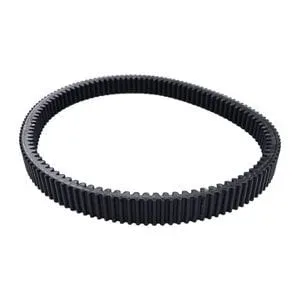
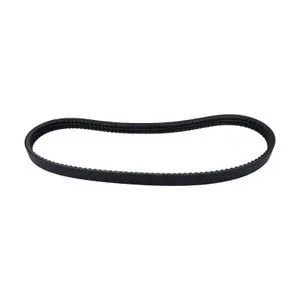
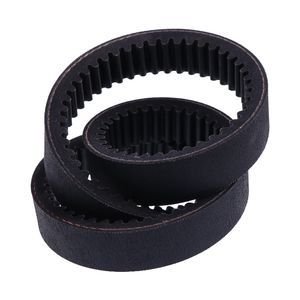
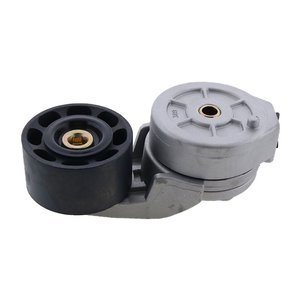
Matched CVT Sets — Belt and sheave tolerances verified against Polaris Ranger engine variants before dispatch.
Technical Specifications
| Parameter |
Value |
| Part Number |
3211218 |
| Cross-Reference |
3211218 (reference only), 26C4057 (reference only) |
| Product Type |
Belt |
| Machine Fitment |
Ranger XP 1000 (2020–2024), Ranger SP 570 (2022–2024), Pro XD Mid-Size & Full-Size Gas (2022–2024) |
| Material |
Aramid-reinforced EPDM rubber compound |
| Tensile Cord |
High-modulus polyester |
| Surface |
Micro-textured |
| Condition |
New Aftermarket |
| Warranty |
3–12 months against manufacturing defects |
| MOQ |
1 piece |
| Standards |
ISO 9001, ISO 22341 |
Application Suitability
| Engine System |
Related Components |
| CVT Power Transmission |
Primary clutch sheave, secondary clutch, drive clutch spring |
| Engine Cooling |
Cooling duct seals, clutch cover gasket, ventilation filter |
| Drivetrain Interface |
Engine-to-transmission alignment mounts, output shaft seal |
| High-Torque Variable Load |
Sheave bushing, roller weights, spider button |
System-Level Failure Roots in CVT Belt Drives
A slipped or shredded clutch drive belt is rarely a random failure; it is often the final symptom of misaligned sheaves, worn roller weights, or degraded ventilation within the CVT housing. Treating the clutch drive belt engine rebuild as a simple swap-out leads to repeat failures. We require the engine serial number and CVT variant to cross-reference system compatibility.
When a machine in a mining haul fleet burns through a second belt within the first hundred hours, the root cause is usually upstream [NEED_CITE: CVT thermal degradation and ventilation requirements in side-by-side vehicles]. Ignoring the primary clutch surface condition or the secondary spring tension during a belt replacement guarantees the new component will absorb the same destructive forces.

Primary and Secondary Clutch Interaction
This belt operates under extreme tension cycles between the primary and secondary clutches. The interaction requires that sheave surfaces be free of scoring and that the clutch spring maintains correct pressure. If the sheaves are pitted, the belt will track poorly and degrade prematurely. The clutch drive belt engine rebuild process must address these mating surfaces to ensure the new aramid-reinforced EPDM compound can achieve its rated service life.
Heat Cycle Endurance and Material Stability
The Polaris Ranger and Pro XD engines generate substantial heat under sustained load. The aramid-reinforced EPDM rubber compound resists the thermal cycling that causes standard rubber to crack and glaze. High-modulus polyester tensile cords maintain dimensional stability, preventing the belt from stretching and slipping under the high-torque conditions typical of agricultural fields and forestry trails [NEED_CITE: material selection criteria for CVT belt heat resistance].
Pitch Length and Angle Tolerance Verification
Before installation, the pitch length and angle tolerance must match the specific engine variant. A deviation in angle tolerance can cause the belt to ride too high or too low in the sheaves, leading to edge burn. Our technical team verifies these specifications against the engine serial number to ensure the clutch drive belt engine rebuild is dimensionally correct for the specific machine configuration.
The Hidden Cost of Ignoring System Diagnostics
Replacing the belt without checking the cooling duct seals or the clutch cover gasket invites contamination into the CVT housing. Dust and debris accelerate wear on the micro-textured surface of the belt. Furthermore, failing to inspect the roller weights and spider buttons means the belt will be subjected to uneven loading [NEED_CITE: impact of worn CVT rollers on belt tracking and wear]. The cost of a second teardown far exceeds the time spent on a full system inspection.
Why Source This Component Here
- System-Level Verification: We confirm the 3211218 (cross-reference only) or 26C4057 (cross-reference only) matches your specific engine variant and CVT generation.
- Matched Supply: We supply the belt alongside clutch springs and sheave bushings under one warranty, ensuring all wear items are replaced simultaneously.
- Quality Inspection: Tensile strength verification and heat-cycle endurance testing records are available for review.
- Sample Confirmation: We provide sample supply for fitment confirmation before you commit to fleet-level quantities.
- Technical Support: Our team helps diagnose repeat failures by looking at system-level root causes rather than just the failed part.
Documentation & Verification
- Commercial invoice listing the 3211218 and 26C4057 as reference numbers.
- Part compatibility sheet detailing the specific Polaris Ranger or Pro XD engine fitment.
- Quality inspection record showing tensile strength and angle tolerance checks.
- Warranty terms covering manufacturing defects for 3 to 12 months.
- Packing photographs confirming the aramid-reinforced belt is protected from UV and moisture.
Installation & Rebuild Sequence
- Clean the CVT housing thoroughly to remove debris that could score the new belt's micro-textured surface.
- Inspect primary and secondary sheave faces for pitting or glazing; resurface if necessary before installing the belt.
- Verify the pitch length matches the service manual specification for the specific engine serial variant.
- Check roller weights and spider buttons for flat spots that could cause uneven belt loading.
- Install the belt and cycle the clutches manually to ensure proper seating in the sheave grooves.
- Run the engine at idle for a break-in period before applying full load to allow the tensile cords to seat.
Requesting a System Match
Provide the engine model, year, and CVT variant serial number to receive a compatibility confirmation. If the machine has a history of repeat belt failures, include details of previous clutch or sheave work. This allows us to verify whether the 3211218 or 26C4057 is the correct specification for your rebuild.
Frequently Asked Questions
Q: What other CVT components should be inspected or replaced when changing this belt?
A: You must inspect the primary and secondary clutch sheaves for scoring, check the roller weights for flat spots, and verify the condition of the cooling duct seals. Worn sheaves or stuck rollers will cause a new belt to fail prematurely. We supply these adjacent components to ensure the entire system is refreshed during the rebuild.
Q: How do I confirm which belt variant fits my specific Polaris engine and model year?
A: Fitment depends on the engine serial number and the specific CVT generation. Provide your machine's VIN or engine serial number so we can verify whether the 3211218 (reference only) or 26C4057 (reference only) is the correct pitch length and angle tolerance for your unit.
Q: What system-level faults cause repeated clutch belt failures beyond normal wear?
A: Repeat failures often stem from restricted airflow in the CVT housing, misaligned engine mounts, or worn spider buttons in the primary clutch. These issues create excessive heat or uneven loading that destroys the belt's aramid cords. Addressing these root causes is essential for long-term reliability.
Q: Can I get a sample to verify fitment before ordering for my fleet?
A: Yes, we provide sample units so your workshop can verify the fitment on a specific machine model before committing to a bulk order. This prevents the cost and downtime associated with receiving a large batch of incompatible components.