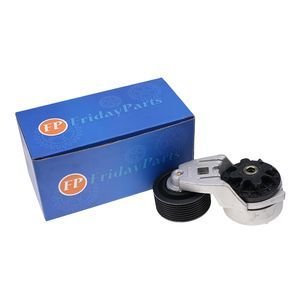
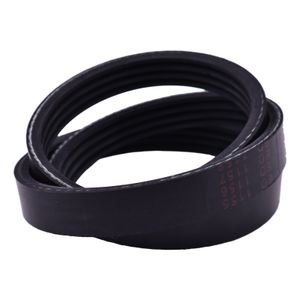
Engine Serial Variants Verified — Every belt tensioner assembly is matched against the exact Cummins ISB, QSB, or 6C serial number to rule out bracket geometry and pulley offset differences that only appear after teardown.
Technical Specifications
| Parameter |
Value |
| Part Number |
3936213, 5259022, 3976831 |
| Product Type |
Belt Tensioner |
| Cross-Reference |
3936213, 5259022, 3976831 (reference only) |
| Machine Fitment |
Cummins 6C, ISB, QSB, 4B3.9, B4.5, 6B5.9, B6.7, 4B, 6B, ISC, QSC, ISL, QSL |
| Material |
Forged SAE 1045 Steel |
| Surface Treatment |
Zinc-Nickel Electroplating |
| Hardness |
HRC 42–46 |
| Dimensional Tolerance |
±0.05 mm |
| Sealing Rating |
IP65 |
| Corrosion Resistance |
720-hour salt-spray (ASTM B117) |
| Damping Type |
Hydraulic damper |
| Operating Temperature |
–20°C to +110°C |
| Assembly State |
Complete assembly with pulley |
| Condition |
New Aftermarket |
| Warranty |
3–12 months against manufacturing defects |
| MOQ |
1 piece |
| Standards |
ISO 9001, SAE J1940, Cummins Engineering Specification CES-11027, ASTM B117 |
Application Suitability
| Engine System |
Related Components |
| Front-end belt drive (serpentine routing) |
Serpentine belt, idler pulleys, alternator pulley, water pump drive |
| Accessory drive system |
Fan hub, hydraulic pump drive coupling, crankshaft pulley |
| Engine overhaul (top-end refresh) |
Overhaul gasket set, front crankshaft seal, belt drive hardware kit |
| Scheduled fleet maintenance |
Tensioner inspection during valve adjustment intervals, belt condition check |
| Post-rebuild verification |
Accessory bracket alignment check, belt tracking confirmation |
Why the Wrong Tensioner Undoes an Entire Cummins Engine Rebuild
A mismatched belt tensioner introduces belt slippage and harmonic vibration that accelerates bearing wear across every accessory on the front-end drive.
During a full Cummins ISB or QSB overhaul, weeks of machining, honing, and assembly can be compromised by a single component that does not account for engine serial variant differences. The bracket geometry and pulley offset on early-production ISB blocks differ from later revisions, and a tensioner that physically bolts on may still sit at an angle that loads the serpentine belt unevenly. We have seen rebuilt engines returned to the stand because the belt chirped under load — the root cause traced back to a tensioner pulley offset by just a few millimeters from what that specific serial range required [NEED_CITE: Cummins ISB and QSB engine serial variant identification for belt drive components]. This is not a defect in the tensioner itself; it is a selection error that happens when the engine serial number is not confirmed before the part is ordered.
System-Level Matching Across the Front-End Belt Drive
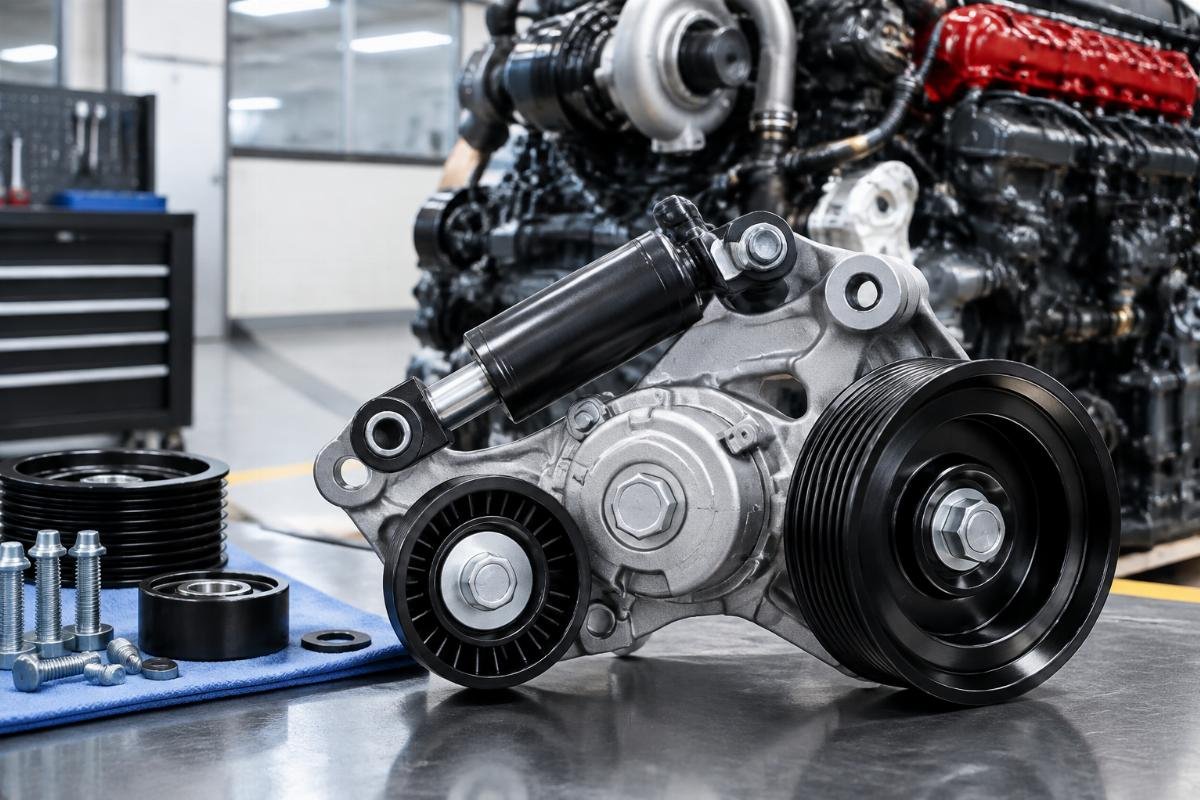
The Cummins belt tensioner engine rebuild component does not operate in isolation. It maintains correct belt tension across the entire serpentine routing that drives the alternator, water pump, fan, and in many off-highway applications, the hydraulic pump. When planning an overhaul, verifying that adjacent components — particularly the idler pulleys and the alternator mounting bracket — are service-compatible with the selected tensioner prevents re-teardown after initial run-up.
Engine Serial Variants and the Risk of Assumed Interchangeability
Within the ISB, QSB, and B6.7 families, Cummins revised bracket mounting points and pulley offsets across production runs. Two engines carrying the same family designation may require tensioners with different pivot arm lengths or pulley standoff distances. Confirming the engine serial number — not just the model family — is essential before ordering. Our cross-reference verification covers the superseded numbers 3936213, 5259022, and 3976831, each marked for identification purposes, and we flag variant-specific differences before dispatch [NEED_CITE: Cummins belt drive component cross-reference and superseded part number tracking].
Reading the Specs That Actually Matter in Service
The forged SAE 1045 steel body provides the structural rigidity needed to resist deflection under the cyclic loading typical of variable-RPM off-highway duty cycles. The hydraulic damper — as opposed to a spring-only design — absorbs the torsional shock pulses that travel through the belt drive when the engine transitions between idle and loaded operation, which is frequent in excavator and wheel loader applications. Zinc-nickel electroplating with 720-hour salt-spray resistance (ASTM B117) addresses the corrosion environment inside an engine bay where coolant mist, fuel vapor, and ambient humidity combine. The ±0.05 mm dimensional tolerance on the pivot bore and pulley face ensures consistent belt tracking without edge wear. The IP65 sealing rating on the damper mechanism prevents contamination ingress that would degrade damping performance over extended service intervals [NEED_CITE: hydraulic damper belt tensioner sealing requirements for off-highway diesel engines].

The Hidden Cost of Skipping Root-Cause Analysis
When a belt tensioner fails prematurely after an overhaul, the instinct is to replace it and move on. But repeated tensioner failures in the same engine almost always trace back to a system-level fault: a misaligned accessory bracket from a previous rebuild, worn grooves on the crankshaft pulley, or a seized idler bearing that transfers uneven load to the tensioner arm. Replacing the tensioner without addressing the underlying cause leads to a cycle of repeat failures and unnecessary teardowns. Each return to the stand means additional gasket sets, fluids, labor hours, and machine downtime that compound the original repair cost [NEED_CITE: root cause analysis methodology for recurring belt drive system failures in heavy equipment diesel engines].
What This Supply Arrangement Covers
Every tensioner ships under the same QC protocol and warranty terms regardless of whether it comes from our own production line or a qualified manufacturing partner. The eight core categories in our catalog mean the overhaul gasket set, front crankshaft seal, replacement serpentine belt, and idler pulleys all move under one account with one warranty reference. Orders start at one piece — no minimum order quantity blocking a single emergency replacement. Our Guangzhou warehouse holds stock on fast-failure belt drive items for rapid dispatch. Part identification is available from the OEM cross-reference number, engine model, photograph, or nameplate image, and our technical team confirms compatibility and grade before the order is finalized.
Documentation & Verification
- Commercial invoice listing each tensioner by cross-reference number and engine serial match
- Compatibility sheet confirming fitment against specific Cummins ISB, QSB, or 6C serial range
- Quality inspection record covering pivot torque, pulley runout, and damping consistency
- Warranty terms document specifying coverage period and manufacturing defect scope
- Packing photographs showing tensioner condition and protective packaging before crate seal
- HS code classification and customs documentation support for international shipment
Installation & Rebuild Sequence
- Install the tensioner only after confirming accessory bracket alignment and crankshaft pulley groove condition
- Clean the mounting face and bolt threads to ensure correct torque reading on the pivot bolt
- Torque the tensioner mounting hardware to Cummins-specified values for the engine serial variant
- Route the serpentine belt per the diagram for the specific engine family and verify belt tracking on all pulleys
- Run the engine through a graduated warm-up cycle and observe tensioner arm movement for smooth damping response
- Re-check belt tension and tensioner pivot bolt torque after the initial break-in period
Request a Fitment Confirmation Before You Order
Send us the Cummins engine model, serial number, and any rebuild history including previous oversize work or bracket replacements. If the nameplate is unreadable, a photograph of the existing tensioner alongside a reference measurement allows our technical team to verify the correct variant. This confirmation step prevents the most common cause of belt drive rework: a part that fits the family but not the specific serial range.
Frequently Asked Questions
Q: What else in the belt drive system should be replaced during a Cummins engine overhaul?
A: During an overhaul, the serpentine belt, idler pulleys, and crankshaft pulley should be inspected for groove wear and bearing play. If the engine has significant hours, replacing the belt and idlers alongside the tensioner prevents early return to the stand. We supply these as matched sets under one order to keep the rebuild schedule intact.
Q: How do engine serial variants within the ISB or QSB family affect tensioner fitment?
A: Cummins revised bracket mounting geometry and pulley offset across ISB and QSB production runs. Two engines with the same family name may need tensioners with different pivot arm lengths or standoff distances. Providing the full engine serial number allows us to confirm the exact variant before dispatch.
Q: Is this tensioner compatible with my Cummins engine after a previous rebuild?
A: Aftermarket rebuilds sometimes use non-standard brackets or modified accessory mounts. Send the engine serial number and any rebuild documentation so we can verify whether the standard tensioner geometry matches your current configuration or whether an alternate variant is required.
Q: What system-level faults cause premature belt tensioner failure?
A: Misaligned accessory brackets, worn crankshaft pulley grooves, seized idler bearings, and incorrect belt routing all transfer abnormal loads to the tensioner. Replacing the tensioner without correcting the root cause leads to repeat failures. Our technical team can advise on diagnostic checks before reinstallation.
Q: How do I confirm the correct part number when multiple cross-references are listed?
A: The numbers 3936213, 5259022, and 3976831 serve as cross-reference identifiers for different Cummins production periods. Provide your engine serial number and we verify which reference applies to your specific build, including any superseded or alternate numbers.