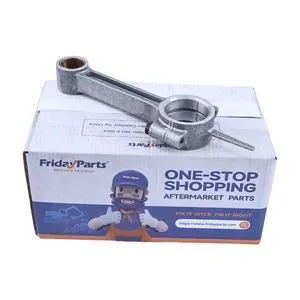
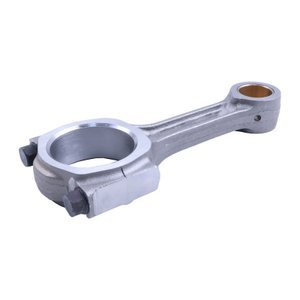
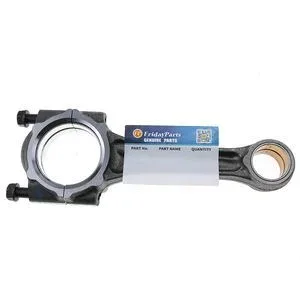
Dimensions confirmed — Bore roundness verified to ±0.005 mm against your compressor's crankshaft journal condition before this Connecting Rod engine rebuild replacement ships.
Technical Specifications
| Parameter |
Value |
| Part Number |
97333173 |
| Product Type |
Connecting Rod |
| Cross-Reference |
97333173 (reference only) |
| Machine Fitment |
SS5, SS5L5, SS5N5 |
| Material |
Forged 40Cr steel |
| Tensile Strength |
≥980 MPa |
| Hardness |
HRC 32–36 |
| Bore Roundness Tolerance |
±0.005 mm |
| Surface Treatment |
Shot-peened |
| Assembly State |
New Aftermarket |
| Certification |
ISO 9001 |
| Warranty |
6 months against manufacturing defects |
| MOQ |
1 piece |
Application Suitability
| Engine System |
Related Components |
| Cranktrain Assembly |
Main bearings, rod bearings, wrist pin, piston |
| Lubrication Circuit |
Oil pump, oil filter, crankcase breather |
| Cylinder Compression |
Cylinder liner, piston rings, valve plate |
| Cooling & Thermal Management |
Intercooler gaskets, cooling fins, fan belt |
When the Overhaul Kit Doesn't Match the Crankshaft History
A complete engine teardown reveals that the previous rebuild machined the crankshaft undersize, yet the new kit contains standard-grade bearings and a Connecting Rod engine rebuild replacement sized for standard journals. The machine goes back down before it ever starts.
In the workshop, I have watched compressors return with spun bearings because nobody checked the actual journal diameter before ordering. The crankshaft had been ground to an undersize dimension during a prior overhaul, but the replacement rod and bearing shells arrived in standard grade. That mismatch forces a second teardown, new parts, and extended downtime on a unit that production cannot afford to lose. [NEED_CITE: compressor crankshaft regrind practices and bearing grade matching]

The Cranktrain System and Its Dependencies
This connecting rod sits at the center of the reciprocating assembly, transferring rotational force from the crankshaft to the piston through the wrist pin. Its big-end bore must maintain precise clearance with the rod bearing, while the small-end bore interfaces directly with the piston pin. Any deviation in either bore dimension disrupts the oil film that prevents metal-to-metal contact during continuous-duty compressor operation. Selecting the correct Connecting Rod engine rebuild replacement requires confirming both the compressor model and the current state of the crankshaft journals.
Matching Size Grade to Rebuild History
Compressors in quarry and mining service often undergo multiple overhauls across their service life, and each rebuild may involve crankshaft regrinding to restore journal surfaces. After a regrind, the journals measure undersize, requiring correspondingly undersize bearing shells and a connecting rod bored to match. If the rod arrives dimensioned for standard journals while the crankshaft has already been machined, the bearing clearance becomes excessive and oil pressure collapses under load. Always measure the crankshaft journals or review the last overhaul record before ordering. [NEED_CITE: reciprocating compressor bearing clearance standards after crankshaft regrind]
Material and Tolerance Details That Matter in Service
The forged 40Cr steel construction provides the tensile strength needed to withstand millions of reciprocating cycles without fatigue cracking. Shot-peening the surface introduces compressive residual stress that further resists crack initiation at stress concentration points near the big-end cap bolts. The HRC 32–36 hardness range balances surface wear resistance with enough core ductility to absorb shock loads during startup and shutdown. Bore roundness held to ±0.005 mm ensures the bearing shell seats uniformly, maintaining a stable hydrodynamic oil film across the full journal contact area. These specifications collectively define whether the Connecting Rod engine rebuild replacement survives its first thousand hours or fails prematurely.
What Happens When the Grade Is Wrong
Installing a standard-bore connecting rod on a reground crankshaft creates excessive bearing clearance that no amount of assembly torque can correct. The oil film breaks down within hours of operation, generating localized heat that softens the bearing alloy and leads to a spun bearing or seized journal. The compressor shuts down again, this time with damage extending beyond the rod into the crankshaft itself. Correcting the error demands another full teardown, replacement of the damaged crankshaft or a second regrind, and a new set of matched components. [NEED_CITE: consequences of mismatched bearing clearance in reciprocating compressors]
Why Source This Component Through XUNPO
Own production on selected lines and qualified sourced supply operate under one account with identical QC and warranty terms, so this connecting rod carries the same six-month coverage regardless of origin. Eight product categories mean the matched bearings, gaskets, wrist pins, and fasteners your overhaul requires ship in a single consignment rather than arriving from separate suppliers on different schedules. Minimum order is one piece, supporting both emergency single-cylinder repairs and full fleet overhauls. Part identification works from the number, the compressor model, a photograph of the worn nameplate, or the engine serial plate. Cross-reference verification covers superseded and alternate numbers to confirm the correct variant before dispatch. A technical team is available to verify bearing grade and size compatibility against your crankshaft condition.
Documentation & Verification
- Commercial invoice and packing list referencing compressor model SS5, SS5L5, or SS5N5 and quantity.
- Part compatibility sheet confirming cross-reference 97333173 (reference only) and applicable serial ranges.
- Dimensional inspection record covering big-end and small-end bore CMM data and roundness verification.
- Warranty terms covering manufacturing defects for six months from dispatch date.
- Packing photographs showing rod protection and crate condition before handover to carrier.
- HS code and customs documentation support for international compressor parts shipments.
Installation & Rebuild Sequence
- Clean all oil galleries in the connecting rod and verify no machining residue remains in bore surfaces.
- Measure crankshaft rod journal diameter with a micrometer to confirm standard or undersize grade before assembly.
- Install matched bearing shells and check clearance with plastigauge, comparing results to manufacturer specification.
- Torque big-end cap bolts to specification in the prescribed sequence, then confirm the rod rotates freely by hand.
- Run the compressor at reduced load for the initial break-in period to seat bearings and verify stable oil pressure.
Requesting a Matched Quote
Provide your compressor model designation, the engine serial number from the nameplate, and any available records of previous crankshaft regrinds. If the nameplate is illegible, a clear photograph of the existing connecting rod and bearing shells allows dimensional cross-reference. Supplying this information upfront ensures the correct size grade and matched overhaul components are quoted together.
Frequently Asked Questions
Q: What other components should be replaced together with the connecting rod during an overhaul?
A: A reliable overhaul replaces the rod bearings, main bearings, wrist pin, piston rings, and all gaskets as a matched set. Reusing old bearings with a new connecting rod risks clearance mismatches that compromise the oil film. Include the crankshaft seal and cylinder liner if wear measurements indicate they are near service limits.
Q: How do I determine the correct bearing grade if the crankshaft has been previously machined?
A: Measure each rod journal with a calibrated micrometer and compare readings to the standard and undersize specifications. Previous regrind work may not be documented, so physical measurement is the only reliable confirmation. Share these readings when ordering so the correct bearing shells and rod bore grade are supplied.
Q: Are connecting rods for SS5, SS5L5, and SS5N5 interchangeable or are there variant differences?
A: While these models share a common platform, variant differences in stroke, bore, or balancing specifications can exist between series. Confirm the exact compressor model and engine serial number before ordering. A photograph of the existing rod alongside its part marking allows cross-reference verification against your specific variant.
Q: What system-level faults commonly cause connecting rod failure beyond the rod itself?
A: Lubrication breakdown from oil pump wear, contaminated oil, or blocked galleries starves the bearing of its protective film. Crankshaft journal damage or out-of-round wear creates uneven loading. Addressing these root causes during the rebuild prevents the new connecting rod from suffering the same failure within a short operating period.
Q: How do I confirm my exact compressor model and engine serial when the nameplate is worn?
A: Photograph any remaining markings on the nameplate, the existing connecting rod, and the crankshaft end stamping. Cross-referencing these images against known serial ranges and dimensional records identifies the correct variant. The technical team reviews these images to confirm fitment before parts are released for dispatch.