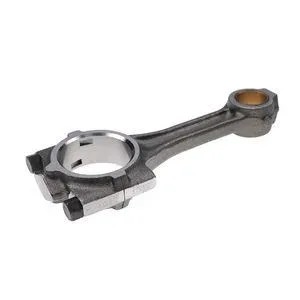
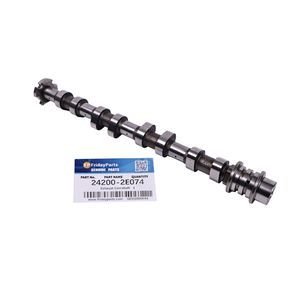
Matched Set Dispatch — Rod, wrist pin, and bearing inserts verified against your engine serial before packing to prevent tolerance mismatch on the bench.
Technical Specifications
| Parameter |
Value |
| Part Number |
15471-22012 |
| Product Type |
Connecting Rod |
| Cross-Reference |
15471-22010, 15471-22013, 15741-22012, 15201-22010 (reference only) |
| Compatible Engine Models |
Kubota D1301, D1302 DI, D1402, D1402-BBS |
| Condition |
New Aftermarket |
| Manufacturing Standard |
ISO-certified facility |
| Warranty |
3-12 months against manufacturing defects |
| Machine Fitment |
Kubota Tractor (L1500, L2350DT, L245-IIDT, M4950), Excavator (KH-66, KH-91, KX101), Generator (GV1160, GV3200), Loader (R410, RW30); Bobcat 225, 643 |
Application Suitability
| Engine System |
Related Components |
| Crank-Linkage Mechanism |
Piston, Wrist Pin, Snap Rings |
| Bottom End Bearings |
Rod Bearing Inserts (STD/Undersize) |
| Cylinder Bore Interface |
Cylinder Liner, Piston Rings |
| Fastening Hardware |
Rod Bolts (single-use torque-to-yield) |
System Mismatches That Force a Second Teardown
Verify the crankshaft journal size before ordering rod bearings; a reground crank demands matched undersize inserts.
When a Kubota D1402 is opened for an overhaul, the connecting rod is rarely the only casualty. We have walked into workshops where the rod was replaced, but the bearings were ordered as Standard while the crank had previously been machined to 0.25mm undersize. The result is immediate spinning or seizure upon startup [NEED_CITE: diesel engine crankshaft journal regrind tolerances and bearing selection]. This connecting rod engine rebuild requires a system-level approach, not a parts-list lottery. In the Shandong manufacturing belt, where older L2350DT tractors and KH-66 excavators are worked hard, ignoring the sequence variants between a D1402 and a D1402-BBS can render a brand new rod unusable due to minor casting or weight differences.

The Rod Within the Cylinder Assembly
The connecting rod transmits combustion force to the crankshaft, meaning its small end must seat the wrist pin with precise clearance while the big end maintains oil film thickness on the journal. If the piston has been overheated, the wrist pin bore may be distorted, requiring a matched piston-and-rod replacement rather than a single rod swap. Treating this as an isolated component ignores the friction pair it operates within.
Sequence Variants and Regrind Histories
Not all D1402 engines share the same internal dimensions across every serial range. The -BBS variant, often found in specific Bobcat loaders or generator sets, may carry different balancing requirements or bolt specifications. Furthermore, if the engine was overhauled previously, the crank journals might no longer be Standard size. We confirm the exact engine serial and current journal dimensions to ensure the connecting rod engine rebuild set includes the correct oversize or undersize bearing inserts [NEED_CITE: Kubota D-series engine serial number location and variant decoding].
Interpreting the Dimensions and Tolerances
The center-to-center length of the rod determines the piston's top-dead-center position; even a slight deviation alters compression ratio and valve clearance. The big end bore must be perfectly round to accept the bearing shell without pinching, while the small end bushing (if serviceable) must align with the piston pin axis. We supply rods where these critical geometries are held to the tight limits required for high-speed diesel operation, preventing the localized hot spots that lead to cracked skirts.
The Cost of Unchecked Tolerances
Installing a rod without checking the adjacent piston for skirt scuffing or the crank for out-of-round wear guarantees a short interval before the next failure. We have seen entire cylinder banks destroyed because a single reused rod bolt stretched beyond its yield point during torque-up. In an engine rebuild, skipping the measurement of the housing bore leads to catastrophic loss of oil pressure and a scored crankshaft that is beyond salvage [NEED_CITE: connecting rod bolt torque-to-yield reuse risks].
Why Source Through This Channel
Our technical team bridges the gap between catalog numbers and workshop reality. We do not just ship 15471-22012; we verify if your specific D1302 DI serial requires the updated forging or the earlier variant. With eight categories under one account, you can add the necessary gasket sets, piston rings, and seal kits to the same consignment. Every rod we dispatch, whether from our own line or an ISO-certified partner, undergoes dimensional verification and carries the same warranty terms. We also support sample supply so you can check physical fitment before committing to a fleet-wide overhaul order.
Documentation & Verification
- Commercial invoice listing all matched components (rod, bearings, bolts)
- Cross-reference sheet noting 15471-22010 and 15741-22012 as reference only
- Dimensional inspection record for big-end and small-end bores
- Warranty terms covering material and manufacturing defects
- Packing photographs showing anti-corrosion treatment and boxing
Installation & Rebuild Sequence
- Inspect crankshaft journal for taper and out-of-round before fitting new rod.
- Replace rod bolts every time; they are single-use tension fasteners.
- Check connecting rod sideplay (endplay) against service manual limits.
- Verify bearing insert crush height to ensure proper shell retention.
- Torque to specified value in stages using calibrated equipment.
Requesting an Accurate Quotation
To ensure the connecting rod matches your workshop's needs, provide the engine model, the full serial number from the block, and any known history of crankshaft regrinding. This allows us to select the correct bearings and confirm compatibility with your specific machine variant.
Frequently Asked Questions
Q: What other components should be replaced when changing this connecting rod?
A: The rod bolts must be replaced as they stretch during installation. You should also inspect the piston wrist pin bore for ovality and replace the bearing inserts to match the current crankshaft journal size. We typically recommend supplying the piston rings and cylinder liner if bore wear is evident, ensuring the entire cylinder pack is balanced.
Q: How do I determine the correct bearing grade for this rod?
A: You must measure the crankshaft journal diameter with a micrometer. If the crank has been reground, it will be undersize (e.g., 0.25mm, 0.50mm). We use your measurements and engine serial number to supply the matching bearing inserts, preventing the oil pressure loss that occurs with incorrect clearance.
Q: Is there a difference between rods for the D1402 and D1402-BBS?
A: While the base number may appear similar, variants like the D1402-BBS can have different balancing weights or minor dimensional shifts depending on the application (e.g., generator vs. excavator). Providing the exact engine serial number allows us to verify the casting variant and ensure it seats correctly in your specific block.
Q: Can I reuse the old rod bolts if they look clean?
A: No. Rod bolts are torque-to-yield fasteners designed to stretch into their plastic deformation zone to maintain clamp load. Reusing them risks snapping the bolt under combustion load, which typically results in the rod exiting the block and destroying the engine assembly. Always install new hardware.
Q: How can I confirm the part number if my old rod is damaged?
A: Send us a photograph of the engine nameplate and, if possible, the crankcase stamping. The number cast on the rod itself is often a forging code, not the replacement part number. Our team uses the machine model and engine serial to cross-reference the correct assembly, avoiding the errors found in generic online tables.