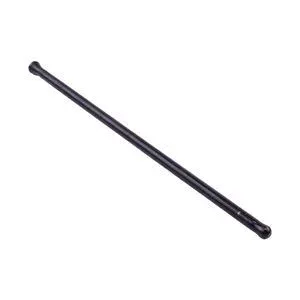
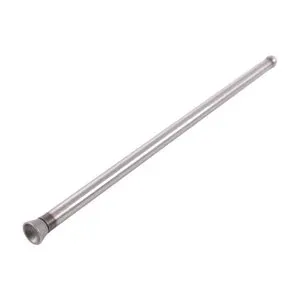
Matched valve train sets — every push rod 31434307 ships with confirmed tappet and rocker compatibility for your specific Perkins 1004-40T engine serial prefix.
Technical Specifications
| Parameter |
Value |
| Part Number |
31434307 |
| Product Type |
Push Rod |
| Cross-Reference |
31434307 (reference only), 795728R1 (reference only), 131434307 (reference only), 505089 (reference only) |
| Machine Fitment |
Perkins 1004-40T, 1004-40, 1004G, 1004-40S, 135Ti, 1004-4T, 1004-4, 1104C-44, 6.354, 1106C-E60TA; CASE Loader 321D, Telehandler 689G, Tractor C70–C100, CX70–CX100, MX80C–MX100C; Landini 6500–9880 series, Blizzard, Ghibli, Globus, Legend, Mythos, Powerfarm, Rex, Trekker, Vision, Globalfarm, LARGE, TECHNOFARM; New Holland 1496; Kobelco Loader 700, 800, 900 |
| Material |
High-strength alloy steel, precision ground and heat-treated |
| Condition |
New Aftermarket |
| Warranty |
3–12 months against manufacturing defects |
| Standards |
ISO 9001, ISO 8535 |
| Minimum Order |
1 piece |
Application Suitability
| Engine System |
Related Components |
| Valve train – overhead cam push rod actuation |
Tappets, rocker arms, valve stem seals, rocker shaft springs |
| Cylinder head assembly – compression recovery |
Head gasket set, valve guides, retaining collets |
| Engine block lower end – cam lobe interface |
Camshaft bearings, timing gears, block gasket set |
| Full overhaul – Perkins 1004 family rebuild |
Piston rings, main and big-end bearings, overhaul gasket kit |
Why Push Rod 31434307 Failures Keep Coming Back After Rebuild
The rod itself is rarely the root cause — it is the symptom of a valve train system left partially addressed.
In Central Asian mining camps, I have watched Perkins 1004-40T engines return to the teardown bench within weeks of a push rod swap. The new component bends under load not because of material weakness, but because the mating tappet face was already dished from the previous service life, altering lift geometry and concentrating stress at the rod tip. Replacing a single push rod without verifying cam lobe profile, tappet crown condition, and valve clearance baseline means the next failure is already in progress before the rocker cover goes back on [NEED_CITE: valve train failure root cause analysis methodology for diesel engines].
The same base part number spans multiple Perkins 1004 variants, yet valve train geometry shifted between early and late production serial prefixes. Ordering on engine family alone — without confirming the serial prefix — risks receiving a rod that physically fits but operates outside the designed lift envelope, accelerating wear across the entire valve train set.

Valve Train System Context for the Perkins 1004 Family
This push rod sits inside a pushrod-actuated overhead valve system where every interface — tappet crown to rod base, rod tip to rocker arm pad — must maintain precise geometric relationships after rebuild. When any one surface is worn beyond tolerance, the adjacent components absorb the irregularity as side-loading or point stress. Confirming the full contact chain before teardown completion prevents a Push Rod 31434307 engine rebuild parts for Perkins 1004-40T order from arriving too late or arriving wrong.
Engine Serial Variants and Why the Prefix Matters
Within the Perkins 1004 family, the 1004-40T designation covers production runs with different cam profiles and tappet diameters across serial prefixes. A rod that is dimensionally correct for one variant may sit too high or too low in the tappet bore of another, producing valve float at governed RPM or insufficient lift at idle. Supplying the engine serial prefix at enquiry stage allows verification against variant-specific valve train data before the overhaul kit is assembled [NEED_CITE: Perkins 1004 series engine serial prefix identification standards].
Material and Heat Treatment in Service
The high-strength alloy steel body is precision ground to hold straightness within tight tolerance, then heat-treated to resist bending fatigue under repeated valve spring loading. In quarry applications where dust ingestion accelerates cam lobe wear, the rod endures asymmetric loading cycles that demand uniform core hardness rather than surface-only treatment. This material specification addresses the failure mode most common in high-vibration, high-thermal-cycling environments — progressive bowing that shifts valve timing before the bend becomes visible on inspection.
The Cost of a Partially Rebuilt Valve Train
An overhaul that replaces the push rod but reuses worn tappets and fatigued valve springs produces an engine that passes initial compression checks but develops valve float within the first few hundred operating hours. The second teardown costs more than the first — labour hours double, gasket sets must be ordered again, and the machine sits idle while the next round of components ships. System-level fault diagnosis before the head comes off eliminates the cycle of repeat failures [NEED_CITE: diesel engine valve train overhaul sequencing best practices].
Why Source Through This Channel
Production and sourcing lines carry identical QC and warranty terms, so a mixed order of self-manufactured and sourced push rods ships under one account with consistent documentation. Eight product categories mean the valve train components, gasket sets, and adjacent engine parts travel as one consignment rather than arriving on separate timelines. Minimum order is one piece — a single emergency replacement dispatches without forced bulk. Guangzhou warehouse stock covers common Perkins 1004 variants for fast turnaround, while part identification works from a part number, machine model, photograph, or worn nameplate image. Cross-reference verification covers superseded and alternate numbers across the full 1004 family.
Documentation & Verification
- Commercial invoice lists push rod quantities matched to engine serial prefix
- Compatibility sheet confirms cross-reference numbers 31434307, 795728R1 as reference only
- Dimensional inspection record covers straightness and tip radius tolerances
- Warranty terms document manufacturing defect coverage period
- Packing photographs show individual rod protection and kit grouping
- HS code and customs classification support included with shipment
Installation & Rebuild Sequence
- Verify tappet crown profile and cam lobe condition before fitting new push rod
- Clean tappet bore thoroughly — residual debris causes immediate misalignment
- Confirm valve clearance to specification after rocker arm torque sequence
- Inspect rocker arm pad contact surface for wear matching old rod tip pattern
- Run initial break-in at reduced load to seat tappet-to-cam interface surfaces
Enquiry Information for Accurate Supply
Provide the full Perkins engine model designation, serial number, and serial prefix so that variant-specific valve train data can be confirmed against your unit. If the engine has been previously rebuilt, note the oversize grades fitted and any non-standard components discovered during the last teardown. Photographs of the existing push rod, tappet face, and engine nameplate accelerate identification when numbers are worn or overpainted.
Frequently Asked Questions
Q: What else should I replace when rebuilding the valve train on a Perkins 1004-40T?
A: Tappets, valve stem seals, and rocker arm pads should be evaluated together with the push rod. Reusing a dished tappet with a new rod concentrates load at the tip and shortens service life. A matched set ensures lift geometry is restored across all cylinders, preventing individual cylinder imbalance that leads to early repeat failure.
Q: Does the overhaul kit include tappets, rocker arms, and valve stem seals?
A: Kit contents vary by supplier and kit designation. Confirm whether your kit lists tappets and stem seals as included line items before ordering. Missing components discovered mid-rebuild extend downtime while additional parts ship. We verify kit contents against your engine serial prefix to identify gaps before dispatch.
Q: How do engine serial variants affect push rod fitment within the same Perkins 1004 family?
A: The Perkins 1004 family includes production variants with different cam profiles and tappet bore dimensions across serial prefixes. A rod dimensionally correct for one variant may produce incorrect valve lift in another. Supplying the serial prefix allows verification against variant-specific valve train specifications before components ship.
Q: What system-level fault causes repeated push rod failure after replacement?
A: Worn cam lobes, excessive valve clearance, and fatigued valve springs all produce loading patterns that bend a new rod prematurely. If the root cause is not addressed during rebuild, the replacement component inherits the same stress cycle. Inspect the full cam-tappet-rocker chain before concluding the rod was the failed element.
Q: How do I confirm the correct engine model and serial prefix for ordering?
A: The engine nameplate typically carries both model designation and serial number, though paint or wear may obscure these. A photograph of the nameplate, combined with the machine model and any visible casting numbers on the block, allows cross-reference against variant records. We verify fitment from whatever identification evidence is available.

![10080 → 1+0+0+8+0 = 9 9 mod 6 = 3 → 句式: [品牌/机型]-Compatible [品类词] – [站点修饰词] 站点: xunpomachineryparts.com → 池: Engine Grade / Rebuild Kit / Matched Set / Overhaul Component / Powertrain / System-Matched (6个) 9 mod 6 = 3 → Overhaul Component Connecting Rod 8980139624 for Isuzu 4JG1 4JG2 Engine John Deere 75C 80C Excavator 实词提取: Connecting Rod, 8980139624, Isuzu, 4JG1, 4JG2, Engine, John Deere, 75C, 80C, Excavator 套用句式3: [品牌/机型]-Compatible [品类词] – [站点修饰词] 尝试: Isuzu 4JG1 4JG2-Compatible Connecting Rod – Overhaul Component 字符数: I-s-u-z-u(5) + 空格(1) + 4-J-G-1(4) + 空格(1) + 4-J-G-2(4) + --(1) + C-o-m-p-a-t-i-b-l-e(10) + 空格(1) + C-o-n-n-e-c-t-i-n-g(10) + 空格(1) + R-o-d(3) + 空格(1) + –(1) + 空格(1) + O-v-e-r-h-a-u-l(8) + 空格(1) + C-o-m-p-o-n-e-n-t(9) = 62字符 ✓ 检查合规: 无genuine/original/OEM authorized;无价格;无emoji/书名号/引号/句号/井号;非全大写;无连续标点。 Isuzu 4JG1 4JG2-Compatible Connecting Rod – Overhaul Component](https://xunpomachineryparts.com/wp-content/uploads/2026/08/10080-e28692-10080-9-9-mod-6-3-e28692-e58fa5e5bc8f-e59381e7898c-e69cbae59e8b-compatible-e59381e7b1bbe8af8d-e7ab99e782b9e4bfaee9a5b0-628f2e.webp)
![10767 → 1+0+7+6+7 = 21 21 mod 6 = 3 → 句式结构 3: [品牌/机型]-Compatible [品类词] – [站点修饰词] 站点 xunpomachineryparts.com 修饰词池: Engine Grade / Rebuild Kit / Matched Set / Overhaul Component / Powertrain / System-Matched 21 mod 6 = 3 → 取第4个(index 3): Overhaul Component GM-Compatible Camshaft Holding Tool Kit – Overhaul Component](https://xunpomachineryparts.com/wp-content/uploads/2026/09/10767-e28692-10767-21-21-mod-6-3-e28692-e58fa5e5bc8fe7bb93e69e84-3-e59381e7898c-e69cbae59e8b-compatible-e59381e7b1bbe8af8d-e7ab99-2c4fc1.webp)