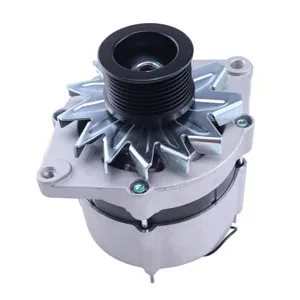
System-Matched Supply — alternator output verified against 4JB1/4JG1 electrical load profiles to prevent repeat failures during engine rebuilds.
Technical Specifications
| Parameter |
Value |
| Part Number |
8972283181 |
| Product Type |
Alternator |
| Cross-Reference |
8972283181, LR150714, LR150715, 8972012810, 897228-3180, 8972283180, 897201-2810 (reference only) |
| Machine Fitment |
Doosan SOLAR 55, Daewoo DH55 |
| Voltage |
12V |
| Amperage |
50A |
| Condition |
New Aftermarket |
| Warranty |
3–12 months |
| Manufacturing Standard |
ISO 9001 |
Application Suitability
| Engine System |
Related Components |
| Belt-drive system |
Drive belt, tensioner, idler pulley, crankshaft pulley |
| Charging circuit |
Battery terminals, wiring harness, voltage regulator connector |
| Engine auxiliary |
Water pump, fan assembly, thermostat housing |
| Electrical load management |
Starter motor, glow plugs, instrument panel draw |
Why an Alternator Failure Is Rarely Just an Alternator Problem
The failed unit usually points to a system-level fault that will destroy the replacement if left unaddressed.
When a charging system fails on an Isuzu 4JB1 or 4JG1 platform, the root cause often sits upstream or downstream of the alternator itself. Worn belt tensioners allow slippage that overheats the diode pack. Corroded harness connectors create resistance that forces the voltage regulator to overwork. Bearing failures inside the unit may trace back to misaligned pulleys from a previous belt service [NEED_CITE: alternator bearing failure root cause analysis in diesel auxiliary systems]. Addressing the alternator engine replacement without tracing these faults means the new unit inherits the same destructive conditions. In a rebuild environment, this translates to a machine returning to the shop within weeks for the same symptom, eroding customer confidence and consuming labor hours that were already spent once.

Where the Alternator Sits in the Rebuild Sequence
During an Isuzu 4JG2 or 4LE1 engine overhaul, the alternator belongs to the final auxiliary reassembly phase. It mounts after the timing cover, water pump, and belt-drive hardware are torqued and verified. Installing the alternator engine component before confirming belt alignment invites immediate bearing load. The unit should arrive on the bench matched to the engine serial variant — mounting ear spacing and connector orientation differ across the 4JB1, 4JG1, and 4LE2 families, and a mismatch discovered at reassembly stage stalls the entire rebuild completion.
Electrical Load Matching and Engine Serial Variants
The 12V 50A output rating must align with the actual electrical demand the engine platform places on the charging system. Engines equipped with additional work lighting circuits, heated cabin components, or auxiliary hydraulic controllers draw more sustained current than base-specification machines. An undersized alternator running at near-maximum output for extended periods experiences diode and stator heat buildup that shortens service life [NEED_CITE: alternator thermal management in construction equipment electrical systems]. Across the 4JB1 through 4LE2 range, engine serial variants introduce differences in mounting bolt patterns, pulley groove profiles, and connector pin configurations. Confirming these details against the engine plate before ordering eliminates the most common fitment failures seen during field installations.
Reading the Specifications Against Real Operating Conditions
The 12V nominal output paired with 50A capacity defines the continuous charging envelope this alternator engine unit sustains under normal operating temperature. In desert environments where ambient heat already stresses electrical insulation, the margin between rated output and actual demand determines whether stator windings degrade prematurely. The new aftermarket condition means all internal wear components — bearings, brushes, slip rings — begin at zero hours, which matters because a remanufactured unit carries unknown residual wear on these surfaces. The ISO 9001 manufacturing standard referenced for the production partner indicates process control over winding consistency and diode solder joints, both of which directly affect voltage ripple under load [NEED_CITE: ISO 9001 quality control requirements for automotive alternator manufacturing].
The Cost of Installing Without Root-Cause Verification
Replacing a failed alternator without diagnosing why it failed is the most common reason for repeat charging system failures within the first service interval. A unit destroyed by a seized idler pulley will fail again if that pulley is not addressed. Voltage regulator burnout traced to a shorted harness connector recurs when the connector is reused. In engine rebuild scenarios, this means a second teardown, a second gasket set, and a second round of labor charged to the same repair order [NEED_CITE: repeat failure rates in engine auxiliary systems after incomplete diagnosis]. The hidden cost is not the part itself — it is the machine downtime, the second mobilization of the service crew, and the credibility loss with the equipment owner.
Why Source This Alternator Through XUNPO
The 8972283181 alternator ships under the same warranty terms whether drawn from XUNPO's own production lines or qualified manufacturing partners, so there is no quality tier gap between sourcing channels. Eight product categories under one account means the alternator, drive belt, tensioner, and seal kit all consolidate into a single dispatch with matched lead times. Orders start from one piece, so an emergency single-unit replacement does not force a distributor to absorb unwanted stock. Guangzhou warehouse inventory covers high-turnover auxiliary components for fast dispatch on common Isuzu platform applications. Part identification is available from the existing unit's nameplate, a photograph of the engine plate, or the machine model alone. Cross-reference verification covers the full OEM interchange list — 8972283181, LR150714, LR150715, 8972012810 and related numbers — including superseded references that may appear on older nameplates.
Documentation & Verification
- Commercial invoice and packing list referencing alternator part number and engine compatibility
- Cross-reference sheet mapping 8972283181 to all verified interchange numbers (reference only)
- Quality inspection record showing voltage output, ripple measurement, and bearing play test
- Warranty terms document covering manufacturing defects and premature operational failure
- Packing photographs confirming unit protection and connector cap placement before crate closure
- HS code and customs classification support for international alternator shipments
Installation & Rebuild Sequence
- Verify mounting ear bolt pattern against engine block before removing the unit from packaging
- Confirm connector pin count and orientation match the existing wiring harness plug
- Inspect drive belt condition and tensioner travel before fitting the alternator to the bracket
- Torque mounting bolts to engine manufacturer specification to prevent case distortion
- Check pulley alignment with a straightedge across the belt-drive plane after installation
- Measure charging voltage at battery terminals during first engine run to confirm regulator function
Requesting a Fitment-Confirmed Quotation
Provide the engine model designation, serial number, and any readable information from the failed unit's nameplate. If the nameplate is illegible, a clear photograph of the engine data plate and the alternator mounting face allows the technical team to confirm the correct variant. For fleet operators planning multiple rebuilds, sharing the engine serial range across the fleet enables batch verification of mounting patterns and connector types before a single unit ships.
Frequently Asked Questions
Q: What else should I replace when the alternator fails during an engine rebuild?
A: Inspect the drive belt, tensioner assembly, idler pulley, and wiring harness connector. Belt slippage or pulley misalignment frequently causes the bearing and diode failures that destroy alternators. Replacing these adjacent components during the same rebuild cycle prevents the new unit from inheriting the same destructive conditions that shortened the life of the original.
Q: Do all Isuzu 4JB1, 4JG1, and 4JG2 variants use the same alternator mounting?
A: No. Mounting ear spacing, bolt diameter, and connector orientation vary across engine serial ranges and production years. Confirm your specific engine serial number against the cross-reference data before ordering. Providing a photograph of the old unit's mounting face and connector allows verification of the correct variant for your application.
Q: How do I confirm the correct connector type from my old unit?
A: Count the pins in the harness connector and note the locking tab position. Compare these details against the product listing or send a clear photograph of the connector face. Connector mismatches are among the most common fitment failures for alternators across the 4LE1 and 4LE2 engine families.
Q: Can I get a sample to verify fitment before ordering for the entire fleet?
A: Sample units are available for fitment confirmation before bulk commitment. This allows your workshop to verify mounting pattern, pulley alignment, and connector compatibility on one machine before the full fleet order ships, eliminating the risk of receiving mismatched variants across multiple engine serial ranges.
Q: What system-level faults can cause a new alternator to fail prematurely?
A: Seized idler pulleys, corroded battery terminals, shorted harness connectors, and overtightened drive belts all impose abnormal loads on alternator bearings and diode packs. Identifying and correcting these faults during installation ensures the replacement unit achieves its expected service life rather than repeating the failure cycle of the original component.