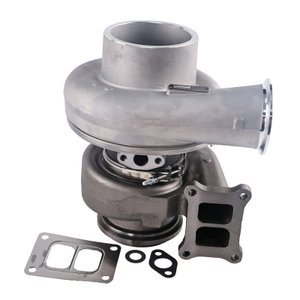
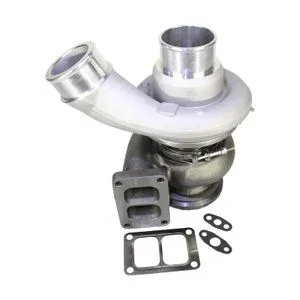
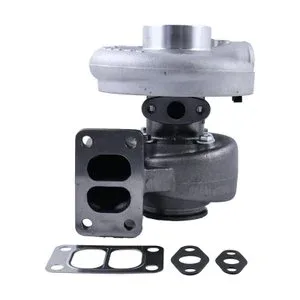
Matched to Rebuild Sequence — Turbocharger T422417 ships with verified oil port orientation for your C4.4 variant, preventing a second teardown.
Technical Specifications
| Parameter |
Value |
| Part Number |
T422417 |
| Product Type |
Turbocharger |
| Cross-Reference |
T422417 (reference only) |
| Engine Fitment |
CAT C4.4 |
| Machine Fitment |
CAT SPF343C Trailer Mounted Pumper |
| Condition |
New Aftermarket |
| Standard |
ISO 9001 |
| Warranty |
3–12 months against manufacturing defects |
| MOQ |
1 piece |
Application Suitability
| Engine System |
Related Components |
| Intake & Forced Induction |
Exhaust manifold gasket, turbo oil feed line, oil return gasket |
| Lubrication Circuit |
Oil filter element, oil supply gallery seals, crankcase breather |
| Exhaust & Emissions |
Downpipe clamp, exhaust flange gasket, heat shield fasteners |
| Cooling Interface |
Coolant line seals if water-cooled bearing housing variant applies |
Why the Same C4.4 Serial Range Demands Different Turbo Builds
A replacement turbocharger T422417 for CAT C4.4 engine rebuild must match the exact engine serial variant, or the oil feed port and waste-gate actuator bracket will not align.
I have walked through too many C4.4 return cases in Shandong where the workshop bolted on a turbo that physically mounted but had the oil drain rotated fifteen degrees off the block return boss. The result is oil pooling inside the bearing cartridge until it carbonizes, and the new unit fails in weeks. The root problem is not manufacturing quality — it is a mismatch between the engine build sheet and the turbo variant ordered. C4.4 platforms span several serial breaks where port orientation, compressor housing clocking, and actuator rod length shifted without the base part number changing on every cross-reference table in circulation [NEED_CITE: engine serial variant tracking for industrial turbocharger replacement].

System Neighbors That Decide Turbo Survival
The turbocharger does not fail in isolation on the C4.4. Oil starvation from a collapsed feed line, exhaust back-pressure from a cracked manifold-to-downpipe joint, or foreign object damage from a deteriorated air filter element each produce the same visible symptom: a burned turbine wheel and axial play beyond tolerance. When a Turbocharger T422417 for CAT C4.4 engine rebuild goes into a machine without verifying those upstream and downstream conditions, the replacement inherits the fault that destroyed the previous unit.
Serial Variant Identification Before the Crate Opens
C4.4 engines fitted to SPF343C trailer-mounted pumpers span production years where Caterpillar adjusted the turbocharger oil drain flange profile and compressor housing outlet diameter. Ordering a turbocharger T422417 for CAT C4.4 engine rebuild on the basis of the machine model alone, without the engine serial number, risks receiving a unit that fits the mounting studs but misaligns the oil return passage. Verification against the engine build sheet takes a few minutes and prevents a second teardown that costs far more than the part itself [NEED_CITE: C4.4 engine serial break documentation for turbocharger fitment].
Reading the Specs That Matter in the Workshop
The bearing cartridge inside this turbocharger relies on a continuous oil film fed from the C4.4 main gallery, so oil supply pressure at idle must remain within the engine manufacturer's specified band before the unit is commissioned. Compressor housing outlet diameter and flange bolt pattern must match the charge air pipe on the specific C4.4 variant, because forcing a mismatched hose introduces a boost leak that masks itself as low power. Turbine housing A/R ratio is matched to the C4.4 fuel map on SPF343C pumpers, meaning a different ratio pulled from another application will shift boost onset and raise exhaust gas temperature beyond safe limits for continuous dewatering duty.
What Happens When Root Cause Is Ignored
Every time a workshop replaces only the turbo without flushing the oil feed line or checking exhaust back-pressure, the same contamination or restriction that killed the first unit begins attacking the second. Carbon deposits from a coked oil return build up in the new bearing housing within the first fifty hours, and axial play returns. On mining and municipal pumper sites where the SPF343C runs extended shifts, that second failure arrives before the next scheduled service interval, turning a single-component job into a repeated teardown with compounding labor cost and machine downtime [NEED_CITE: turbocharger failure root cause analysis in diesel engine service].
What Sets This Supply Arrangement Apart
Self-produced and qualified sourced lines carry the same inspection standard and warranty period, so the turbocharger and the gasket set beside it are covered under one account. Eight product categories mean the oil feed line, exhaust gasket, and air filter element ship in the same consignment as the turbo, eliminating split freight. One-piece minimum order lets a rebuild shop pull a single unit for a bench test before committing to stock. Identification support extends from a clean part number to a photograph of an oil-caked nameplate on a C4.4 that has seen several pumper seasons. Cross-reference verification covers superseded numbers, catching cases where a parts book still lists a retired prefix. Sample supply for fitment confirmation is available so the workshop can clock the compressor housing against the actual block before bulk commitment.
Documentation & Verification
- Commercial invoice and packing list referencing turbocharger serial and C4.4 engine fitment.
- Cross-reference sheet listing T422417 (reference only) against superseded and alternate numbers.
- Dimensional inspection record covering oil port orientation and mounting flange pattern.
- Warranty terms covering manufacturing defects for 3–12 months from dispatch.
- Pre-shipment packing photographs showing crate condition and desiccant placement.
- HS code and customs documentation support for cross-border rebuild kit consolidation.
Installation & Rebuild Sequence
- Flush the C4.4 oil feed gallery and replace the feed line restrictor orifice before mounting the turbocharger.
- Verify turbine housing-to-exhaust manifold flange alignment without forcing studs into misaligned holes.
- Pre-lubricate the bearing cartridge with clean engine oil through the oil inlet port before first start.
- Torque compressor outlet and oil return fasteners to C4.4 specification to prevent boost or oil leaks.
- Run the engine at idle for several minutes to confirm oil pressure at the turbo inlet before loading.
- Inspect the oil return line for collapse or internal coking that would restrict drain-back flow.
Tell Us What Your C4.4 Actually Needs
Share the engine serial number and any known rebuild history, including whether oversized bearings or a previous crankshaft regrind are on record. If the nameplate is painted over or missing, send a photograph of the turbo mounting flange and oil port positions so the correct variant can be confirmed against build records. Specify whether the unit is needed as a single replacement or as part of a matched C4.4 overhaul kit with gaskets, seals, and filters consolidated in one shipment.
Frequently Asked Questions
Q: What gaskets and seals should be replaced alongside the turbocharger during a C4.4 rebuild?
A: The exhaust manifold-to-turbo gasket, oil feed line seals, oil return gasket, and compressor outlet O-ring should all be renewed. Reusing any of these invites a leak that causes repeat failure. A matched set specific to the C4.4 variant ensures correct thickness and material for the operating temperature range.
Q: Does this turbocharger fit every CAT C4.4 serial variant?
A: No. Port orientation, compressor housing clocking, and actuator bracket geometry differ across C4.4 serial breaks. The engine serial number must be provided so the correct variant is matched. Supplying the machine model alone is not sufficient for guaranteed fitment.
Q: How do I determine whether oil starvation destroyed the previous turbo?
A: Inspect the oil feed line restrictor for blockage, check the oil return passage for coking, and review oil pressure logs if available. A blue-tempered bearing cartridge and carbon deposits on the thrust face point directly to oil starvation as the root cause rather than a manufacturing defect.
Q: Is a matched overhaul kit available that includes this turbo with other C4.4 components?
A: Yes. The turbocharger can be bundled with piston ring sets, main and con-rod bearings, full gasket set, oil and fuel filters, and seal kits matched to the specific C4.4 engine serial variant. Consolidating these into one shipment avoids mismatched arrival times across multiple suppliers.
Q: How do I confirm the correct turbo when the engine nameplate is unreadable?
A: Send clear photographs of the turbo mounting flange, oil port positions, and compressor housing outlet. These physical features can be cross-checked against engine build records to identify the correct variant without relying on a faded or painted-over identification plate.