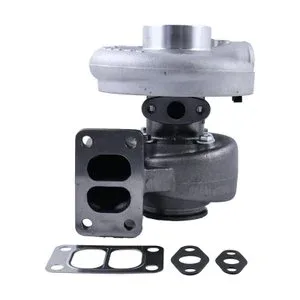
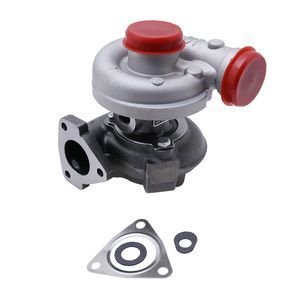
Matched System Fitment — Engine serial variants verified against rebuild history to confirm correct H1C turbine and compressor configuration before dispatch.
Technical Specifications
| Parameter |
Value |
| Part Number |
3802289 |
| Product Type |
Turbocharger |
| Cross-Reference |
3522777, 3528742, 3528741, 3522778, 3526739, 3802302, 3802115 (reference only) |
| Alternate Cross-Reference |
466563-0001, 466563-0003, 447450-0051, 447450-0065, 3535415, 3535416, 3535417, 3535418 (interchange reference) |
| Turbo Model |
H1C, H1C-8243AF/E18DA11 |
| Compatible Engine Brand |
Cummins |
| Engine Number |
6BT, 6BT-590, 6T-590 |
| Machine Fitment |
Various models with 6BT, 6BT-590, 6T-590 Engine (1994-09), XMQ Buses, Military Truck |
| Condition |
New Aftermarket |
| Warranty |
3-12 months against manufacturing defects |
| Manufacturing Standard |
ISO-certified manufacturing |
Application Suitability
| Engine System |
Related Components |
| Intake and charge air delivery |
Air filter housing, intake manifold gaskets, charge air cooler hoses |
| Exhaust gas routing |
Exhaust manifold studs and nuts, downpipe flange gasket, heat shields |
| Turbo lubrication circuit |
Oil feed line, oil drain tube, oil filter, crankcase breather |
| Engine overhaul assembly |
Complete gasket set, main and rod bearings, piston rings, thrust washer |
Why a New Turbo Fails Weeks After Installation on Cummins 6BT Platforms
Replacing the turbocharger without diagnosing the oil supply or exhaust back-pressure fault that destroyed the previous unit guarantees a repeat visit to the teardown bench.
In workshops across Brazil and Chile, I watched Cummins 6BT engines return to the stand within weeks of a fresh Turbo H1C 3802289 engine rebuild installation. The bearing journal was scored, the compressor wheel showed contact marks, and the root cause was never the turbo itself. Contaminated oil from a failing bypass filter, restricted drain lines packed with carbon, or exhaust manifold cracks altering turbine inlet pressure all kill a replacement unit quickly [NEED_CITE: common causes of premature turbocharger failure in medium-duty diesel engines]. Addressing the system-level fault is the only way the new component survives its break-in period.

The Intake-to-Exhaust Path This Turbocharger Controls
The H1C turbocharger sits at the intersection of the intake charge system and the exhaust energy recovery path on the Cummins 6BT, 6BT-590, and 6T-590 engine family. It compresses filtered air into the intake manifold while extracting energy from exhaust gas leaving the cylinders. When planning a Turbo H1C 3802289 engine rebuild, the adjacent components—intake piping, charge air cooler, exhaust manifold, and downpipe—all influence how the turbo performs and how long its bearing system lasts. Treating the turbocharger as an isolated replacement rather than part of a pressurized system leads to mismatched flow characteristics and repeat failures.
Engine Serial Variants That Change Which Turbo Actually Fits
Within the 6BT family, production year and application code determine whether the turbine housing orientation, compressor wheel trim, or wastegate actuator calibration match your specific build [NEED_CITE: Cummins 6BT engine serial range and turbocharger variant identification]. An engine that has been through a prior overhaul may already carry oversize bearings or modified oil clearances, affecting oil pressure at the turbo feed port. The 6BT-590 variant used in XMQ buses and certain military truck applications may specify a different turbine A/R ratio than the base 6BT in construction excavators. Confirming the exact engine serial number and rebuild history before ordering prevents receiving a unit that physically bolts on but delivers incorrect boost pressure or surges at operating RPM.
What the Model Designation and Cross-Reference Numbers Mean for Your Build
The H1C-8243AF/E18DA11 designation encodes the compressor inducer diameter, turbine wheel trim, and housing configuration that match the Cummins 6BT combustion chamber volume and expected exhaust gas temperature range. Cross-reference numbers such as 3522777 and 466563-0001 (interchange reference) represent alternate production runs or supplier assignments for the same functional specification, but subtle differences in gasket surface finish or oil port thread pitch can exist between batches. The rotating assembly balance grade directly affects bearing life at sustained high RPM, and dimensional tolerance data on shaft runout and housing bore concentricity should appear on the quality inspection record accompanying your shipment. Selecting a unit based solely on number matching without verifying these tolerance parameters risks vibration-induced seal wear.
The Cost of Skipping System-Level Diagnostics Before Turbo Replacement
Installing a fresh turbocharger on an engine where the oil drain line is partially blocked by carbon deposits creates back-pressure inside the bearing housing, forcing oil past the compressor seal into the intake tract. The engine then consumes oil at a rate the operator notices only after the new unit has accumulated enough contamination to fail [NEED_CITE: turbocharger oil drain restriction symptoms and diagnosis in diesel engines]. Similarly, reusing crushed exhaust manifold gaskets or warped flange surfaces allows exhaust gas to leak before reaching the turbine, reducing boost output and forcing the engine to run richer than designed. These system-level oversights turn a planned repair into an unplanned second teardown, doubling labor cost and machine downtime.
Why Rebuild Shops Source This Category From Our Supply Chain
Our own production lines and qualified sourced partners operate under a single warranty account, so whether your Turbo H1C 3802289 engine rebuild order is filled from stock or built to schedule, the quality terms remain consistent. We carry eight engine system categories under one order number, meaning the turbocharger, matched gasket set, oil feed and drain seals, and air filter can ship in a single consignment. Orders start from one piece, so an emergency single-unit replacement is never blocked by minimum quantities. Our technical team verifies cross-reference numbers and engine serial compatibility before dispatch, catching superseded part numbers that copied reference tables often carry forward in error. Sample units are available for fitment confirmation before you commit to a bulk stocking order for your rebuild customers.
Documentation & Verification
- Commercial invoice listing turbocharger part number, engine compatibility, and cross-reference numbers marked as reference only.
- Dimensional inspection record covering shaft runout, compressor wheel balance grade, and housing bore measurements.
- Part compatibility sheet confirming 6BT, 6BT-590, or 6T-590 engine serial match with specific turbo variant.
- Warranty terms covering manufacturing defects for the stated period with clear claim procedure.
- Packing photographs showing turbocharger protective caps on oil ports and compressor inlet before crate closure.
- HS code and customs documentation support for international engine parts shipments.
Installation & Rebuild Sequence
- Pre-lubricate the turbocharger bearing housing with clean engine oil before connecting feed and drain lines.
- Verify oil feed line internal diameter is not restricted by hardened deposits from the previous failed unit.
- Torque exhaust manifold-to-turbo flange fasteners to engine manual specification to prevent gasket creep under thermal cycling.
- Replace all gaskets at turbo-to-manifold and turbo-to-downpipe interfaces with new matched set items.
- Crank the engine without starting to build oil pressure at the turbo feed port before first combustion.
- Run at idle for several minutes after first start to allow bearing temperatures to stabilize before applying load.
Preparing Your Inquiry With the Right Engine Data
Provide the complete engine number, production year, and any prior overhaul records so we can confirm which H1C variant matches your build. If the engine data plate is worn or painted over, send a photograph of the block casting number and any visible serial stamping. Specify whether the turbocharger is for a single-unit emergency replacement or a batch order for rebuild stock, and note any gasket or oil line components you need included in the same shipment. This information lets us verify fitment accuracy and return a confirmed compatibility answer rather than a generic catalog match.
Frequently Asked Questions
Q: What gaskets and seals should be replaced together with this turbocharger?
A: The turbo-to-manifold gasket, turbo-to-downpipe gasket, oil feed line O-rings or copper washers, and oil drain flange seal should all be replaced during installation. Reusing compressed or heat-cycled gaskets compromises seal integrity and introduces exhaust leaks or oil seepage that shorten turbocharger service life. We supply matched gasket sets alongside the turbo as a complete system package.
Q: Does the 6BT-590 require a different turbo variant than the base 6BT?
A: The 6BT-590 variant used in bus and truck applications may specify a different turbine housing A/R ratio or wastegate actuator setting compared to the base 6BT used in construction machinery. Providing your exact engine serial number and application code allows us to confirm the correct variant from our cross-reference database rather than shipping a generic fitment.
Q: How do I confirm my engine serial and production year for correct turbo fitment?
A: Locate the engine data plate on the valve cover or block side, which lists the engine number, serial, and build date. If the plate is illegible, photograph any visible casting numbers or serial stampings on the block. Our technical team cross-references these against Cummins production records to identify the exact turbocharger variant your engine requires.
Q: What oil system issues commonly cause premature turbo failure on Cummins 6BT engines?
A: Restricted oil drain lines, contaminated oil from bypass filter failure, and incorrect oil pressure after a previous rebuild with oversize bearings all starve or contaminate the turbo bearing system. Diagnosing and correcting these faults before installing the replacement turbocharger prevents the new unit from suffering the same failure mode within weeks of commissioning.
Q: Can I request a sample turbo for fitment verification before committing to a bulk order?
A: Yes, we supply single sample units so you can verify physical fitment, flange alignment, and port positioning on your engine before placing a stocking order. This eliminates the risk of receiving a batch of units that require modification or adapter plates during installation on your specific engine configuration.