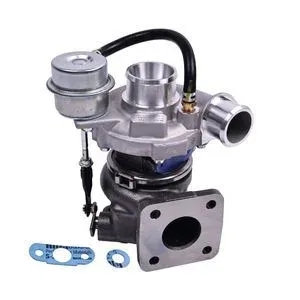
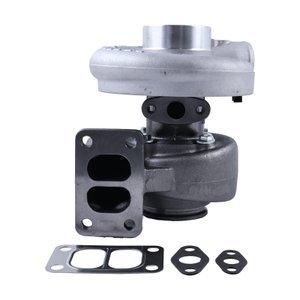
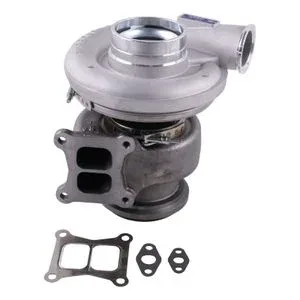
Matched Rebuild Set — turbocharger, oil feed lines, and exhaust gaskets ship under one warranty for complete M11/ISM system restoration.
Technical Specifications
| Parameter |
Value |
| Part Number |
3590044 3803938 3536995 3536996 |
| Product Type |
Turbocharger |
| Cross-Reference |
3590044, 3536995, 3536996, 590045, 4033813, 178923, 2834419, 4046031, 4033813H, 3803938NX, 178923R, 2080237R, 478923, OTR2080237R (cross-reference only) |
| Machine Fitment |
2007-2012 Truck & Bus with ISM, ISME, M11 Engine; 1999-2009 Truck Bus, Truck Delta Alpha Plus with M11 Engine |
| Turbo Model |
HX55-E9861L/H22E11D, HX55, S400, HX55-D98K66RL/C86L90PH22EX |
| Condition |
New Aftermarket |
| Warranty |
12-Month |
| Standard |
ISO 9001 |
Application Suitability
| Engine System |
Related Components |
| Intake Boost & Exhaust Energy Recovery |
Oil feed and return lines, oil filter, air filter element |
| Charge Air Compression |
Intercooler core, charge air hoses, clamps |
| Exhaust Flow Management |
Exhaust manifold gaskets, manifold studs, heat shields |
| Crankcase Ventilation |
Crankcase breather, separator elements |
Why New Turbos Fail Weeks After Installation
The failed part is usually a symptom, not the root cause. Replacing an HX55 Turbocharger for Cummins M11 ISM engine rebuild without investigating the surrounding system is a recurring pattern I have seen across multiple workshop returns.
Oil starvation from a clogged feed line or a collapsed return hose destroys the floating bearing within hours of operation [NEED_CITE: diesel engine turbocharger lubrication failure modes]. Contaminated intake air bypassing a cracked filter housing erodes the compressor wheel. Excessive exhaust backpressure from a blocked diesel particulate filter drives turbine inlet temperature beyond design limits. Each scenario kills the replacement unit while the original failure cause remains active in the system. Addressing the HX55 turbocharger as an isolated component ignores the interconnected nature of the intake, exhaust, and lubrication circuits that determine its service life.

Positioning the Turbocharger Within the Boost System
The turbocharger sits at the intersection of three fluid circuits: intake air, exhaust gas, and engine oil. This HX55 Turbocharger for Cummins M11 ISM engine rebuild requires every upstream and downstream connection to function within specification before the unit can reach its intended service interval.
A compressor inlet drawing air through a restricted filter forces the wheel to operate at higher speed for the same boost target, increasing bearing load and oil temperature. On the exhaust side, a leaking manifold gasket upstream of the turbine housing reduces available energy, forcing the engine control module to demand more boost and creating a cycle of thermal stress. Oil supply pressure and return line capacity are equally critical — the floating bearing relies on a continuous film of clean oil at adequate volume to survive turbine-end temperatures.
Engine Serial Variants and Shell Differences
Cummins M11, ISM, and ISME designations span multiple calibration generations, and the base part number often covers several turbine housing and wastegate configurations [NEED_CITE: Cummins heavy-duty engine family variant identification]. The correct HX55 turbocharger for Cummins M11 ISM engine rebuild must match the specific wastegate actuator pressure setting and turbine housing A/R ratio for the engine serial number in question.
Installing a variant intended for a lower boost target causes chronic under-boost and excessive exhaust gas temperature. A variant with a higher wastegate crack pressure over-boosts the cylinders, risking head gasket failure and piston crown damage. Cross-reference numbers like 3536995 and 3536996 may share the same compressor stage but differ in turbine housing geometry or oil port orientation. Verification against the engine data plate is necessary before confirming the correct assembly.
Reading the Specifications That Matter
The HX55 designation refers to the compressor inducer diameter class, which determines the airflow capacity available for the M11 and ISM displacement range. The turbine wheel specification, denoted in model strings like HX55-E9861L/H22E11D, defines the exhaust energy extraction profile — a mismatch here affects spool response and peak boost delivery across the engine speed range.
Oil inlet and drain port configuration must align with the block-mounted supply line and the crankcase return passage. An adapter or custom hose introduces flow restriction and potential leak paths. The wastegate actuator calibration controls maximum boost; this value must correspond to the fuel map programmed in the engine control module for the specific engine serial variant. The 12-month warranty covers manufacturing defects but does not extend to failures caused by unresolved system faults such as oil contamination or exhaust restriction.
The Cost of Skipping System Diagnostics
Replacing the turbocharger without verifying oil cleanliness, air filter condition, and exhaust backpressure leads to repeat failure, often within the first few hundred operating hours. I have traced returns to carbon-blocked oil return lines and split intercooler hoses that no one inspected during the initial repair [NEED_CITE: turbocharger warranty claim root cause analysis procedures].
The second teardown costs more than the first because the engine has now endured two episodes of metal contamination in the oil sump, potentially damaging main and connecting rod bearings. A systematic approach — checking each related circuit before installing the new unit — is less expensive than a second removal, a second oil change, and a second set of gaskets.
Procurement With System-Level Support
Our own production lines and qualified sourced partners operate under identical quality control and warranty terms, so this turbocharger carries the same 12-month coverage regardless of origin. Eight product categories allow you to add oil filters, exhaust gaskets, and seal kits to the same order and account.
Minimum order is one piece, supporting emergency single-unit replacements as well as fleet overhaul programs. Identification is possible from the part number, the engine model and serial, or a photograph of the nameplate when the original label is unreadable. Cross-reference verification covers superseded numbers and alternate variants to confirm the correct configuration ships. A sample unit is available for fitment confirmation before you commit to bulk quantities. Our technical team can review engine serial data and rebuild history to confirm the appropriate size grade and variant.
Documentation & Verification
- Commercial invoice listing turbocharger part numbers and corresponding engine serial references
- Compatibility sheet with cross-reference numbers marked as reference only for each variant
- Dimensional and balance inspection record for the shipped unit
- 12-month warranty terms covering manufacturing defects with exclusions clearly defined
- Packing photographs showing protective caps on oil ports and compressor inlet
- HS code and export documentation for customs clearance support
Installation & Rebuild Sequence
- Pre-fill oil inlet port with clean engine oil before first cranking to prevent dry-start bearing damage
- Verify oil supply line flow rate and return line capacity with hoses disconnected
- Torque turbine inlet flange fasteners to engine manufacturer specification using new gaskets
- Confirm wastegate actuator rod travel and crack pressure against engine calibration data
- Run engine at idle for initial warm-up, checking all connections for oil and exhaust leaks
- Monitor boost pressure against specification during first loaded operation cycle
Request a System-Matched Quotation
Provide the engine model, serial number, and any known rebuild history so we can confirm the correct turbocharger variant and associated seal kit contents. If the engine has experienced a previous turbocharger failure, describe the symptoms and any diagnostic codes logged. Including photographs of the existing unit nameplate and mounting configuration helps us verify port orientation and housing variant before shipment.
Frequently Asked Questions
Q: What other engine system components should be checked before installing a replacement turbocharger?
A: Verify oil supply pressure and return line flow, inspect the air filter housing for cracks or bypass, check intercooler integrity and charge air hose condition, and confirm exhaust backpressure is within specification. Any unresolved fault in these circuits will damage the new turbocharger regardless of its manufacturing quality.
Q: Are HX55 turbochargers for M11 and ISM engines interchangeable?
A: Not automatically. While the base compressor and turbine stages may be shared, turbine housing A/R ratio, wastegate actuator calibration, and oil port orientation can differ between M11, ISM, and ISME variants. Engine serial number verification is required to confirm the correct configuration ships.
Q: Why does the same base part number appear with different housing or wastegate variants?
A: Cummins used the HX55 platform across multiple engine calibrations and model years. Each application may require a different turbine housing geometry or wastegate crack pressure to match the fuel map and emissions configuration. Cross-reference numbers identify the family, not the exact variant.
Q: Should the new turbocharger be pre-filled with oil before first engine start?
A: Yes. The floating bearing requires immediate lubrication upon cranking. Pre-fill the oil inlet port with clean engine oil, then crank the engine with the fuel supply disabled until oil pressure registers before allowing the engine to fire and run at idle.
Q: How do I confirm the correct turbocharger variant from my engine serial number?
A: Provide the complete engine serial number and model designation. We cross-reference the build data against turbocharger variant configurations including turbine housing, wastegate setting, and oil port layout to confirm the exact assembly required for that engine.