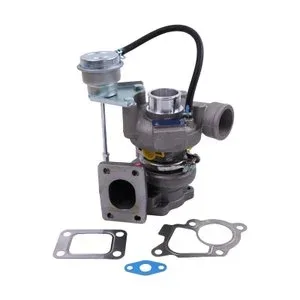
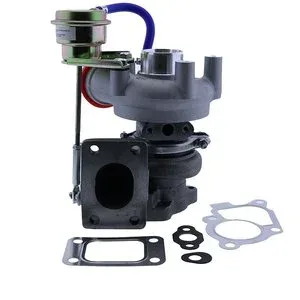
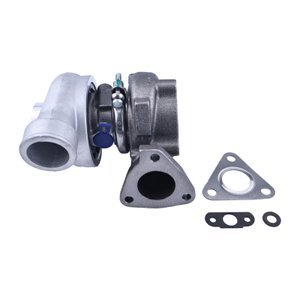
Matched Set Dispatch — Turbocharger, oil feed gaskets, and intake seals for Kubota V3307-DI ship as one verified engine system package.
Technical Specifications
| Parameter |
Value |
| Part Number |
1J774-17010 |
| Product Type |
Turbocharger |
| Turbo Model |
TD04L4, TD04L4-09T, TD04L4-09TK3-5.0 |
| Compatible Engine |
Kubota V3307-DI-TE3-Q, V3307-DI-T-E3B |
| Cross-Reference |
1J774-17012, 1J774-17013, 1J774-17014, 1J774-17015, 1J774-17016, 49177-03250, 49177-03251, 49177-03252, 49177-03253, 49177-03254 (reference only) |
| Machine Fitment |
SVL75-2, SVL75-2C |
| Condition |
New Aftermarket |
| Warranty |
3-12 months against manufacturing defects |
Application Suitability
| Engine System |
Related Components |
| Air Intake & Filtration |
Air filter element, intake ducting seals, breather hoses |
| Lubrication Circuit |
Oil feed line, drain pipe gasket, oil filter, turbo oil seal ring |
| Exhaust & Emission |
Exhaust manifold gasket, heat shield fasteners, downpipe clamp |
| Engine Block & Cooling |
Coolant hoses adjacent to turbo, thermostat, block heater connections |
Why Replacing the Turbo Alone Fails the V3307-DI Engine
A new turbocharger installed without addressing the oil feed restriction or exhaust backpressure that destroyed the previous unit will fail within weeks.
I have pulled melted TD04L4 center housings off Kubota V3307-DI engines in Nigerian mining camps more times than I can count. The turbo was the victim, not the cause. Carbon blocking the oil supply gallery, a pinched drain line, or a collapsed air filter bypassing dirty air into the compressor wheel — any of these will kill a fresh Turbocharger engine rebuild for Kubota V3307-DI before the next scheduled service. [NEED_CITE: root cause analysis standards for turbocharger failure in diesel engines] Treating the turbo as an isolated swap rather than a system symptom is how repair shops lose credibility and machines lose operating hours.

The Turbocharger Sits at the Intersection of Three Systems
The TD04L4 turbocharger on the V3307-DI is not simply an exhaust-driven air pump; it is the convergence point of the lubrication circuit, the intake filtration path, and the exhaust emission system. Every Turbocharger engine rebuild for Kubota V3307-DI must begin with an oil pressure check at the turbo feed port and a flow test on the drain line back to the sump. If the oil arriving at the bearing cartridge is contaminated or restricted, the new unit inherits the same starvation that killed its predecessor.
Engine Serial Variants Dictate Port Orientation and Fitting Type
Within the V3307-DI family, the TE3-Q and T-E3B variants differ in turbo mounting orientation and oil fitting configuration. A turbo assembled for one variant may physically bolt on to the other but misalign the oil drain, causing pooling in the center housing and eventual seal blowout. Confirming the exact engine serial before dispatch ensures the TD04L4 variant shipped matches the port angles and gasket profile your block requires. [NEED_CITE: engine serial variant identification practices for compact diesel platforms] This is where a cross-reference verification step — covering superseded numbers from 1J774-17010 through 1J774-17016 and the 49177-03250 series — prevents a mismatched delivery.
Reading the Specs That Determine Turbo Survival
The TD04L4-09T and TD04L4-09TK3-5.0 designations encode the turbine housing A/R ratio and compressor trim, which together set the boost curve and airflow capacity the V3307-DI expects at rated RPM. Fitting a trim that is too small causes the engine to run rich and overheat the exhaust manifold; too large, and boost lag increases, loading the engine during transient response. The new aftermarket condition means bearing clearances are set to factory tolerance, so oil viscosity and feed pressure must match original specifications to maintain the hydrodynamic film. Any deviation in the oil circuit — wrong filter, degraded hose inner liner, blocked sump screen — directly undermines these clearances.
The Hidden Cost of Skipping Root-Cause Diagnosis
When a workshop replaces the turbo without cleaning the oil feed gallery or inspecting the air filter housing for bypass damage, the new Turbocharger engine rebuild for Kubota V3307-DI is already on borrowed time. The failure mode repeats: bearing wear accelerates, shaft play increases, the compressor wheel contacts the housing, and the machine is back on the bench. This cycle costs the fleet owner in repeated downtime and parts spend, and it costs the repair shop in warranty claims and lost trust. [NEED_CITE: cost impact of repeat turbocharger failures in off-highway equipment] Systematic diagnosis — oil circuit flush, drain line flow test, intake tract inspection, exhaust backpressure measurement — is the only way to break the loop.
Why Source This Turbocharger Through XUNPO
Our selected production lines and qualified sourced supply both carry identical QC protocols and the same 3-12 month warranty against manufacturing defects. Eight product categories under one account mean the turbo arrives with matched gaskets, oil line seals, and air intake components in a single consignment — no split freight, no missing items holding up the rebuild. One-piece minimum order applies, so a single emergency turbo ships without artificial quantity barriers. Part identification works from a part number, a machine model like SVL75-2, or a photograph of a worn nameplate. Cross-reference verification covers superseded and alternate numbers across the entire 1J774 and 49177 ranges. Our technical team confirms variant fitment and grade before the order is released, and sample supply is available for fitment confirmation before any bulk commitment.
Documentation & Verification
- Commercial invoice and packing list itemizing turbo, gaskets, and seals together
- Part compatibility sheet mapping TD04L4 variants to V3307-DI serial ranges (reference only)
- Dimensional inspection record covering shaft play, wheel clearance, and port thread verification
- Warranty terms document specifying coverage period and manufacturing defect conditions
- Packing photographs showing turbo protection, gasket separation, and crate condition before dispatch
- HS code and customs classification support for turbocharger and associated gasket kits
Installation & Rebuild Sequence
- Flush oil feed and drain lines before turbo mounting to remove carbon deposits and debris
- Verify oil drain port orientation matches the V3307-DI variant; incorrect angle causes oil pooling
- Torque exhaust manifold and turbo mounting fasteners to engine manual specification in sequence
- Pre-lube the turbo center housing with clean engine oil before first crank to prevent dry start
- Run the engine at idle for several minutes, then check all oil and exhaust joints for leaks
- Inspect air filter housing and intake ducting for bypass damage that could contaminate the new compressor wheel
Requesting a System-Matched Quote
Provide the engine model (V3307-DI-TE3-Q or V3307-DI-T-E3B), engine serial number, and any history of prior rebuilds or turbo replacements. If the nameplate is illegible, a clear photograph of the existing turbo data tag and the engine block casting number allows our technical team to confirm the correct TD04L4 variant and compile the matched gasket and seal set your rebuild requires.
Frequently Asked Questions
Q: What other components should I inspect or replace when changing this turbocharger?
A: Inspect the oil feed and drain lines for restriction or carbon buildup, check the air filter housing for bypass damage, and replace the exhaust manifold gasket and turbo oil seal ring. Contaminated oil or restricted drain flow will destroy the new turbocharger just as quickly as the old one failed. A matched kit covering these adjacent items ships together.
Q: How do I confirm which TD04L4 variant fits my specific V3307-DI engine serial?
A: Provide the full engine serial number from the block nameplate. The TE3-Q and T-E3B variants differ in turbo port orientation and oil fitting type. Our cross-reference verification covers all superseded part numbers from 1J774-17010 through 1J774-17016 and the 49177 series to match the exact variant your engine requires.
Q: The old turbo failed quickly — how do I prevent the same failure with the replacement?
A: Quick failure almost always traces to a system root cause: blocked oil feed, restricted drain, air filter bypass, or exhaust backpressure. Before installing the new turbocharger, flush the oil circuit, flow-test the drain line, inspect intake ducting, and verify exhaust path integrity. Addressing the cause rather than swapping the symptom is the only reliable prevention.
Q: Can I order the turbo together with oil feed gaskets and exhaust manifold gasket in one shipment?
A: Yes. Our eight-category inventory allows the turbocharger, oil line seals, exhaust manifold gasket, and air intake seals to ship in a single consignment under one account. Consolidated dispatch eliminates the partial-order delays that leave machines sitting on the bench waiting for a missing seal.
Q: How do I verify the engine model if the nameplate is worn or painted over?
A: Send a clear photograph of the engine block casting number and the existing turbocharger data tag. Our technical team uses these identifiers along with machine model information to confirm the correct V3307-DI variant and the matching TD04L4 configuration, even when the original nameplate is no longer readable.