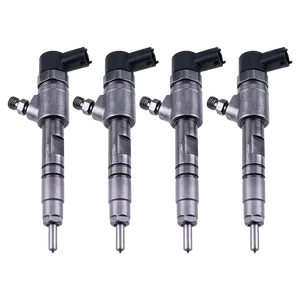
Matched System Components — Every injector in this set is flow-tested against Kubota V2403 and D1803 engine build codes to prevent cylinder imbalance after rebuild.
Technical Specifications
| Parameter |
Value |
| Part Number |
1J801-53052 0445110777 |
| Product Type |
Fuel Injector |
| Cross-Reference |
1J801-53052, 0445110777, 1J801-53051, 1J801-53050, KEARI-1J801, 0 445 110 777 (reference only) |
| Machine Fitment |
KX040-4, U48-5, L3301DT, L3301F, L3301H, L3302, L3302H, L3560DT, L3560GST, L3560HST, L3560HSTC, L3560HSTC-LIMITED, L3560HST-LIMITED, L3901DT, L3901F, L3901H, L3902, L3902H, L4060DT, L4060GST, L4060HST, L4060HSTC, L4060HSTC-LIMITED, L4060HST-LIMITED, L47, L4701DT, L4701F, L4701H, L4760GST, L4760HST, L4760HSTC, L4802DT, L4802DTM, L4802F, L4802H, L5060GST, L5460HST, L5460HSTC, L6060HST, L6060HSTC, M5660SUH, M5660SUHD, M62, MX4800DT, MX4800F, MX4800H, MX5200DT, MX5200F, MX5200H, MX5400DT, MX5400DTC, MX5400F, MX5400H, MX5400HSTC, MX5800H, MX6000H, MX6000HSTC |
| Condition |
New Aftermarket |
| Warranty |
3–12 months against manufacturing defects |
| Engine Platform |
Kubota V2403, D1803 |
| Manufacturing Standard |
ISO-certified production |
Application Suitability
| Engine System |
Related Components |
| Fuel delivery — common rail injection |
Fuel filter, high-pressure lines, injection pump |
| Combustion chamber sealing |
Cylinder head gasket, valve stem seals |
| Engine management and timing |
Solenoid harness connector, ECU calibration |
| Emission and exhaust after-treatment |
DPF regeneration sensors, exhaust temperature probes |
| Crankcase ventilation during rebuild |
PCV valve, breather hoses |
Why Repeat Injector Failure Keeps Happening on the Same Engine
New injectors installed on a contaminated fuel system fail within weeks, not years.
In the Yangtze Delta workshop circuit, I have opened too many Kubota V2403 engines where the rebuild invoice listed a full fuel injector set but nothing else in the fuel path. The injectors were replaced, the engine ran clean for a short period, then the same misfire symptoms returned. Root cause: upstream debris from a deteriorating supply pump or a bypassed primary filter had already scored the new nozzle tips. A fuel injector engine rebuild replacement job that ignores the delivery chain is simply financing the next teardown. [NEED_CITE: common rail fuel system contamination tolerance standards]
The Fuel Circuit as a Closed System
The V2403 and D1803 platforms run a common-rail architecture where every component from the tank pickup to the return line affects nozzle life. When one injector shows internal scoring, the remaining units have experienced the same fuel quality. Replacing a single failed unit while leaving worn companions in the rail creates uneven fuel delivery across cylinders, producing vibration at load and carbon buildup on the weaker side. A complete fuel injector engine rebuild replacement set keeps spray pattern and flow rate consistent across all firing positions.
Spray Pattern Calibration and Cylinder Protection
The nozzle geometry on this common-rail injector produces a multi-hole atomization cone timed to the piston bowl profile of the V2403 and D1403 combustion chambers. Incomplete atomization leaves unburned fuel washing past the rings, diluting oil and accelerating cylinder bore wear. Matched nozzle sets prevent this cascade by ensuring each cylinder receives the same droplet size distribution at every load point, which matters especially during cold starts when combustion margin is already thin. [NEED_CITE: diesel injector spray pattern effect on cylinder liner wear]
Tolerance Verification Against Engine Serial Variants
Kubota issued several build codes across the V2403 and D1803 families — suffixes like CR-E4 and CR-TE4 change rail pressure specifications and solenoid response curves. An injector calibrated for the lower-pressure variant will under-deliver on the turbocharged variant, causing the operator to compensate with throttle and masking the problem until soot accumulation blocks the DPF. Before dispatch, cross-reference verification confirms the engine serial range and applicable build code so the supplied units match the actual rail pressure requirement.

What the Parameter Table Actually Means for the Bench
Solenoid response time governs the opening and closing lag of the injector needle, directly influencing injection duration at high RPM. On a V2403 running at governed speed, even a marginal delay shifts the end-of-injection point past optimal timing, raising exhaust gas temperature and accelerating turbo degradation. The nozzle hole diameter and count determine fuel volume per event and droplet size, both of which must align with the piston crown geometry engineered for this displacement. Rail pressure rating confirms the injector body and internal valve can sustain repeated cycling at the system's peak hydraulic stress without seat erosion.
The Cost of Skipping System-Level Diagnosis
Sending a machine back out with fresh injectors and a clogged secondary filter is a common shortcut that guarantees repeat failure. The fuel injector engine rebuild replacement set solves the nozzle problem only if the fuel reaching those nozzles is clean and at correct pressure. Rebuild shops that skip the pump flow test, skip the line flush, and skip the filter housing inspection end up re-opening the same engine before the next scheduled service. That second teardown costs labor, gasket sets, and customer confidence in roughly equal measure. [NEED_CITE: diesel fuel system diagnostic sequence before injector replacement]
What Sets This Supply Apart
Our own production lines and qualified sourced partners both operate under the same quality inspection protocol, so a fuel system overhaul pulls matched components from one account with one warranty. Eight product categories — from injectors to piston rings to full seal kits — ship as a single consignment, which means the rebuild shop receives everything for a V2403 job on one packing list. Minimum order starts at one piece, useful when a diagnostic bench confirms only a single cylinder needs attention. Guangzhou warehouse stock covers fast-moving Kubota fuel system items for prompt dispatch. Identification from engine serial number, machine model, nameplate photograph, or worn part marking eliminates ordering guesswork. Cross-reference verification catches superseded numbers like 1J801-53050 and 1J801-53051 before the wrong variant ships.
Documentation & Verification
- Commercial invoice listing injector part numbers matched to engine serial variants
- Cross-reference sheet noting 1J801-53052 interchange references (reference only)
- Dimensional and flow-bench inspection record per injector unit
- Warranty terms covering manufacturing defects for 3–12 months
- Packing photographs showing each injector sealed and labeled before crate closure
- HS code documentation for customs clearance at destination port
Installation & Rebuild Sequence
- Clean fuel rail and high-pressure lines with filtered solvent before fitting new injectors
- Verify solenoid connector pin condition and harness continuity on each channel
- Torque injector hold-down clamps to manufacturer specification in sequence
- Replace all copper crush washers and O-rings — never reuse from previous install
- Prime system and crank without starting to purge air before first combustion cycle
Requesting the Right Set for Your Engine
Provide the engine model designation, serial number from the block nameplate, and any suffix indicating turbo or emission tier. If the existing injector markings are illegible, a clear photograph of the nameplate allows cross-reference confirmation. Include whether the engine has undergone a prior rebuild, as previous oversize work may affect adjacent clearances. Our technical team will return a compatibility sheet covering applicable build codes and confirm the correct injector variant before the order is released.
Frequently Asked Questions
Q: What other fuel system components should be replaced alongside injectors?
A: Secondary fuel filters, copper seat washers, return line O-rings, and high-pressure line seals should be renewed at the same time. If the injection pump shows wear on the delivery valve, include it in the scope. Rebuilding only the injectors while leaving degraded upstream components in place leads to premature nozzle contamination and repeat failure.
Q: How do I identify my exact Kubota engine variant?
A: The engine serial plate on the block carries the model code and a build suffix such as CR-E4 or CR-TE4. This suffix determines rail pressure calibration. A clear photograph of the plate allows verification against cross-reference tables. Never order by machine model alone, as the same tractor may carry different engine builds across production years.
Q: Should I replace all injectors as a set or only the failed unit?
A: Full-set replacement is recommended. Injectors age at similar rates and experience identical fuel conditions. Mixing a new unit with worn companions creates uneven fuel distribution across cylinders, causing vibration, power imbalance, and accelerated wear on the weaker cylinders. Set replacement ensures consistent spray pattern and flow rate.
Q: What causes injector failure and how do I prevent repeat damage?
A: Primary causes include fuel contamination from degraded filters, water ingress, and internal scoring from abrasive particles. Prevention requires replacing primary and secondary filters at each service interval, draining the water separator regularly, and flushing fuel lines before installing new injectors. Address the contamination source rather than treating only the failed component.
Q: Do different engine serial numbers require different injector specifications?
A: Yes. Build variants across the V2403 and D1803 platform carry different rail pressure ratings and solenoid calibration curves. An injector specified for a naturally aspirated variant will under-perform on a turbocharged unit. Always confirm the engine serial suffix to ensure the supplied injectors match the factory calibration for that specific build code.