Engine Sequence Variants Confirmed — we match J911559 belt specs against your exact CASE engine serial build to avoid tension mismatch and repeat failures.
Technical Specifications
| Parameter |
Value |
| Part Number |
J911559 |
| Product Type |
Belt |
| Cross-Reference (reference only) |
J911559-A, J911559A, 90500580, 73162121, J902309, J903099, J911570 |
| Machine Fitment |
CASE Loaders: 1840, 1845C, 40XT, 480E, 480E LL, 480F, 480F LL, 580K, 580SK, 590, 60XT, 621, 680K, 680L, 70XT, 750K, 75XT, 780C, 780D, 85XT, 90XT, 95XT, 580E, 580SE; Tractors: 1150E, 1150G, 1150H, 1155E, 650, 650G, 750H, 850D, 850E, 850G, 850H, 850K, 855D, 855E, 1896, 2096; Motor Grader: 845, RG140; Forklift: 584E, 585E, 586E |
| Material |
High-tensile synthetic rubber with polyester cord reinforcement |
| Condition |
New Aftermarket |
| Warranty |
6-month warranty against manufacturing defects |
| Temperature Rating |
Continuous service up to 120°C |
| Dimensional Tolerance |
±0.3 mm across length and width |
| Compliance Standards |
ISO 9001, ISO 16848, SAE J2432 |
Application Suitability
| Engine System |
Related Components |
| Engine cooling drive |
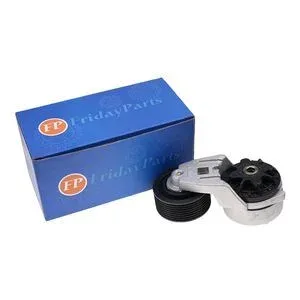
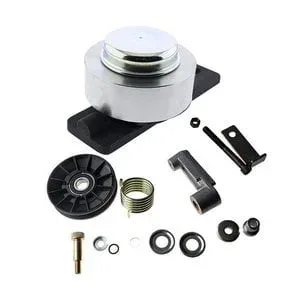
Belt tensioner assembly, idler pulleys, fan clutch |
| Accessory drive circuit |
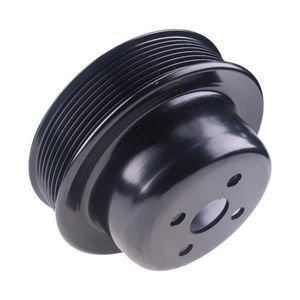
Alternator pulley alignment, water pump drive interface |
| Preventive maintenance cycle |
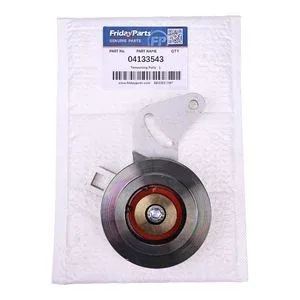
Coolant hoses, thermostat housing gasket, tensioner bearing |
Why the Same Fan Belt Fails Weeks After Installation
The root cause often sits in the tensioner, pulley alignment, or engine serial variant — not in the belt itself.
Replacing a fan belt on a CASE loader or tractor without inspecting the full cooling drive system leads to repeat failures within a few hundred operating hours. I have seen machines back on the teardown bench because the belt was swapped but the worn tensioner spring was ignored, or because an engine serial variant required a different belt length. The new belt absorbs the misalignment stress until it snaps [NEED_CITE: engine cooling system belt failure root cause analysis for off-highway equipment]. A matched-set approach to the engine cooling drive system prevents this cycle.

The Cooling Drive System as a Connected Assembly
A fan belt does not operate in isolation. It is one element in the engine cooling drive system, transferring crankshaft rotation to the fan and often the water pump. When you order this replacement fan belt, the adjacent components — tensioner, idler pulleys, fan clutch — must be inspected for bearing play, surface scoring, and spring fatigue. A worn pulley surface accelerates belt wear from the inside, invisible until the belt separates.
Engine Serial Variants and Belt Specification Differences
Within the same CASE loader model family, different engine production runs can use belts of slightly different effective length or rib profile. An engine serial number confirms which variant sits in your machine. Ordering by machine model alone risks receiving a belt that fits the pulleys but cannot achieve correct tension. We verify the engine serial against our cross-reference database before confirming the fan belt specification, so the part you receive matches the exact cooling system configuration [NEED_CITE: CASE engine serial variant belt specification differences].
Material and Construction Behind Sustained Tension
The synthetic rubber compound maintains flexibility across the operating temperature range, resisting the hardening and cracking that occurs when cheaper compounds face sustained thermal load. Polyester cord reinforcement runs through the belt body to resist elongation under continuous mechanical stress — a belt that stretches loses tension and begins to slip. The ±0.3 mm dimensional tolerance ensures the belt seats correctly in the pulley grooves without manual adjustment. Surface texture is engineered for friction against both cast-iron and aluminum pulley materials, addressing slippage that develops in dusty quarry and damp port environments.
The Cost of Missing the Root Cause
When a fan belt replacement does not address the underlying cooling drive fault, the machine returns to the workshop within weeks. The downtime accumulates — each repeat failure costs more in lost production hours than the initial repair. A tensioner bearing that was borderline at first replacement will seize before the next scheduled service. A pulley with surface pitting will shred the replacement belt from the contact side. These secondary failures are entirely preventable when the full cooling drive system is assessed as one unit during the initial overhaul [NEED_CITE: repeat engine cooling failure cost in heavy equipment fleet operations].
Why Source This Fan Belt Through Our Engine System Desk
We produce selected belt lines in our own facility and source the remainder from ISO-certified manufacturing partners, with both paths carrying identical QC standards and warranty terms. Our eight-category catalogue means the tensioner, pulleys, seals, and gaskets for the same cooling system job ship under one account. Orders start from one piece for emergency replacements. Our technical team confirms compatibility using engine serial number, machine model, or a photograph of the existing belt when the printed number is illegible. Cross-reference verification covers superseded numbers and alternate references to prevent specification mismatches.
Documentation & Verification
- Commercial invoice listing J911559 and all matched cooling drive components on one document
- Cross-reference sheet marking J911559-A, 90500580, and alternates as reference only
- Dimensional verification record confirming belt length and width within ±0.3 mm tolerance
- Warranty certificate covering manufacturing defects for the stated coverage period
- Packing photographs showing belt condition and labeling before crate closure
Installation & Rebuild Sequence
- Inspect tensioner spring tension and idler pulley bearing play before removing the old belt
- Clean all pulley contact surfaces to remove rubber residue and oil contamination
- Route the new fan belt following the OEM routing diagram for your specific engine variant
- Verify belt deflection at the longest span between pulleys matches service manual specification
- Run the engine at idle for initial seating, then re-check tension after the first operating cycle
Request a Matched Cooling System Quote
Provide your engine model, engine serial number, and any previous rebuild history so we can confirm the correct fan belt variant and identify which adjacent components should be replaced together. If the nameplate is worn, send a photograph of the existing belt and pulley arrangement. Our technical team will return a verified fitment confirmation and a consolidated quote for the complete cooling drive job.
Frequently Asked Questions
Q: What other cooling system parts should I replace together with the fan belt?
A: We recommend inspecting the belt tensioner assembly, all idler pulleys, and the fan clutch during every belt replacement. If any pulley shows bearing play or surface scoring, replace it concurrently. Coolant hoses and the thermostat gasket are also commonly addressed in the same service window to consolidate downtime and avoid a second teardown within weeks.
Q: How do I confirm the correct belt specification when my engine has a variant serial number?
A: Provide the full engine serial number from the engine nameplate or your service records. We cross-reference this against our database to identify which belt length and profile variant your specific build requires. If the nameplate is missing, a photograph of the old belt with a ruler alongside it allows us to narrow the correct specification.
Q: What causes premature fan belt failure beyond normal wear?
A: Misaligned pulleys, a weak tensioner spring, oil contamination from a leaking seal, and a worn fan clutch bearing all accelerate belt failure. Replacing the belt without addressing these root causes results in repeat failures. Our technical team can guide you through a systematic cooling drive inspection to identify the actual fault before you order replacement parts.
Q: How do I identify my engine model when the nameplate is worn or painted over?
A: Send us a clear photograph of the engine block casting numbers, the existing belt part number if legible, and the machine model plate. We use these identifiers together to trace the correct engine variant. In many cases, the casting numbers on the block or cylinder head provide enough information for a definitive match.