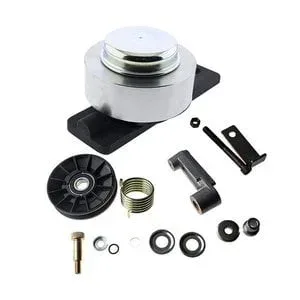
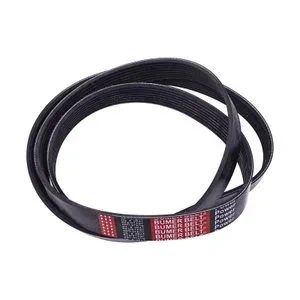
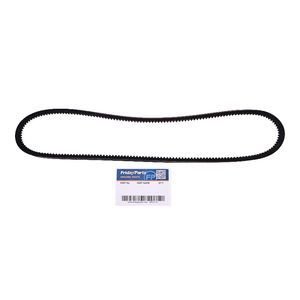
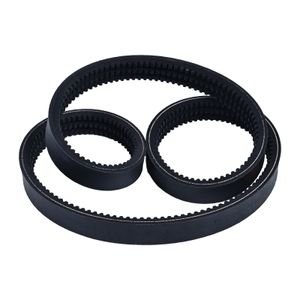
Matched Set Shipped — Spring tensioner and fan pulley verified together against engine serial variant before dispatch.
Technical Specifications
| Parameter |
Value |
| Part Number |
6735884 6662997 |
| Product Type |
Belt Tensioner, Fan Pulley |
| Cross-Reference |
6735884 (reference only), 6662997 (reference only) |
| Machine Fitment |
Bobcat 653, 751, 753, 763, 773, 7753, S130, S150, S160, S175, S185, S205, T140, T180, T190 |
| Condition |
New Aftermarket |
| Warranty |
3-12 months against manufacturing defects |
| Standard |
ISO 9001 |
Application Suitability
| Engine System |
Related Components |
| Front-end accessory drive |
Serpentine belt, fan blade, water pump |
| Cooling system overhaul |
Thermostat, radiator hoses, coolant |
| Scheduled preventive maintenance |
Idler pulleys, belt guard hardware |
Why the Front Drive Kit Cannot Be Split Across Orders
The tensioner and pulley must be evaluated as one assembly, not as separate line items.
When only the tensioner is replaced on a Bobcat S150 or T190, residual bearing play in the old fan pulley introduces lateral runout that destroys the new belt within weeks. I have seen overhaul jobs in mining camps where the pistons and liners arrived in mismatched grades because they were sourced separately; the same logic applies to the front-end drive. A mismatched tensioner spring rate against a worn pulley bearing creates oscillating load, accelerating wear across the entire accessory drive [NEED_CITE: mechanical drive system wear progression under oscillating load]. Sourcing the Drive Belt Tensioner & Fan Pulley Kit engine rebuild parts as a single matched set eliminates the variable of component-to-component tolerance mismatch.

The Accessory Drive as a System
A worn fan pulley bearing shifts the belt tracking plane, forcing the tensioner to work outside its designed arc. The Drive Belt Tensioner & Fan Pulley Kit engine rebuild parts addresses both wear points simultaneously, restoring the correct belt path geometry for the cooling and charging circuits on compact loaders.
Sequence Verification Across Engine Variants
Different engine serial ranges within the Bobcat S130 to S205 family may carry alternate mounting bracket configurations or pulley diameters. Confirming the engine serial number ensures the supplied tensioner arm pivot and pulley hub match the block mounting pattern. This verification step prevents the situation where the kit arrives on site but the bolt circle does not align. [NEED_CITE: engine serial variant identification for aftermarket parts supply]
Reading the Specifications That Matter
The tensioner spring mechanism is calibrated to maintain target belt tension across the operating RPM range of these compact loader engines. The sealed bearing in the cooling fan pulley resists dust ingress typical of quarry and construction site conditions. Correct pulley diameter and groove profile must match the original belt specification to prevent slip under high-load cooling demand, such as extended idling in high ambient temperatures.
The Cost of a Partial Front-End Job
Replacing the tensioner alone leaves the old pulley bearing as the weakest link, typically causing a repeat failure before the next scheduled service interval. This means a second teardown, a second belt, and additional machine downtime that could have been avoided. Procuring the complete kit from one source ensures both components share the same quality control record and warranty period. [NEED_CITE: repeated teardown cost impact on fleet maintenance budgets]
Why This Supply Chain Works for Rebuild Shops
Selected part lines are produced in-house while the remainder is sourced from qualified ISO-certified partners, with both carrying identical QC and warranty terms. Eight product categories mean the tensioner kit ships alongside gaskets, seals, and overhaul components under one account. Minimum order is one piece, so a single emergency kit is fulfilled without delay. Part identification works from a part number, machine model, or a photograph of the nameplate. Cross-reference verification covers superseded and alternate numbers to confirm fitment before commitment. A technical team is available to confirm compatibility and grade selection based on engine serial data.
Documentation & Verification
- Commercial invoice and packing list itemizing each sub-component of the kit
- Part compatibility sheet with cross-reference numbers marked reference only
- Dimensional inspection record covering pulley bore and tensioner arm pivot
- Warranty terms sheet included inside the dispatch carton
- Packing photographs showing kit contents before crate closure
- HS code and customs documentation prepared for international freight
Installation & Rebuild Sequence
- Inspect the mounting bracket face for warping or corrosion before fitting the new tensioner assembly.
- Clean the pulley mounting hub on the front cover to ensure flush seating and true rotation.
- Apply specified torque to the tensioner pivot bolt and pulley retaining fastener.
- Route the new belt following the correct diagram and verify tensioner arm position falls within the indicator range.
- Run the engine at idle for a break-in period, then re-check belt tracking and tensioner stability.
Inquiries for System-Level Supply
Provide the engine model and serial number along with any previous rebuild history so the correct variant of the Drive Belt Tensioner & Fan Pulley Kit engine rebuild parts can be confirmed. Mentioning adjacent components on your overhaul list allows consolidated quotation and single-consignment dispatch.
Frequently Asked Questions
Q: Must the belt and pulley be replaced at the same time as the tensioner?
A: Yes, replacing all three as a set restores correct belt geometry and tension. A worn pulley bearing introduces runout that damages a new belt and overloads a new tensioner, leading to early repeat failure. The matched kit ensures dimensional compatibility across all contact points.
Q: Do all Bobcat S130 through S205 models share the same front drive components?
A: No, engine serial ranges within this model family may carry different mounting patterns or pulley diameters. Providing the full engine serial number allows verification of the correct variant before shipment, preventing on-site fitment issues.
Q: How do I determine if overheating is caused by the tensioner or the pulley?
A: Check for lateral play in the fan pulley bearing and observe belt tracking under load. A wandering belt or squeal under cooling demand indicates a worn pulley or weak tensioner spring. Both should be replaced together to eliminate the fault root cause.
Q: What other front-end hardware should be included in the overhaul order?
A: Belt guard fasteners, idler pulleys if present, and any bracket shims should be reviewed. Including these on the same order prevents split shipments and ensures all related hardware arrives together for a single uninterrupted rebuild session.
Q: Can a sample kit be supplied before placing a bulk order?
A: Sample supply is available for fitment confirmation before bulk commitment. This allows the rebuild shop to verify mounting interfaces and belt path geometry on the actual engine, reducing risk on larger fleet orders.