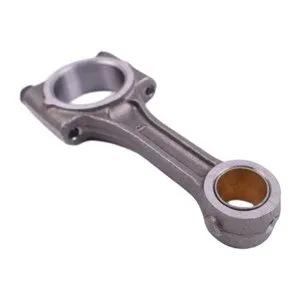
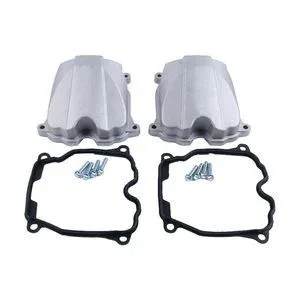
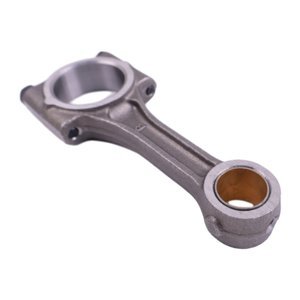
Matched Set Dispatch — Connecting rods ship as a balanced group with piston pins and bearing shells verified against the same engine serial variant.
Technical Specifications
| Parameter |
Value |
| Product Type |
Connecting Rod |
| Machine Fitment |
3D82, 3D82AE, 3TN82E, 3TNV82A, 3TNE82 |
| Brand Compatibility |
Compatible with Komatsu and Yanmar engine platforms |
| Oversize Grade |
STD |
| Material |
Forged Steel |
| Surface Treatment |
Heat-treated |
| Condition |
New Aftermarket |
| Manufacturing Standard |
ISO 9001 |
| Warranty |
3–12 months against manufacturing defects |
| Minimum Order |
1 piece |
Application Suitability
| Engine System |
Related Components |
| Block & Internal Rotating Assembly |
Con rod bearing shells (STD or undersize per crank condition) |
| Piston & Cylinder Group |
Piston pin, piston pin circlips, piston rings |
| Lubrication System |
Main bearings, thrust washers, oil pump assembly |
| Overhaul Gasket Set |
Full gasket kit including rod cap nut torque specifications |
When Rebuild Kits Arrive But the Rod Grade Is Wrong
The Connecting Rod engine rebuild stalls before the first piston goes back in.
I have seen engine shops in Shandong tear down a three-cylinder block only to find the previous rebuild reground the crankshaft to 0.25 undersize, while the new STD connecting rod sitting on the bench expects standard journals. The mismatch is not visible until you plastigauge the big-end clearance. By then, the gasket kit is already opened, the bearings are unwrapped, and the machine owner is asking why the excavator still is not running [NEED_CITE: engine rebuild teardown procedures for undersize crankshaft identification].
This STD connecting rod fits Komatsu 3D82 and 3D82AE as well as Yanmar 3TN82E, 3TNV82A, and 3TNE82 platforms, but the correct oversize grade depends entirely on what happened inside your specific engine during its last overhaul — not what the service manual assumes for a factory-fresh unit.

Where the Connecting Rod Sits in the Rebuild Sequence
The Connecting Rod engine rebuild sequence places this component at the junction of the rotating assembly and the cylinder group. Before the rod goes onto the crankshaft journal, the block must be cleaned, the main bearings seated, and the crankshaft end-play confirmed. The rod big-end bore tolerance, the bearing shell thickness, and the crankshaft journal diameter must all agree within the clearance band specified for your engine serial variant. A rod ordered without confirming the crankshaft condition is a guess.
Serial Variants and the Hidden Grade Mismatch
Yanmar 3TNV82A and 3TNE82 engines share the same displacement and cylinder count, yet internal component revisions appeared across production runs. Some serial ranges use a different piston pin diameter, which changes the small-end bushing specification on the connecting rod itself. Ordering by engine model alone ignores these variant boundaries. When a rebuild shop sources rods, pistons, and bearings from separate suppliers, each may assume a different serial configuration, and the mismatch surfaces only when the piston refuses to slide through the small end [NEED_CITE: Yanmar engine serial variant differences for internal rotating components].
Reading the Specs That Matter on the Bench
The forged steel construction provides the tensile strength to handle combustion loads across the three-cylinder firing order, while heat treatment stabilizes the big-end bore against distortion under repeated thermal cycling. The STD oversize grade means the big-end bore is dimensioned for a standard-diameter crankshaft journal — if your crankshaft was reground during a prior rebuild, you need the corresponding undersize bearing shells to maintain oil film clearance. The small-end bore must match the piston pin outer diameter for the specific piston set installed, and any deviation creates either excessive clearance or a pin that binds when the engine reaches operating temperature.
The Cost of Skipping the Root-Cause Check
When a connecting rod fails, the fracture surface tells a story: oil starvation leaves a blue-heat signature on the big-end cap, a spun bearing scores the journal, and overloading cracks the beam near the small-end transition. Installing a new rod without diagnosing why the last one broke means the same fault is waiting in the lubrication circuit, the cooling system, or the load profile. Rebuild shops that skip this step see the replacement rod fail within the first hundred hours, and the engine comes back apart on the same bench [NEED_CITE: connecting rod failure analysis for diesel engine forensic inspection].
Why Source This Rod Through a Single Engine Account
Self-produced lines and qualified sourced supply carry the same warranty terms, so whether the connecting rod comes from our facility or a certified partner, the QC documentation is identical. Eight product categories under one account means the overhaul gasket kit, piston rings, main bearings, and con rod bolts can ship in one consignment rather than arriving on different schedules. The technical team verifies oversize grade and serial variant compatibility before dispatch, and sample supply is available for fitment confirmation when you are committing to a matched set for all three cylinders. Guangzhou warehouse stock covers common items for fast turnaround on urgent rebuilds.
Documentation & Verification
- Commercial invoice listing each connecting rod with oversize grade and engine serial applicability
- Cross-reference sheet for Komatsu and Yanmar part numbers (for identification purposes only)
- Dimensional inspection record covering big-end bore, small-end bore, and center distance
- Warranty terms stating coverage period and manufacturing-defect conditions
- Packing photographs showing rod separation and protective wrapping before crate closure
- HS code and customs documentation for international engine parts shipment
Installation & Rebuild Sequence
- Confirm crankshaft journal diameter with a micrometer before selecting STD or undersize bearing shells for the connecting rod big-end
- Clean all oil passages in the rod and block to prevent debris from scoring the new bearing surfaces during first startup
- Torque rod cap nuts in the specified two-stage sequence and verify big-end side clearance with a feeler gauge
- Check piston-to-rod alignment after pin installation to prevent cylinder wall scuffing once the engine reaches operating temperature
- Follow the manufacturer break-in procedure for the first run cycle to seat bearing shells properly against the crankshaft journals
Before You Request a Quote
Provide the engine model, serial number, and any known crankshaft regrind history so the correct oversize grade and bearing combination can be confirmed. If the nameplate is missing or painted over, send a photograph of the block casting number and any remaining data stamps on the old connecting rod cap. Include the full list of components you need for the overhaul so the gasket kit, piston set, and bearings can be matched to the same serial variant and shipped together.
Frequently Asked Questions
Q: How do I confirm whether my engine needs STD or oversize connecting rods?
A: Measure the crankshaft journal diameter with a micrometer at multiple points. If the journals are at factory-standard dimension, the STD connecting rod with standard bearing shells is correct. Any regrind from a previous overhaul means you need undersize bearings matched to the actual journal size, not the oversize grade stamped on the old rod cap.
Q: Are con rod bearings and piston pins included, or sourced separately?
A: The connecting rod ships as an individual component. Bearing shells, piston pins, circlips, and rod bolts are sourced as separate line items so you can select the correct grade for your crankshaft condition. Ordering them together under one account ensures all items match the same engine serial variant.
Q: Do different serial numbers of the same engine model use different internal components?
A: Yes. Yanmar 3TNV82A and 3TNE82 engines had internal revisions across production runs that affect piston pin diameter and small-end bushing dimensions. Providing the full serial number allows verification that the connecting rod small-end bore matches the piston pin specification for your specific engine build.
Q: What caused the original rod to fail, and how do I prevent it happening again?
A: Common causes include oil starvation from a blocked passage, a spun bearing from excessive clearance, or overloading beyond the engine rated output. Inspect the fracture surface and the crankshaft journal condition to identify the root cause before installing the replacement rod, otherwise the same fault will repeat the failure.
Q: Can I get a matched set of rods for all cylinders in one order?
A: Yes. Supplying a matched set ensures consistent weight balance and uniform bearing clearance across all three cylinders. Request the set with your engine serial number so each connecting rod is verified against the same variant specification before dispatch.