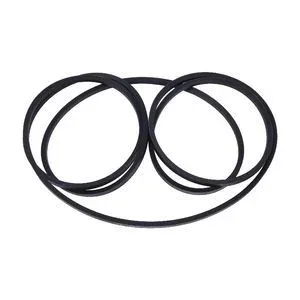
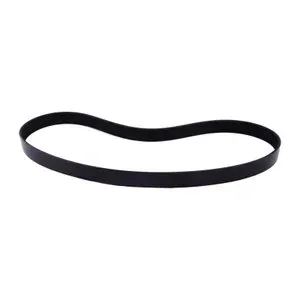
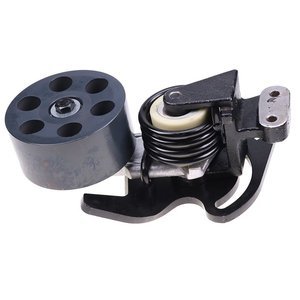
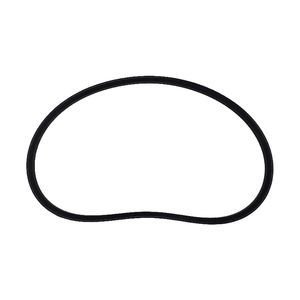
System-Matched Belt Drive Components — every 130-0843 belt ships with a verified cross-reference check against your specific mower deck configuration and engine serial variant.
Technical Specifications
| Parameter |
Value |
| Part Number |
130-0843 |
| Product Type |
Belt |
| Cross-Reference |
130-0843, 1300843, 130-0843-SL, 1300843SL, 130-0843P, 1300843P (reference only) |
| Machine Fitment |
Toro TimeCutter 74740 (SS 5425), 74741 (SS 5425), 74768 (MX 5075), 74778 (MX 5075), 74793 (SW 5425), 75754 (MX 5475), 75756, 75757 (5475 C); Exmark QTE708GEM54100, QZS708GEM54200, QZS735GKC54200 |
| Part Name |
54" Deck V-Belt |
| Condition |
New Aftermarket |
| Material |
EPDM rubber compound with high-tensile polyester cords |
| Temperature Resistance |
Up to 120°C (248°F) |
| Warranty |
3-12 months against manufacturing defects |
| Quality Standard |
ISO 9001 |
Application Suitability
| Engine System |
Related Components |
| Deck belt drive — power transfer from engine PTO to cutting deck spindles |
Deck pulleys, idler wheels, tensioner assemblies |
| Spindle drive circuit on 54-inch commercial mowing decks |
Spindle bearings, spindle housings, deck belt guards |
| Secondary drive on zero-turn mower hydraulic transmission output |
Drive sheaves, belt guides, deck engagement cables |
| Engine accessory drive on turf maintenance equipment |
Alternator brackets, cooling fan pulleys, belt covers |
Why Repeated Belt Failures Point Beyond the Belt Itself
The belt is the symptom; the system holds the fault.
I have watched crews in tropical landscaping operations replace a snapped deck belt only to have the next one fail within days. The pulley alignment was off, the tensioner spring had lost its load rating, or a spindle bearing was dragging just enough to spike heat at the belt contact surface. A replacement belt alone cannot correct any of those upstream conditions. [NEED_CITE: belt drive system failure analysis for commercial turf equipment]
When you source a 130-0843 deck V-belt for a Toro TimeCutter or Exmark zero-turn mower, the procurement decision should start with the entire drive circuit. Heat buildup from a worn spindle bearing transfers directly into the belt rubber, accelerating EPDM degradation past its rated threshold. Running a fresh belt over a scored pulley face introduces localized stress concentrations that crack the cog profile prematurely.

The Belt Drive Circuit on 54-Inch Commercial Mowing Decks
The 130-0843 belt occupies a specific position in the mower's deck drive system: it transfers rotational energy from the engine output sheave to the spindle pulleys that spin the cutting blades. On a 54-inch deck, this belt routes around multiple idlers and a tensioner before wrapping the spindle pulleys, meaning every contact point is a potential source of premature wear. Treating this component as an isolated spare rather than a system member leads to repeated downtime across a commercial mowing fleet.
Engine Serial Variants and Deck Drive Configuration Differences
The same Toro TimeCutter model designation can ship with different engine families depending on the production year, and the deck drive routing may differ between them. A 74740 SS 5425 unit with one engine variant might use a different belt length or tensioner geometry than the same model number built six months later. Before committing to a bulk order of 54" Deck V-Belt engine / overhaul / rebuild stock, verifying the engine serial number against the deck drive schematic prevents receiving belts that are dimensionally correct for the model but wrong for the specific build. [NEED_CITE: OEM deck drive configuration variations across engine serial ranges]
EPDM Compound Behavior Under Tropical Mowing Loads
The EPDM rubber compound in this belt is rated to 120°C (248°F), which matters because commercial mowing in hot climates pushes belt surface temperatures higher than residential use ever does. The high-tensile polyester cords embedded in the belt body resist stretching under continuous load, maintaining correct tension across the spindle pulleys without requiring frequent re-tensioning. The precision-molded cog profile on the belt's inner surface reduces bending fatigue as it wraps around smaller-diameter pulleys, which is where most cracking originates on deck drive belts. When a spindle bearing develops play, it creates lateral deflection that the belt was not designed to absorb — and no rubber compound compensates for that mechanical fault.
The Hidden Cost of Ignoring Adjacent Drive Components
Replacing a failed belt without inspecting the tensioner, idlers, and spindle bearings means the root cause remains active in the system. A tensioner with a fatigued spring applies inconsistent pressure, allowing the new belt to slip under load and generate excess friction heat. A scored idler wheel abrades the belt backing with every rotation, cutting service life short regardless of rubber quality. In commercial landscaping operations running multiple units through daily mowing schedules, this pattern of repeat failure compounds into significant unplanned downtime across the fleet. [NEED_CITE: cascading failure patterns in belt drive systems under continuous commercial duty]
Sourcing Engine System Components From One Account
Our own production lines and qualified sourced supply operate under a single warranty framework, so a 130-0843 belt ordered alongside matching pulleys and tensioner assemblies carries consistent quality terms across the entire drive kit. The eight product categories in our catalog mean deck drive belts, spindle bearings, and engagement cables ship in one consignment rather than arriving from separate suppliers on mismatched timelines. Guangzhou warehouse stock on common deck drive items supports fast dispatch for urgent fleet requirements. Part identification works from the OEM reference number, the machine model, or a photograph of the worn belt and its routing path. Cross-reference verification covers superseded and alternate numbers, catching cases where a Toro part number has been updated across model years. Technical support is available to confirm compatibility against your specific engine serial and deck configuration before bulk commitment.
Documentation & Verification
- Commercial invoice listing each belt drive component by part number and quantity
- Cross-reference sheet mapping 130-0843 variants (reference only) to your specific Toro or Exmark deck configuration
- Dimensional inspection record covering belt length, width, and cog profile tolerance
- Warranty terms document specifying coverage period for manufacturing defects
- Packing photographs showing belt coils secured against deformation during transit
- HS code classification support for customs clearance on international belt shipments
Installation & Rebuild Sequence
- Route the 130-0843 belt following the deck drive diagram specific to your engine serial variant, not generic model guidance
- Inspect all pulley contact surfaces for scoring or glazing before installing the new belt to prevent immediate surface abrasion
- Verify tensioner spring load and idler bearing free-spin before final belt tensioning to eliminate upstream failure sources
- Run the deck at idle for initial seating, then check belt tracking alignment across each spindle pulley under no-load conditions
Requesting a Complete Drive System Quote
Provide your mower model designation along with the engine serial number and any previous deck drive service history. If the nameplate is unreadable, a photograph of the existing belt routing and pulley arrangement allows our technical team to confirm the correct deck drive configuration. For fleet orders, sharing the full unit list with model and serial data enables consolidated drive component matching across your entire operation.
Frequently Asked Questions
Q: What other belt drive components should I replace along with this V-belt?
A: Inspect the tensioner assembly, all idler wheels, and spindle bearings before installing a new belt. Worn tensioner springs apply inconsistent pressure, causing slippage and heat buildup. Scored idlers abrade the belt backing on every rotation. Spindle bearing play introduces lateral deflection the belt cannot absorb. Replacing these together prevents the new belt from inheriting the same failure conditions.
Q: Does the same Toro model use different belts depending on engine serial number?
A: Yes. The same TimeCutter model number may ship with different engine families across production runs, and the deck drive routing can vary between them. Providing the engine serial number allows verification of the correct belt length and tensioner geometry for your specific build, rather than relying on the mower model alone.
Q: What causes repeated belt failures even after replacement?
A: The root cause usually sits outside the belt itself. Misaligned pulleys, fatigued tensioner springs, dragging spindle bearings, or scored idler surfaces all transfer abnormal loads into the new belt. Each condition generates excess heat or localized stress that degrades the EPDM compound prematurely. A systematic drive circuit inspection identifies which adjacent component is the actual fault source.
Q: How do I confirm this belt fits my specific deck drive configuration?
A: Share your mower model, engine serial number, and ideally a photograph of the existing belt routing path. Our technical team cross-references these against deck drive schematics to confirm pulley count, idler positions, and belt length. This prevents ordering based on model number alone when the engine variant requires a different configuration.
Q: Can I get a complete belt drive system kit including pulleys and tensioners?
A: Yes. We supply matched belt drive components — belts, pulleys, idlers, tensioner assemblies, and spindle bearings — under one account with unified warranty terms. Consolidating the full drive kit into a single consignment eliminates split shipments and ensures all components arrive ready for the same service window.