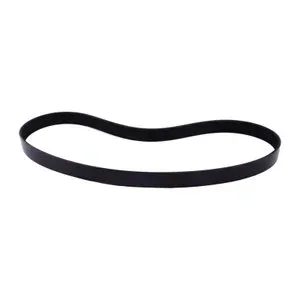
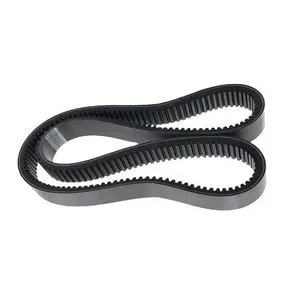
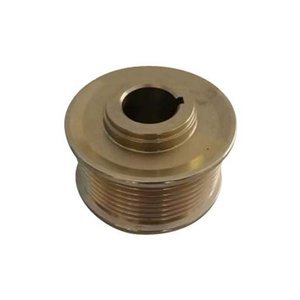
Matched Set Dispatch — This ribbed V-belt ships alongside verified tensioners and pulleys calibrated for the same Deutz engine serial variant, preventing mismatched tolerances across the front-end drive.
Technical Specifications
| Parameter |
Value |
| Part Number |
01184002 04131488 |
| Product Type |
Belt |
| Cross-Reference |
01184002, 0118-4002, 1184002, 04131488, 0413-1488, 4131488 (reference only) |
| Machine Fitment |
D 2.9 L4, TD 2.9 L4, TCD 2.9 L4, TCD 2.2 L3 |
| Brand Compatibility |
DEUTZ |
| Part Name |
Ribbed V-Belt |
| Condition |
New Aftermarket |
| Warranty |
3-12 months against manufacturing defects |
| Minimum Order Quantity |
1 piece |
| Manufacturing Standard |
ISO-certified |
Application Suitability
| Engine System |
Related Components |
| Front-End Accessory Drive |
Automatic tensioner assembly, idler pulley, fan hub bearing |
| Cooling Circuit Drive |
Water pump pulley, coolant hose routing adjacent to belt path |
| Charging System Drive |
Alternator mounting bracket, alternator pulley alignment shim |
| Engine Overhaul Package |
Front crankshaft seal, timing cover gasket set, vibration damper |
Why a New Belt Fails When the Root Cause Remains in the Drive System
A snapped belt mid-job is rarely the first failure in the sequence. Replacing the ribbed V-belt engine replacement without inspecting the tensioner spring force, idler pulley bearing play, and pulley groove wear means the new component inherits the exact misalignment or overload condition that destroyed the previous one. [NEED_CITE: belt drive system failure root cause analysis for diesel engines] In mining and construction sites where Deutz D 2.9 L4 and TCD 2.9 L4 engines run continuous high-load cycles, a belt that fails prematurely often points to a tensioner that has lost its damping capacity or a pulley with worn ribs that no longer maintains full contact area. The cost is not just the belt itself but the secondary downtime while the correct diagnosis is finally made.

The Belt Drive System as a Matched Assembly
This ribbed V-belt engine replacement sits at the center of a multi-component front-end drive system that transfers crankshaft power to the water pump, alternator, and cooling fan. Each driven component imposes its own load profile on the belt ribs, and any single worn pulley or degraded tensioner shifts the load distribution unevenly across the rib faces. For TCD 2.2 L3 and TD 2.9 L4 variants, the accessory drive geometry differs in pulley spacing and tensioner arm length, which means the belt must be specified against the exact engine serial to ensure correct rib engagement depth and wrap angle around each pulley.
Engine Serial Variants and the Tolerance Stack-Up
Deutz engine families in this range have undergone running changes in pulley diameter and tensioner pivot geometry across production batches. A belt that physically fits the groove may still run with insufficient contact pressure if the tensioner has been previously replaced with an incorrect variant, or if the alternator bracket has been shimmed during a prior repair. [NEED_CITE: Deutz TCD engine serial variant differences in accessory drive components] Verifying the engine serial against the cross-reference numbers 01184002 and 04131488 (for identification purposes) confirms not just that the belt length and rib count match, but that the entire tolerance stack from crankshaft pulley to furthest driven accessory remains within the design envelope for that specific build.
Rib Profile, Cord Construction, and Heat Load Management
The ribbed profile of this belt is formed to match the original pulley groove geometry, ensuring full flank contact rather than riding on the rib tips where slip and heat generation concentrate. The tensile cord embedded in the belt body carries the transmitted torque load, and its construction must withstand the cyclic loading pattern of a four-cylinder diesel where crankshaft torsional vibration pulses through the drive at every firing event. The compound formulation is selected for the operating temperature range of Deutz industrial engines, where under-hood ambient temperatures in enclosed equipment compartments can exceed typical automotive levels. [NEED_CITE: elastomer compound temperature rating standards for industrial diesel belt drives] Correct rib-to-groove contact area directly determines whether the belt transfers power without micro-slip that accelerates rib wear and generates excess heat at the pulley interface.
The Hidden Cost of Replacing the Belt Alone
When only the belt is changed and the tensioner and pulleys are left in place, the new ribbed V-belt engine replacement begins its service life already compromised by whatever wear pattern the old components have established. A tensioner with a fatigued spring applies inconsistent pressure, allowing the belt to flutter under load changes and develop localized rib cracking. [NEED_CITE: belt tensioner fatigue failure modes in heavy duty diesel applications] An idler pulley with bearing play introduces lateral runout that wears the belt edges unevenly, leading to premature rib separation. The machine returns to service but the next failure arrives much sooner than expected, and the second teardown reveals what the first one should have addressed.
Sourcing the Complete Drive Refresh in One Account
XUNPO manufactures selected part lines in its own facility and sources the remainder from qualified ISO-certified partners, with both streams carrying identical quality control and warranty terms. For this belt drive system, that means the belt, matched tensioner, and associated pulleys all arrive under one account with one warranty framework. The Guangzhou warehouse maintains stock on high-consumption engine consumables for fast dispatch, and the technical team verifies cross-reference numbers against your specific engine serial to confirm variant correctness before anything ships. Sample supply is available for fitment confirmation before bulk commitment, and part identification can proceed from a part number, machine model, or even a photograph of a worn nameplate. Every consignment is documented with a compatibility and cross-reference sheet, quality inspection record, and packing photographs for your receiving team.
Documentation & Verification
- Commercial invoice listing each belt drive component with its verified cross-reference number for customs clearance.
- Part compatibility sheet mapping 01184002 and 04131488 to your specific Deutz engine serial variant.
- Quality inspection record covering rib profile gauge check and tensile cord integrity verification.
- Warranty terms document specifying the coverage period against manufacturing defects for all matched components.
- Packing photographs showing belt and companion parts secured against transit damage before crate closure.
- HS code and customs documentation support for international engine parts shipment.
Installation & Rebuild Sequence
- Inspect crankshaft pulley groove for rib wear before installing the new belt to confirm the mating surface is within specification.
- Verify tensioner arm pivot and spring force with the belt removed, replacing the assembly if free play exceeds the service limit.
- Route the belt following the exact path diagram for your engine variant to avoid mis-routing around the idler.
- Apply the specified tension procedure and rotate the engine two full revolutions by hand to seat the ribs uniformly in all pulley grooves.
- Run the engine to operating temperature and re-check belt tracking and tensioner position under thermal expansion conditions.
Confirming the Right Belt for Your Engine Build
To ensure this ribbed V-belt engine replacement matches your application, provide the Deutz engine model designation, the full engine serial number from the nameplate, and any prior rebuild history that may have introduced non-standard components into the drive system. If the nameplate is worn or painted over, a photograph of the old belt part number and the pulley arrangement allows the technical team to verify the correct variant and cross-reference match before shipment.
Frequently Asked Questions
Q: What other belt drive components should be replaced at the same time as this belt?
A: The tensioner assembly and idler pulley should always be evaluated together with the belt. A worn tensioner spring or bearing with lateral play will degrade the new belt from the first hour of operation. For a complete front-end drive refresh, the crankshaft pulley and alternator pulley should also be inspected for rib groove wear and replaced as a matched set if dimensional limits are exceeded.
Q: How do I confirm which Deutz engine variant this belt fits?
A: Provide the full engine serial number from the Deutz nameplate, not just the model family. The D 2.9 L4, TD 2.9 L4, TCD 2.9 L4, and TCD 2.2 L3 share similar architecture but differ in pulley spacing and tensioner configuration across production batches. Cross-reference numbers 01184002 and 04131488 are verified against your specific serial to confirm the correct variant.
Q: Can the matched tensioner and pulley be supplied together in one shipment?
A: Yes, the complete belt drive refresh package ships as one consignment under one account and one warranty. Consolidated dispatch means all components arrive simultaneously, so the machine does not sit idle waiting for a second delivery. The compatibility sheet included with the shipment confirms every part number against your engine serial.
Q: What system-level faults cause premature belt failure beyond normal wear?
A: Misalignment from a bent alternator bracket, a seized idler pulley bearing, or a tensioner that has lost damping capacity all impose abnormal loads on the belt ribs. Crankshaft torsional vibration from a failing vibration damper also transfers destructive pulses into the drive. Identifying and correcting these root causes during the belt change prevents rapid recurrence.
Q: How do I verify the correct cross-reference number for my engine serial?
A: Send the engine serial number and, if available, a photograph of the old belt or its packaging. The technical team cross-checks the reference numbers 01184002 and 04131488 against the build specification for your exact production batch, accounting for any superseded numbers or running changes that may affect fitment.