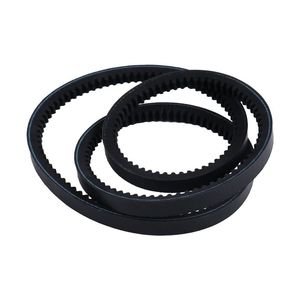
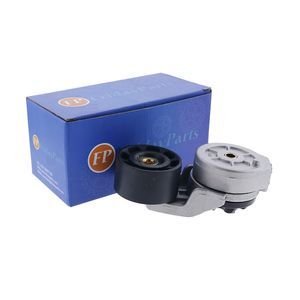
Matched Set Dispatch — This V-belt 9001A-96003 ships with tensioner and idler pulley verification to prevent accessory drive rework on Toyota 4Y engine platforms.
Technical Specifications
| Parameter |
Value |
| Part Number |
9001A-96003 |
| Cross-Reference |
9001A-96003 (reference only), 9001A96003 (reference only) |
| Product Type |
Belt |
| Engine Compatibility |
Toyota 4Y engine |
| Profile Type |
V-Belt, trapezoidal cross-section |
| Material |
Chloroprene rubber compound with polyester-cord reinforcement |
| Profile Tolerance |
±0.15 mm |
| Standard Validation |
ISO 4184 |
| Condition |
New Aftermarket |
| Warranty |
3–12 months against manufacturing defects |
| MOQ |
1 piece |
Application Suitability
| Engine System |
Related Components |
| Cooling fan drive |
Fan clutch, water pump bearing, thermostat housing gasket |
| Alternator drive |
Alternator bracket bolts, alternator bearing, voltage regulator |
| Accessory load path |
Tensioner assembly, idler pulley, crankshaft pulley key |
| Scheduled maintenance interval |
Coolant, oil filter, air filter, spark plugs |
Why the Same 4Y Belt Fails Again Within Weeks
Belt failure on the 4Y is rarely just belt wear — it traces back to a misaligned pulley, a seized tensioner, or a worn fan clutch bearing that the previous rebuild missed.
In our Shandong workshop years, we pulled countless snapped belts off Toyota 4Y forklift engines. The pattern was consistent: a fresh belt installed without checking the tensioner travel or the fan clutch wobble would shred its edges within a few hundred operating hours. The V-Belt 9001A-96003 engine replacement cycle becomes a recurring cost when the root cause sits in the adjacent hardware. A forklift running double shifts in a distribution center cannot afford repeated overheating events triggered by an accessory drive that was only half-addressed [NEED_CITE: accessory drive system root cause analysis methodology for industrial engines].
The Belt's Position Inside the 4Y Accessory Drive System
This V-belt transmits crankshaft torque to the cooling fan and alternator simultaneously. On the 4Y platform, a single belt handles both loads, meaning a tension error affects thermal management and electrical output at once. Proper V-Belt 9001A-96003 engine replacement requires treating the entire accessory drive as one system rather than swapping only the worn element.
Serial Variants and Matched Component Selection
The 4Y engine was produced across multiple serial ranges with variations in pulley groove depth and tensioner geometry. A belt that seats correctly on an early-production 4Y may ride high in the groove of a later variant, causing edge wear and premature failure. Before confirming an order, we cross-check the engine serial number against the pulley profile specification to ensure the trapezoidal cross-section matches the groove angle. This step prevents the costly cycle of install, fail, disassemble, and reorder that rebuild shops encounter when variant differences are overlooked [NEED_CITE: Toyota 4Y engine serial variant identification guide for aftermarket parts].

Profile Tolerance and Material Behavior Under Forklift Duty
The ±0.15 mm profile tolerance ensures the belt wedges into the pulley groove uniformly across its full contact arc. A belt that is even slightly oversized will ride on the groove edges, generating localized heat and accelerating crack propagation. The chloroprene compound resists the elevated under-hood temperatures typical of forklift engines running 12–16 hour shifts, while the polyester-cord reinforcement limits stretch under the cyclic loading imposed by the alternator and fan. ISO 4184 validation confirms the belt's dimensional stability across the temperature range encountered in both indoor warehouse and outdoor port operations.
The Hidden Cost of Ignoring Adjacent Components
A belt replaced without inspecting the tensioner and idler pulley often returns with a warranty claim that is not actually a belt defect.
We have seen rebuild shops order a second belt within weeks, blaming material quality, when the real fault was a tensioner spring that had lost its rate or an idler bearing with axial play. The labor cost of a second teardown on a 4Y engine in a working forklift far exceeds the price of replacing the tensioner and idler as a matched set during the initial service. This is the difference between a one-visit repair and a recurring complaint [NEED_CITE: matched component replacement intervals for industrial engine accessory drives].
Why Rebuild Shops Source This Belt Through Our Engine System Desk
Our technical team confirms 4Y serial variant compatibility before dispatch, so the belt you receive matches the pulley geometry on your specific engine build. We carry engine parts across the full accessory drive system — belt, tensioner, idler, fan clutch, and pulley hardware — under one account with one warranty. Minimum order is one piece, so a single emergency replacement ships without waiting for a batch quantity. Cross-reference verification covers superseded numbers, catching cases where an older part listing no longer maps to the current groove specification. We provide a quality inspection record covering tensile and heat-cycle validation with every shipment [NEED_CITE: aftermarket engine belt quality inspection standards for chloroprene compounds].
Documentation & Verification
- Commercial invoice lists engine serial variant and confirmed pulley groove match
- Cross-reference sheet for 9001A-96003 and superseded numbers, marked reference only
- Inspection record covering belt tensile test, flex endurance, and heat-cycle validation
- Warranty terms specifying coverage period and manufacturing defect conditions
- Packing photographs showing belt condition and coil packaging before dispatch
- HS code and customs documentation for international engine parts shipments
Installation & Rebuild Sequence
- Inspect crankshaft pulley key and fan clutch bearing for axial play before belt installation
- Verify tensioner travel and spring rate against 4Y specification before seating the V-belt
- Check alternator bracket bolt torque and alignment to prevent lateral belt drift
- Run engine at idle for initial seating period, then re-check tension after thermal expansion
- Record installation date and hour meter reading for scheduled replacement tracking
Request a Compatibility Confirmation for Your 4Y Build
Provide your 4Y engine serial number, any previous rebuild history, and the pulley groove condition observed during teardown. We will confirm whether this V-Belt 9001A-96003 engine replacement matches your specific variant and advise on matched tensioner and idler components for a complete accessory drive refresh.
Frequently Asked Questions
Q: What other components should I inspect when replacing the V-belt on a 4Y engine?
A: Check the tensioner assembly for spring rate and travel, the idler pulley for bearing play, the fan clutch for wobble, and the crankshaft pulley key for shear damage. Any fault in these adjacent components will cause premature belt failure regardless of belt quality. We recommend replacing the tensioner and idler as a matched set during belt service.
Q: Does this belt fit all 4Y engine variants or only specific serial ranges?
A: The 4Y platform has serial variant differences in pulley groove depth and tensioner geometry across production runs. This V-belt is dimensionally validated for the standard 4Y groove profile, but we verify fitment against your specific engine serial number before dispatch to ensure the trapezoidal cross-section seats correctly in your pulley set.
Q: How do I confirm whether the pulley groove profile matches this belt's cross-section?
A: Measure the groove angle and depth on your crankshaft and accessory pulleys and compare against the belt's trapezoidal profile dimensions. A mismatch causes the belt to ride high or bottom out, both leading to accelerated wear. Send us a photograph of the pulley groove alongside a caliper reading, and we will verify compatibility before shipping.
Q: Is the belt failure a symptom of a deeper system issue like misalignment or bearing wear?
A: Frequently, yes. Recurring belt failure on the 4Y often traces to a worn fan clutch bearing introducing wobble, a tensioner that no longer maintains correct pressure, or pulley misalignment from a bent alternator bracket. We advise diagnosing the accessory drive system as a whole rather than treating each belt replacement as an isolated parts swap.
Q: Can I order a matched set with the tensioner and idler pulley for a complete accessory drive refresh?
A: Yes. We supply the belt, tensioner assembly, and idler pulley as a consolidated kit under one account and one warranty. Ordering the matched set eliminates the risk of component mismatch and ensures the entire accessory drive is addressed in a single teardown, which is the standard practice we recommend for rebuild shops servicing 4Y-powered forklifts.