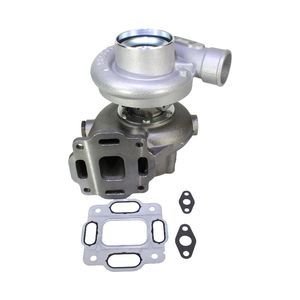
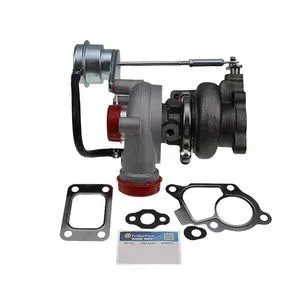
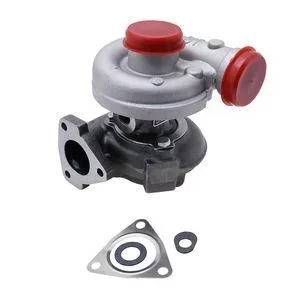
Matched Turbo and Seal Kit — Oil feed and return line gaskets verified against 6BTA 5.9 build variant before dispatch.
Technical Specifications
| Parameter |
Value |
| Part Number |
3536620 |
| Product Type |
Turbocharger |
| Cross-Reference |
3536621, 3536621H, 3802829, 380282900, 3802829NX, 3802829RX, 4089816 (reference only) |
| Machine Fitment |
6BTAM, 6BTA 5.9, 6B5.9 |
| Turbo Model |
HX40M, HX40-L8294T/J16S3, HX40 |
| Turbine Housing Material |
Ni-Resist D5S ductile iron |
| Compressor Wheel Material |
2618 aluminum alloy |
| Compressor Wheel Tolerance |
±0.02 mm |
| Journal Bearing Type |
Hardened steel races with PTFE-impregnated bronze bushings |
| Sealing Surface Finish |
Ra ≤0.8 μm |
| Max Exhaust Gas Temperature |
750°C |
| Max Operating Speed |
180,000 rpm |
| Boost Pressure Test |
2.4 bar |
| Oil Flow Test |
3.5 L/min |
| Dynamic Balancing Grade |
G0.4 |
| Torque Spec (Turbine Housing Bolts) |
22 N·m |
| Condition |
New Aftermarket |
| Warranty |
3–12 months against manufacturing defects |
| Standards |
ISO 9001, ISO 8573-1 Class 2 |
Application Suitability
| Engine System |
Related Components |
| Intake and boost system |
Air intake hoses, intercooler seals, compressor outlet gaskets |
| Lubrication circuit |
Oil feed line restrictor, return line hoses, oil drain flange gasket |
| Exhaust manifold interface |
Manifold-to-turbine housing gasket, stud nuts, heat shields |
| Crankcase ventilation |
Breather hoses, oil separator elements that affect turbo drain pressure |
| Engine overhaul assembly |
Full gasket kit, piston ring sets, main and rod bearings matched to engine serial |
Why a New Turbo Fails Within Weeks on Cummins 6BTA 5.9 Rebuilds
Replacing the turbo without tracing the root cause guarantees repeat failure.
I have pulled HX40 turbochargers off 6BTA 5.9 engines in Nigerian quarry sites where the replacement unit was already leaking oil through the turbine seal after a few hundred hours. The previous turbo did not fail from age. It failed because carbon deposits blocked the oil return line, raising drain-back pressure until the new journal bearings flooded and coked. The mechanic swapped the turbo, never cleared the return hose, and the same fault destroyed the second unit. [NEED_CITE: turbocharger oil coking failure mechanisms in medium-duty diesel engines]
Another common pattern on earthmoving and marine 6BTA 5.9 applications is foreign object damage to the compressor wheel from deteriorated intake boots. The debris scores the compressor blades, unbalances the rotating assembly, and wipes the bearing within one service interval. Installing a fresh HX40 Turbocharger for Cummins 6BTA 5.9 engine rebuild work without replacing cracked intake ducting simply repeats the cycle.
Root-Cause Diagnosis Before the HX40 Turbocharger Goes On
An HX40 Turbocharger for Cummins 6BTA 5.9 engine rebuild projects belongs to a pressurized intake and lubrication loop, not an isolated bolt-on component. Every failure signature points back to a system node. Oil coking in the bearing housing signals restricted drain flow or degraded oil quality. Compressor blade erosion traces to intake filtration gaps. Turbine housing thermal cracking follows sustained exhaust gas temperature spikes from over-fueling or restricted exhaust paths.
Before the replacement turbo is unboxed, the oil feed restrictor must be inspected for sludge, the return line cleared and flow-tested, and the air intake path traced from the filter housing to the compressor inlet for cracks or loose clamps. Skipping this sequence on a 6BTAM marine variant is especially risky because salt-air corrosion accelerates intake boot degradation and the bilge environment concentrates oil vapor around the drain fitting.
Build Variant Differences Across 6BTAM and 6BTA 5.9 Engines
The Cummins 6BTA 5.9 industrial engine and the 6BTAM marine variant share the same displacement block, but the turbo calibration and manifold interface diverge at the production level. Marine builds often carry water-cooled bearing housings and different turbine housing flange orientations to accommodate wet exhaust risers. Industrial builds for excavators and loaders use ambient-cooled housings with manifold stud patterns that differ by production era. [NEED_CITE: Cummins 6B series engine serial variant identification for turbo selection]
Ordering an HX40 Turbocharger for Cummins 6BTA 5.9 engine rebuild work without confirming the engine serial number and build code risks receiving a unit with mismatched oil port orientation or incorrect turbine housing bolt circle. The compressor housing discharge angle also shifts between variants, meaning an industrial intake pipe will not align with a marine compressor outlet. Providing the full engine data plate information before ordering eliminates these fitment gaps.
Material and Balancing Specs That Matter at 180,000 rpm
The Ni-Resist D5S ductile iron turbine housing resists thermal fatigue at exhaust gas temperatures up to 750°C, which is the sustained threshold where standard grey iron begins micro-cracking under cyclic heat loads. This material choice matters on quarry haul trucks and generator sets that run under continuous high-load conditions where EGT fluctuates with each gear shift or load step.
The 2618 aluminum alloy compressor wheel maintains structural integrity at the 180,000 rpm maximum operating speed because this alloy retains yield strength at elevated temperatures better than common casting alloys. The ±0.02 mm compressor wheel tolerance and G0.4 dynamic balancing grade keep the rotating assembly vibration within journal bearing clearance limits, preventing the shaft whirl that destroys PTFE-impregnated bronze bushings prematurely. The Ra ≤0.8 μm sealing surface finish on the bearing housing face ensures the oil seal ring maintains contact without localized wear tracks that would allow oil to migrate past the turbine seal into the exhaust stream. [NEED_CITE: journal bearing turbocharger dynamic balancing grade specifications]

The Cost of Skipping System-Level Verification
When an HX40 turbocharger is installed without verifying the oil return path and intake seal condition, the typical outcome is a warranty claim within the first few hundred operating hours. The bearing housing shows heavy carbon deposits on the turbine-side seal ring, and the compressor wheel displays leading-edge nicks from ingested debris. The root cause was never the turbo itself.
For fleet operators running multiple 6BTA 5.9 units across remote mining or construction sites, this pattern multiplies. Each repeat failure costs a machine-down day plus freight for the next replacement, and the fleet maintenance record begins showing chronic turbo issues when the actual fault sits in the lubrication circuit. [NEED_CITE: total cost of repeat turbocharger replacement in heavy equipment fleet operations]
Why Source This Turbo Through XUNPO
Own production lines and qualified sourced supply carry the same quality inspection and warranty terms, so a turbocharger from either channel meets the same boost hold and dynamic balance test criteria.
Eight product categories under one account mean the turbine housing gasket set, oil feed restrictor, intake boots, and exhaust manifold studs ship in the same consignment as the turbo itself, eliminating partial-delivery delays on rebuild jobs.
Single-piece minimum order allows a workshop to order one HX40 unit for a down machine without hitting a batch threshold, and Guangzhou warehouse stock enables fast dispatch on common engine configurations.
Part identification from engine serial number, machine model, or a photograph of the data plate resolves ambiguity when the old turbo nameplate is oil-stained or heat-blued beyond readability.
Cross-reference verification covers superseded part numbers such as 3802829RX and 4089816, confirming which earlier references map to the current HX40 build specification before the order is placed.
Technical team support confirms bearing grade, compressor housing orientation, and oil port configuration against the specific engine serial, preventing variant mismatch before the unit ships.
Documentation & Verification
- Commercial invoice listing turbo model designation and engine serial for customs matching
- Cross-reference sheet mapping 3536620 to alternate numbers, marked reference only
- Quality inspection record with dynamic balance certificate and boost pressure test result
- Warranty terms specifying coverage period and manufacturing defect scope
- Packing photographs showing turbine housing flange and compressor outlet condition pre-shipment
- HS code classification and export documentation for turbocharger and associated gasket items
Installation & Rebuild Sequence
- Flush oil feed and return lines with solvent before connecting to the new HX40 bearing housing ports
- Verify turbine housing bolt torque at 22 N·m using a calibrated wrench after thermal cycling
- Prime the oil feed line by cranking the engine without starting until oil appears at the turbo inlet fitting
- Inspect compressor wheel for free rotation and no contact noise before attaching intake ducting
- Run the engine at idle for several minutes to stabilize oil film in the journal bearings before applying load
- Re-check all intake and exhaust flange fasteners after the first heat cycle for seating settlement
Ordering the Right Configuration
To confirm which HX40 variant matches your engine, provide the full Cummins engine serial number, the CPL or build code from the data plate, and any previous overhaul records that note bearing grade or turbo service history. If the nameplate is unreadable, a photograph of the existing turbo data tag, oil port orientation, and compressor housing discharge angle allows identification before the order is committed.
Frequently Asked Questions
Q: What other engine components should I inspect or replace when the turbo fails?
A: Inspect the oil feed restrictor for sludge buildup, clear and flow-test the oil return line, check all intake boots and intercooler connections for cracks or loose clamps, and examine exhaust manifold studs for stretch or corrosion. Replace any deteriorated intake ducting and the turbine housing gasket as a matched set to prevent foreign object damage and exhaust leaks from destroying the new turbocharger within its first service interval.
Q: Does my 6BTAM marine engine use the same HX40 as the 6BTA 5.9 industrial variant?
A: No. Marine 6BTAM builds often require water-cooled bearing housings and different turbine housing flange orientations for wet exhaust riser configurations. The compressor housing discharge angle also differs between marine and industrial variants. Confirm your engine serial number and build code before ordering to ensure the correct oil port orientation and manifold bolt pattern.
Q: What gaskets and seals ship with the turbo or need separate ordering?
A: The turbocharger unit includes the bearing housing and rotating assembly but does not include the turbine housing-to-manifold gasket, oil drain flange gasket, or oil feed line O-rings. These items are available as a matched set in the same shipment. Specify your engine serial number so the correct gasket dimensions and fastener sizes are included.
Q: How do I confirm the root cause of the previous turbo failure before installing the replacement?
A: Examine the old turbo bearing housing for carbon deposits indicating oil coking from restricted drain flow. Check the compressor wheel for leading-edge nicks that point to intake air leaks or failed filtration. Inspect the turbine housing for thermal cracking from sustained EGT spikes. Address whichever system fault is found before the new unit goes on.
Q: Can I get a matched turbo plus overhaul gasket kit in one shipment?
A: Yes. The HX40 turbocharger, full engine gasket set, oil feed and return line seals, and exhaust manifold fasteners can be consolidated into a single consignment. Provide your engine serial number and overhaul scope so all matched components are verified against the same build variant before packing.