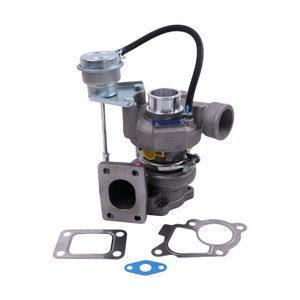
Engine Serial Variant Confirmed — Cummins N14 turbo flange and oil port differences mapped before dispatch to prevent repeat bench failures.
Technical Specifications
| Parameter |
Value |
| Part Number |
3804566 |
| Product Type |
Turbocharger |
| Cross-Reference |
3804566, 380456600, 3804566NX, 3804566RX, CU3804566, 3536804, 4033556, 4033556H, 3536012 (reference only for identification purposes) |
| Machine Fitment |
Komatsu PC600-6, PC600LC-6, PC650-6, PC650LC-6, PC600LC-6KJ, PC600-6KJ |
| Engine Fitment |
Cummins N14 |
| Turbo Model |
HT60-N0881A/H32K1, HT60 |
| Turbine Housing Material |
Ni-Resist D5S ductile iron |
| Compressor Wheel Material |
2618 aluminum alloy |
| Compressor Wheel Balance Tolerance |
G2.5 |
| Bearing Type |
Dual ceramic ball bearings |
| Bearing Grease Temperature Rating |
180°C |
| Boost Pressure Validation |
1.4 bar |
| Turbine Wheel Balance Speed |
100,000 RPM |
| Thermal Cycling Range |
-20°C to 750°C |
| Sealing Surface Tolerance |
SAE J1922 |
| Leak-down Pressure Hold Test |
1.6 bar |
| Condition |
New Aftermarket |
| Warranty |
3–12 months against manufacturing defects |
| Standards |
ISO 9001, SAE J1922 |
Application Suitability
| Engine System |
Related Components |
| Emission & Exhaust |
Exhaust manifold gaskets, heat shields, exhaust clamps, turbo drain line seals |
| Intake System |
Air filter assemblies, intake hose connections, boost pressure sensors |
| Lubrication |
Oil feed and drain lines, oil filters, oil cooler core |
| Engine Overhaul |
Complete N14 overhaul gasket kits, piston ring sets, main and rod bearing shells |
Why Repeat Turbo Failures Keep Sending N14 Engines Back to the Bench
The HT60 Turbocharger for Cummins N14 engine rebuild rarely fails on its own — the root cause usually lives elsewhere in the intake, exhaust, or oil supply path.
In desert mining operations across the Middle East, I have watched freshly installed turbochargers burn through their bearings within weeks. The replaced part was never the real problem. Exhaust backpressure from a clogged muffler, restricted oil feed lines carrying carbon deposits, or a cracked intake boot bleeding boost pressure — these conditions destroy the new unit just as quickly. An HT60 turbocharger for Cummins N14 engine rebuild must be treated as one node inside a larger system, not a standalone fix. [NEED_CITE: turbocharger failure root cause analysis in heavy diesel applications]
Different Cummins N14 production serial ranges carry variations in turbo flange bolt patterns and oil port orientations. Shipping a unit based solely on the Komatsu PC600-6 machine model ignores these build-level differences, which is why serial confirmation sits at the front of our verification workflow.

System-Level Failure Tracing Before Turbo Replacement
An HT60 turbocharger for Cummins N14 engine rebuild demands that the technician examine the full exhaust path upstream and downstream. Exhaust manifold gaskets that have blown out create uneven gas flow across the turbine wheel, leading to localized overheating. Heat shields that have corroded through allow ambient air disruption around the turbine housing. These adjacent components should be replaced during the same service window to protect the new turbocharger investment.
Oil Feed Contamination and Engine Serial Variants
Bearing failure inside this turbocharger traces back to contaminated or restricted oil supply in the majority of field cases. The oil feed line, filter, and cooler core form a matched set — replacing the turbo without flushing and inspecting these upstream components invites the same failure mode. Across Cummins N14 production runs, engine serial variants affect turbo oil port clocking and flange configuration. Confirming the exact engine serial number before ordering prevents receiving a unit whose ports do not align with the existing feed line routing. [NEED_CITE: Cummins N14 engine serial variant turbo port configuration]
Material and Balance Specifications Under Thermal Load
The Ni-Resist D5S ductile iron turbine housing withstands sustained exhaust temperatures up to 750°C without cracking or warping, which matters in continuous high-load digging where exhaust heat soaks into the casting over long shifts. The 2618 aluminum alloy compressor wheel retains structural integrity at elevated temperatures better than standard casting alloys, reducing the risk of wheel deformation under sustained boost. Compressor wheel balance held to G2.5 tolerance at 100,000 RPM means vibration stays within the threshold that protects the dual ceramic ball bearings from premature race wear. The 180°C bearing grease rating covers the heat transfer path from turbine housing through the center cartridge during thermal cycling.
The Hidden Cost of Skipping System Diagnostics
Installing a new turbocharger without addressing exhaust manifold leaks or oil supply restrictions creates a repeat failure cycle. The machine goes back into service, runs for a short period, then returns to the bench with the same symptoms. Each cycle costs labor hours, replacement gaskets, and equipment availability. For fleet operations running multiple PC600-6 or PC650-6 units, this pattern compounds across the fleet. [NEED_CITE: repeated turbo failure cost impact on excavator fleet availability]
Why Source This Turbocharger Through XUNPO
Own production lines and qualified sourced supply operate under one warranty account, so the HT60 turbocharger and its companion gaskets carry identical terms. Eight product categories under a single order mean the overhaul kit, seal sets, and exhaust hardware ship as one consignment rather than arriving on staggered schedules. Minimum order of one piece supports emergency single-unit rebuilds without forcing bulk commitments. Part identification proceeds from engine serial number, machine model, or nameplate photograph when the original tag is unreadable. Cross-reference verification covers superseded numbers and alternate manufacturer references to catch catalog errors before dispatch. A sample unit can ship for fitment confirmation before a fleet-wide bulk order is placed.
Documentation & Verification
- Commercial invoice and packing list referencing Cummins N14 engine serial and turbo model HT60-N0881A/H32K1
- Cross-reference sheet mapping interchange numbers (reference only) to confirmed N14 variant match
- Dimensional check on turbo flange bolt pattern and oil port orientation before dispatch
- Boost pressure validation record at 1.4 bar and leak-down hold test at 1.6 bar
- Quality inspection record covering compressor wheel balance certification at G2.5
- HS code classification and customs documentation support for international engine parts shipment
Installation & Rebuild Sequence
- Verify Cummins N14 engine serial against turbo flange and oil port configuration before unboxing
- Flush oil feed line and replace inline filter to prevent carbon contamination of new ceramic bearings
- Install new exhaust manifold gaskets and inspect heat shields before mounting turbocharger assembly
- Torque turbo mounting fasteners to SAE J1922 sealing surface specification in star pattern
- Pre-lube center cartridge with clean engine oil before first cranking to protect dry bearing surfaces
- Run engine at idle for initial break-in period, monitor boost pressure and oil leak paths
Request a System-Matched Quote
Provide the Cummins N14 engine serial number, any known rebuild history including previous oversize work, and the machine model to receive a turbocharger matched to your exact production variant. Including photographs of the existing turbo data plate and oil port orientation accelerates the verification process.
Frequently Asked Questions
Q: What other emission and exhaust components should be replaced alongside this turbocharger?
A: Exhaust manifold gaskets, exhaust clamps, and heat shields should be inspected and typically replaced during turbo installation. Blown manifold gaskets create uneven exhaust gas flow that damages the new turbine wheel. Including these items in the same order prevents a second machine teardown within weeks of the initial rebuild.
Q: How do Cummins N14 engine serial variants affect turbocharger fitment?
A: Different N14 serial ranges carry variations in turbo mounting flange bolt patterns, oil port clocking position, and drain port orientation. Confirming the engine serial number ensures the supplied HT60 unit aligns with the existing oil feed line and exhaust manifold without requiring adapter modifications or re-clocking.
Q: What oil system checks prevent repeat turbo failure after rebuild?
A: Flush the oil feed line, replace the inline filter, and inspect the oil cooler core for internal restriction or contamination. Carbon buildup or metallic debris in the oil supply destroys ceramic ball bearings rapidly. Addressing the oil path alongside turbo replacement eliminates the most common cause of early repeat failure.
Q: Can this turbocharger ship as part of a complete N14 overhaul kit?
A: Yes, the turbocharger can be consolidated with matched overhaul gaskets, piston ring sets, bearing shells, and seal kits into a single consignment. This approach ensures all components arrive together and carry the same warranty terms, eliminating staggered delivery schedules that delay engine reassembly.
Q: How do I confirm the correct HT60 model for my specific engine build?
A: Provide the engine serial number from the Cummins N14 data plate along with photographs of the existing turbocharger mounting flange and oil port positions. Our technical team cross-references the serial against production variant records to confirm flange pattern and port orientation match before dispatch.