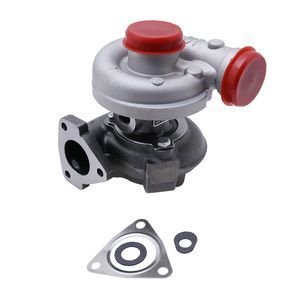
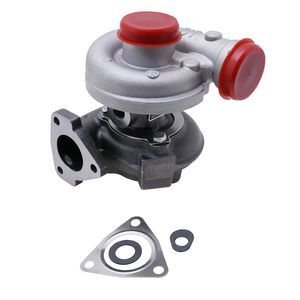
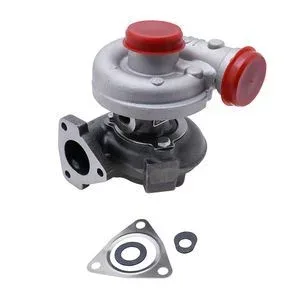
Engine Sequence Variants Confirmed — Kubota V3307-DI-T-E3B and V3307-DI-TE3-Q emission stages alter turbo mounting geometry, requiring serial-level validation before the TD04L4 ships.
Technical Specifications
| Parameter |
Value |
| Part Number |
1J773-17013, 49177-03242 |
| Product Type |
Turbocharger |
| Cross-Reference |
1J773-17013 (reference only), 49177-03242 (reference only) |
| Machine Fitment |
KX080-4S, M6060HDC, M6060HFC, M7060HDC, M7060HDC12, M7060HFC, SSV75, SSV75C, SSV75P, SSV75PC |
| Turbo Model |
TD04L4, TD04L4-09TK3-5.0 |
| Engine Fitment |
Kubota V3307, V3307-DI-T-E3B, V3307-DI-TE3-Q (Stage 3B / Tier 4) |
| Compressor Wheel Material |
A268 Grade 2 titanium alloy |
| Turbine Housing Material |
Centrifugally cast Ni-Resist D2 ductile iron |
| Turbine Inlet Temperature Capability |
720°C |
| Continuous Operating Temperature Rating |
750°C |
| Dynamic Balancing Tolerance |
ISO 1940 G2.5 |
| Shaft Runout |
≤0.015 mm |
| Boost Pressure Validation |
1.8 bar |
| Sealing Type |
Dual-lip nitrile rubber seals with fluorosilicone backup rings |
| Condition |
New Aftermarket |
| Warranty |
3–12 months against manufacturing defects |
| MOQ |
1 piece |
| Standards |
ISO 9001, ISO 1940 G2.5 |
Application Suitability
| Engine System |
Related Components |
| Intake & boost |
Intercooler hoses, intake manifold gaskets, air filter elements |
| Lubrication supply |
Oil feed line O-rings, oil drain gasket, turbo bearing feed restrictor |
| Exhaust side |
Exhaust manifold gaskets, V-band clamps, flexible exhaust bellows |
| Emission control (Stage 3B / Tier 4) |
Wastegate actuator, boost pressure sensor, EGR cooler seals |
Why Repeat Turbo Failures Keep Happening After a Rebuild
The replacement TD04L4 Turbocharger for Kubota V3307 Engine Rebuild fails again not because the unit was defective, but because the fault that destroyed the first turbo was never resolved.
In my years sourcing for fleet maintenance programs, I watched a KX080-4S come back to the shop with blue smoke just two weeks after a turbo swap. The teardown showed the intake ducting had a hairline crack upstream of the compressor inlet — unfiltered dust was ingesting directly into the turbine wheel, scoring the compressor blades within days. The turbo itself was fine at installation. The system around it was not. Rebuild shops that only swap the turbo without tracing oil contamination, boost leaks, or exhaust restriction patterns will see the same failure mode repeat across every unit they install [NEED_CITE: diesel turbocharger failure root cause analysis for off-highway engines].

Where This Turbocharger Sits in the V3307 Intake and Emission Chain
The TD04L4 Turbocharger for Kubota V3307 Engine Rebuild sits at the convergence of three engine circuits: the oil supply that lubricates its floating bearings, the filtered air intake that feeds the compressor, and the exhaust manifold that drives the turbine. A failure in any one of those circuits becomes visible as turbo damage within operating hours. Rebuild shops quoting a V3307 overhaul must treat the turbo as a system component, not an isolated line item.
Engine Serial Variants That Change the Turbo You Need
The V3307-DI-T-E3B and V3307-DI-TE3-Q carry different emission calibration levels. The wastegate actuator setting, the exhaust manifold port layout, and the boost sensor tap location all shift between these variants. Installing a turbo configured for Stage 3B onto a Tier 4 engine build can result in over-boost conditions or insufficient exhaust gas recirculation. Confirming the exact engine serial and emission stage prevents this mismatch before the unit leaves the warehouse [NEED_CITE: Kubota V3307 emission stage variant identification for service parts].
Reading the Old Turbo Before Installing the New One
Turbine housing deposits, compressor wheel edge damage, and shaft discoloration each point to a different root cause. Dark carbon buildup inside the turbine housing suggests oil carryover from worn piston rings. Nicks and curled edges on the compressor blades indicate foreign object ingestion through a failed air filter. A blued or heat-cracked shaft signals sustained over-temperature from exhaust restriction. Identifying which pattern the old unit shows determines whether the new turbo will survive its first season.
The Cost of Installing Without System Diagnosis
A rebuild shop that installs this unit without replacing the oil feed line O-rings and exhaust manifold gaskets as a matched set risks boost leaks and oil seepage from day one. The labor to pull the turbo back out for a gasket reseat often exceeds the cost of the seals themselves. Shops that skip the intake duct pressure test after installation are handing the machine back with a latent leak that will destroy the next turbo just as fast as the last one [NEED_CITE: turbocharger installation best practices for diesel engine overhaul].
Why Rebuild Shops Source This Turbo Through Our Engine System Desk
We run our own production on selected turbocharger lines and source the remainder from ISO-certified partners, both carrying identical QC and warranty terms under one account. Eight parts categories ship consolidated so the turbo, matched gasket set, and oil feed O-rings arrive in one consignment. Minimum order is one piece — a single replacement for a down machine or a full fleet rebuild kit. Our technical team confirms engine serial compatibility and wastegate calibration before dispatch. Sample units are available for fitment verification before bulk commitment.
Documentation & Verification
- Commercial invoice listing part numbers with cross-reference notation for customs clearance
- Turbo-to-engine compatibility sheet confirming V3307 serial variant and emission stage match
- Dynamic balancing certificate at ISO 1940 G2.5 with shaft runout measurement record
- Boost pressure validation log at 1.8 bar prior to packaging
- Packing photographs showing anti-vibration foam cradle and reinforced carton condition
- HS code and export documentation support for international shipment
Installation & Rebuild Sequence
- Pre-lube the turbo bearing cavity with clean engine oil before connecting oil feed line
- Torque exhaust manifold bolts in the factory sequence to prevent housing warpage
- Verify oil drain line has no kinks or restriction — gravity drain must flow freely
- Run engine at idle for initial minutes to establish oil film before applying load
- Check boost pressure against 1.8 bar specification after warm-up cycle
What to Send With Your Inquiry
Send us the engine serial number, the emission stage designation on the nameplate, and any return history from previous rebuilds. If the old turbo is still available, photographs of the compressor wheel face and turbine housing interior help us confirm whether the replacement needs matched consumables beyond the standard gasket set.
Frequently Asked Questions
Q: What gaskets and seals should I replace along with the turbocharger?
A: Replace the exhaust manifold gasket, oil feed line O-rings, oil drain flange gasket, and intake ducting clamps as a matched set during turbo service. Reusing old seals risks boost leaks and oil contamination that will shorten the life of the new unit regardless of its build quality.
Q: How do I tell if the old turbo failed from oil starvation or foreign object damage?
A: Oil starvation shows as shaft bluing and bearing surface scoring with no blade damage. Foreign object damage shows as nicks, bends, or missing material on the compressor or turbine wheel edges. Each failure mode points to a different upstream fault that must be corrected before installing the replacement.
Q: Does the V3307-DI-T-E3B use the same turbo as the V3307-DI-TE3-Q?
A: These emission variants differ in wastegate calibration, boost sensor routing, and exhaust manifold port layout. While the base turbo model number may appear identical, the configured variant must match the engine serial to avoid over-boost or emission compliance failures during operation.
Q: What oil feed and drain line components should I inspect during turbo replacement?
A: Inspect the oil feed restrictor orifice for carbon blockage, replace all feed line O-rings, and verify the drain hose has no internal collapse or kinks. A restricted drain causes oil backup into the turbine housing seal, producing blue smoke that looks like turbo failure but originates in the plumbing.
Q: How do I confirm the correct turbo model for my specific engine serial number?
A: Provide the full engine serial from the nameplate and the emission stage designation. We cross-reference the serial against the V3307 variant database to confirm wastegate setting, port orientation, and sensor tap locations match your engine build before the unit ships.