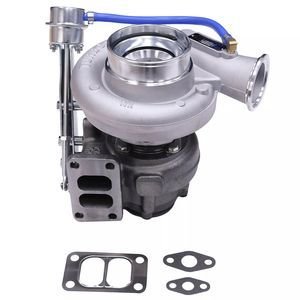
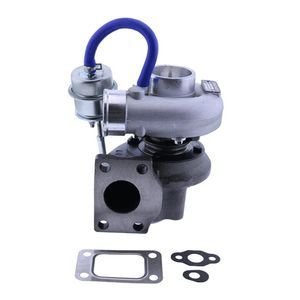
Sequence Variant Confirmed — every turbocharger TD04L cross-checked against your engine serial to avoid flange mismatches on site.
Technical Specifications
| Parameter |
Value |
| Part Number |
187154 |
| Product Type |
Turbocharger |
| Cross-Reference |
04272325, 04272325KZ, 04272325EY0138, 4272325EY0138, 04272325EY0138-43, 4272325, 49377-07700, 4937707700, 04272458, 04281466 (for identification purposes only) |
| Machine Fitment |
Gehl 5640, Gehl 6640 |
| Engine Compatibility |
Deutz BF4L2011, BF4M2011 |
| Condition |
New Aftermarket |
| Turbine Housing Material |
Nickel-alloy |
| Bearing Type |
Oil-lubricated journal bearings |
| Turbine Wheel Balancing |
Balanced to OEM tolerances |
| Mounting Hardware |
Included for drop-in installation |
| Warranty |
3–12 months |
| Quality Standard |
ISO 9001 |
Application Suitability
| Engine System |
Related Components |
| Intake & Exhaust |
Air filter assembly, intake manifold gaskets, exhaust clamps |
| Lubrication System |
Oil feed line, oil return hose, oil filter element |
| Emission & Exhaust |
Exhaust manifold studs, heat shields, wastegate actuator linkage |
| Engine Cooling |
Intercooler hoses, boost pressure sensor |
| Crankcase Ventilation |
Breather hoses, crankcase pressure regulator |
Why Replacing Just the Turbo Won't Keep the Engine Running
A failed turbocharger is rarely the root cause — it is usually the victim of a system fault upstream or downstream.
I once traced three consecutive turbocharger TD04L failures on Deutz BF4M2011 engines back to a single cracked oil feed line that starved the journal bearings during high-idle operation. Each rebuild shop swapped the turbo, ran the engine, and watched the replacement fail within weeks. Only after replacing the oil line and flushing the supply circuit did the fourth turbo survive past break-in. [NEED_CITE: common root causes of turbocharger bearing failure in diesel engines]
When a TD04L 187154 comes off the engine with scored bearings or a discolored turbine shaft, the fault almost certainly lives in the lubrication circuit, the air filtration path, or an exhaust restriction. Ignoring those system conditions guarantees the replacement turbocharger TD04L engine rebuild replacement will end up on the bench again. Fleet maintenance logs across Middle East job sites consistently show repeat turbo failures trace to unresolved oil supply or intake contamination issues rather than part quality. [NEED_CITE: diesel engine intake air filtration standards for construction environments]

How This Turbocharger Sits Inside the Engine System
The turbocharger TD04L on a Deutz BF4L2011 or BF4M2011 sits at the intersection of three fluid systems: exhaust gas drives the turbine, pressurized oil floats the journal bearings, and filtered intake air passes through the compressor wheel into the charge air circuit. Each system must deliver within spec simultaneously, or the turbo becomes the weak link. A turbocharger TD04L engine rebuild replacement belongs on the bench alongside a review of the oil pump output, air filter condition, and exhaust back-pressure readings — not just bolted on as a swap.
Engine Serial Variants That Change the Fitment
Deutz BF4M2011 and BF4L2011 engines shipped across multiple production runs with different turbo mounting flanges and oil port clocking positions. Two engines carrying the same model designation may require different turbo housing orientations or gasket profiles. I learned this the hard way when a replacement turbo for a BF4M2011 in Riyadh arrived with an oil return flange that did not align with the block port — the serial number range dictated a variant that nobody had checked before ordering. Confirming engine serial and production variant before dispatch prevents that kind of costly site delay. [NEED_CITE: Deutz BF4M2011 engine serial range and turbo variant differences]
What the Specifications Mean on the Job
The nickel-alloy turbine housing resists thermal fatigue cracking under the sustained high exhaust temperatures typical of Deutz four-cylinder diesels working full-load cycles in desert conditions. Oil-lubricated journal bearings depend entirely on clean oil arriving at adequate pressure — any sludge or metallic debris in the feed line scores the bearing surface rapidly. Turbine wheel balancing to OEM tolerances keeps shaft vibration within limits, protecting both the bearing and the compressor seal from premature wear. The included mounting hardware allows drop-in installation without sourcing separate studs or nuts, which matters when the machine is already down and the workshop needs to close the job in one session.
The Hidden Cost of Skipping the System Check
When a workshop installs a fresh turbo without diagnosing why the previous one failed, the new unit inherits the same destructive conditions. Oil-starved journal bearings will score within hours of operation. Contaminated intake air erodes the compressor wheel and accelerates bearing wear through ingested dust. An exhaust restriction from a collapsed flex pipe or blocked catalyst raises back-pressure, forcing the turbine to work outside its flow map and generating excessive heat. Each of these faults destroys a replacement turbocharger TD04L engine rebuild replacement just as fast as it destroyed the original. The real cost is not the second turbo — it is the second teardown, the second oil change, the second round of machine downtime, and the erosion of customer confidence in the repair facility. [NEED_CITE: impact of unresolved root cause on repeat turbocharger replacement intervals]
Why Source This Turbocharger Through XUNPO
Self-produced and qualified-sourced turbo lines carry identical QC and warranty terms under one account, so a turbocharger TD04L 187154 ships with the same inspection rigor whether it comes off our Guangzhou line or a partner facility. Eight product categories mean the oil feed line, air filter element, and exhaust gaskets can all ship in the same consignment as the turbo itself. Minimum order starts at one piece — a single emergency replacement does not require padding an order to hit a threshold. Cross-reference verification covers all superseded and alternate numbers listed for Deutz BF4L2011 and BF4M2011 applications. The technical team confirms engine serial variant and port orientation before dispatch, and sample units are available for fitment confirmation before any bulk commitment.
Documentation & Verification
- Commercial invoice and packing list referencing turbocharger part number and engine compatibility
- Cross-reference sheet mapping 187154 to Deutz reference numbers (for identification purposes only)
- Dimensional inspection record covering flange pattern, oil port position, and shaft end-play
- Warranty terms covering material and workmanship for 3–12 months from delivery
- Packing photographs showing turbo secured with protective covers on all ports
- HS code and customs documentation support for international turbocharger shipments
Installation & Rebuild Sequence
- Clean oil feed and return lines thoroughly before connecting to the new turbocharger oil ports
- Pre-lubricate journal bearings with clean engine oil through the feed port before first cranking
- Verify mounting hardware torque sequence against Deutz BF4L2011 workshop manual specifications
- Inspect air filter and intake ducting for contamination that could damage the compressor wheel
- Run engine at idle for initial break-in period and monitor boost pressure and oil leak signs
- Check exhaust system for restrictions or leaks that alter turbine back-pressure conditions
Request a Fitment-Confirmed Quote
Send the engine model, serial number, and any production plate photos from your Deutz BF4L2011 or BF4M2011. Include the old turbocharger part number and a description of the failure symptoms. This information allows the technical team to confirm the correct variant, verify all cross-references, and recommend the matching system components for a complete repair.
Frequently Asked Questions
Q: What other engine system components should be replaced alongside this turbocharger?
A: Oil feed and return lines, oil filter, air filter element, and all turbo mounting gaskets should be replaced during a turbocharger TD04L engine rebuild replacement. Inspect the intercooler and charge air hoses for oil residue indicating previous turbo seal leakage. Replacing these associated components prevents the conditions that destroyed the previous turbo from recurring immediately after installation.
Q: Are BF4L2011 and BF4M2011 turbochargers fully interchangeable?
A: Not universally. While both engines use the TD04L platform, production serial ranges introduced differences in oil port clocking, flange gasket profiles, and wastegate actuator bracket positions. Confirming the engine serial number ensures the correct variant ships, avoiding on-site fitment delays and return freight costs.
Q: How do I prevent the replacement turbo from failing prematurely?
A: Diagnose the root cause of the original turbo failure before installing the replacement. Check oil supply pressure and cleanliness, verify air filtration integrity, and measure exhaust back-pressure. Most repeat turbocharger failures trace to unresolved lubrication starvation or intake contamination rather than component quality issues.
Q: How do I confirm which cross-reference number matches my engine?
A: Provide the engine serial number and any legible markings from the old turbocharger housing. The technical team maps the OEM reference numbers — such as 04272325 or 49377-07700 (reference only) — against your specific engine build to confirm the correct variant and port configuration before dispatch.