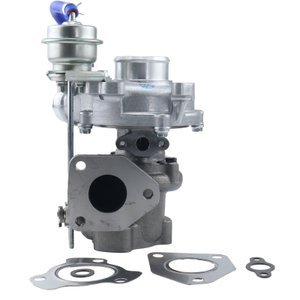
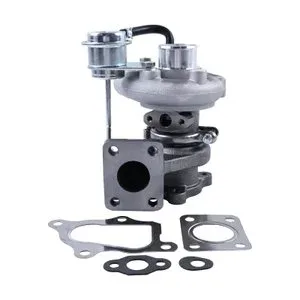
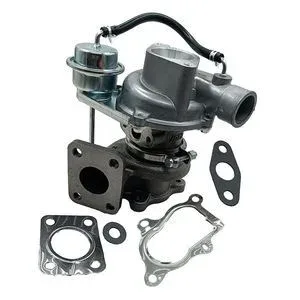
Matched-Set Dispatch — Turbocharger 482-8480 ships with verified gaskets and oil-line seals matched to your C3.8 engine serial variant.
Technical Specifications
| Parameter |
Value |
| Part Number |
482-8480 |
| Product Type |
Turbocharger |
| Cross-Reference |
482-8480 (reference only), 4828480 (reference only), CA482-8480 (reference only) |
| Machine Fitment |
272D2, 272D2 XHP, 272D3, 272D3 XHP, 297D2, 297D2 XHP, 299D2, 299D2 XHP, 299D3, 299D3 XHP, 299D3 XE |
| Engine Fitment |
CAT C3.8 |
| Condition |
New Aftermarket |
| Warranty |
3-12 months against manufacturing defects |
| Quality Standard |
ISO 9001 |
Application Suitability
| Engine System |
Related Components |
| Intake and exhaust |
Air filter assembly, intake manifold gaskets, exhaust manifold studs |
| Lubrication feed to turbo |
Oil supply line, oil return line, O-rings and clamp hardware |
| Emission control |
EGR passages, crankcase ventilation hoses and check valves |
| Charge air delivery |
Intercooler hoses, boost pressure sensor, wastegate actuator linkage |
Why a Turbocharger for CAT C3.8 Engine Rebuild Fails Again Weeks After Replacement
The root cause lives outside the turbo itself — oil contamination or an intake leak upstream destroys the new unit on the same timeline.
In Chilean copper mine fleets running 272D2 and 299D3 loaders on continuous shifts, I have opened intake manifolds on C3.8 engines where thick carbon deposits coated every passage downstream of a leaking turbo oil seal. The crew had replaced the turbo twice in one quarter without cleaning the intercooler hoses or checking the oil return line restriction [NEED_CITE: common causes of premature turbocharger failure in diesel engines]. When the same fault destroys two consecutive units, the repair approach is incomplete. A Turbocharger for CAT C3.8 engine rebuild must arrive alongside the gaskets, seals, and line fittings that address what killed the last one.

Where the Turbocharger Sits in the C3.8 Intake and Exhaust Circuit
The turbocharger on a C3.8 sits between the exhaust manifold outlet and the charge air cooler inlet, driven by exhaust gas energy to compress filtered intake air before delivery to the cylinders. It depends on clean oil from the engine lubrication system for bearing cooling and shaft support, and on an unrestricted air filter upstream to prevent compressor wheel erosion. When any of these three flows — exhaust drive gas, clean intake air, or pressurized lubricating oil — deviates from specification, the turbocharger absorbs the damage first. Sourcing a Turbocharger for CAT C3.8 engine rebuild without the adjacent gaskets and line hardware means the rebuild shop makes a second order before the engine can fire.
How Engine Serial Variants Change Port Orientation and Gasket Fit
C3.8 engines installed across the 272D, 297D, and 299D loader families were built in several serial ranges, and turbo housing clock angles differ between early and late production blocks. The oil drain flange bolt pattern may rotate, meaning a gasket that seals on one serial range leaves an open port on another [NEED_CITE: engine serial variant differences in turbocharger mounting]. Confirming the engine serial before dispatch prevents a mismatch that only reveals itself when the installer lines up the oil return tube. Matched installation consumables — turbo mounting gaskets, oil feed line O-rings, and clamp hardware — must correspond to the specific build variant, not just the base engine family.
Reading the Specification Sheet for Real-World Behaviour
The C3.8 turbocharger operates in an exhaust environment where gas inlet temperatures can approach limits that demand heat-resistant housing alloys and stable bearing clearances under thermal cycling. Shaft play specifications determine how close the compressor and turbine wheels run to their housings — tight clearances improve boost response but require clean, debris-free oil to survive. Wheel balance grade affects vibration transmitted through the bearing cartridge into the mounting flange, which matters on loaders running high-hour duty cycles where harmonic fatigue accumulates over months. An ISO 9001 production process covers dimensional inspection of these features before the unit leaves the factory, and the pre-shipment inspection record should document shaft play, wheel balance, and housing dimensional checks for your file.
The Cost of Skipping System-Level Diagnosis Before Turbo Replacement
Installing a new turbo on a C3.8 without cleaning the charge air hoses, verifying the oil return line is clear, and replacing the intake manifold gaskets means the new unit inherits every upstream problem the old one suffered. Carbon-laden oil residue baked onto intercooler walls breaks loose and enters the new compressor wheel, eroding the blades within weeks [NEED_CITE: intake system contamination effects on turbocharger lifespan]. The loader goes back into the shop, the machine clock shows almost no hours on the new turbo, and the warranty discussion becomes difficult because the root cause was never addressed. This is the hidden cost of treating the turbocharger as an isolated failure rather than a symptom of a system fault.
What This Supply Point Covers Beyond the Part Number
Own production on selected engine component lines and qualified sourced supply under one account means the turbocharger, its matched gasket set, and the oil-line seals all carry the same warranty terms and the same quality documentation. Eight product categories under one order let an overhaul kit, turbocharger, seal set, and diagnostic items ship as one consignment rather than split across three freight bookings. Part identification works from the worn number on the old housing, the machine model plate, or a photograph of the nameplate when paint and dust have made it illegible. Cross-reference verification covers superseded and alternate numbers so a discontinued reference still resolves to the correct current unit. Technical staff confirm engine serial compatibility and gasket grade before the dispatch note is finalized.
Documentation & Verification
- Commercial invoice listing turbocharger and matched gasket set as one line item
- Cross-reference sheet mapping 482-8480 (reference only) to engine serial ranges
- Pre-shipment inspection record covering shaft play and housing dimensions
- Warranty terms document with clear claim procedure for manufacturing defects
- Packing photographs showing turbo protection and gasket set inclusion
Installation & Rebuild Sequence
- Clean oil return line and intercooler hoses before mounting the turbocharger to prevent residual carbon ingestion
- Verify turbo housing clock angle against engine serial range to align oil drain flange correctly
- Replace all intake manifold gaskets and oil feed O-rings with the matched set in the same shift
- Torque turbo mounting nuts to specification and confirm wastegate actuator linkage moves freely
- Pre-lube the turbo bearing cartridge with clean engine oil before first cranking to prevent dry-start scoring
Requesting a System-Matched Quote
Send the engine model, engine serial number, and any rebuild history so the correct turbocharger variant and matched gasket grade can be confirmed. If the old unit is still on the bench, photographs of the data plate and oil port positions speed the cross-reference check. Repair centres quoting a complete job should include the machine model and the full repair list so all related seals, gaskets, and line hardware ship in the same consignment.
Frequently Asked Questions
Q: What gaskets and seals should be replaced at the same time as the turbocharger?
A: The turbo mounting gasket, oil feed line O-rings, oil return flange gasket, and intake manifold gaskets should all be replaced during the same service event. Supplying these as a matched set with the turbocharger prevents a second teardown caused by a reused seal that fails under the new unit's operating pressure.
Q: How do I confirm which C3.8 engine variant is in my machine?
A: The engine serial number stamped on the block data plate identifies the build variant, which determines turbo housing clock angle and gasket configuration. When the plate is worn or painted over, a photograph of the oil port arrangement on the old turbo allows cross-reference verification before dispatch.
Q: What typically causes turbo failure in these loaders and what else should I check?
A: Premature turbo failure in C3.8 engines frequently traces to oil supply restriction, air filter bypass allowing dust ingestion, or exhaust manifold leaks altering drive gas flow. The oil return line, charge air hoses, and crankcase ventilation system should all be inspected and cleaned during the turbo replacement to prevent repeat failure.
Q: Can I get a complete turbo installation kit in one shipment?
A: Yes. The turbocharger can be quoted alongside all required mounting gaskets, oil-line seals, clamp hardware, and intake system consumables so the entire replacement job ships as one consignment, eliminating split freight and second-order delays.
Q: Does the turbocharger come with the required mounting hardware and oil line fittings?
A: The turbocharger can be supplied with or quoted alongside the matched mounting gaskets, oil feed and return O-rings, and clamp hardware specific to your engine serial variant. Confirm your requirements at the quotation stage so all installation consumables are included in the dispatch.