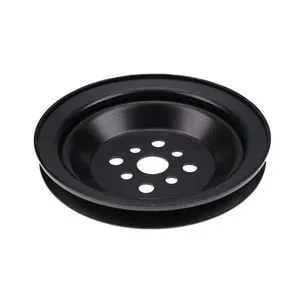
System-Matched Assembly — Every 3919624 fan pulley order cross-references your engine serial to confirm hub bore tolerance before shipping.
Technical Specifications
| Parameter |
Value |
| Part Number |
3919624 |
| Product Type |
Fan Pulley |
| Cross-Reference |
3908819, 3903221 (reference only) |
| Machine Fitment |
Hyundai R130W, R170W-3, R210W-9A, R430LC-9A, R130LC, R130W-3, R140W-9A, R160W-9A, R180LC-3, R180W-9A, R200LC, R200NLC-3, R200W, R200W-2, R200W-3, R210LC-3, R210LC-3_LL, R210W9AMH, R220LC-9A, R220NLC-9A, R235LCR-9, R235LCR-9A, R280LC, R290LC, R290LC-3, R320LC-3, R330LC-9A, R380LC-9A, HX300 L, HX330 L, HX380 L, HX430L |
| Engine Compatibility |
Cummins 4B3.9, 6B5.9, 6C8.3, ISBE, QSB, B4.5, B5.9 G, G5.9, ISB |
| Diameter |
7 inches (177.8 mm) |
| Material |
High-strength cast iron with precision-machined V-groove surface |
| Surface Treatment |
Black oxide coating |
| Assembly State |
New Aftermarket |
| Warranty |
3–12 months against manufacturing defects |
| Minimum Order |
1 piece |
| Standards |
ISO 9001, ASTM A48 Class 30, SAE J1927, ISO 1940-1 |
Application Suitability
| Engine System |
Related Components |
| Front accessory drive cooling loop |
Drive belt, tensioner pulley, water pump assembly, fan clutch |
| Engine overhaul cooling circuit |
Complete seal kit, thermostat housing, fan blade assembly |
| High-load thermal management (quarry, port, demolition) |
Heavy-duty belt set, idler bearings, coolant hoses |
Why the Same Cross-Reference Number Fits Multiple Engine Builds
The 3919624 fan pulley covers several Cummins engine families, but hub bore and groove profile vary across production runs.
In the Yangtze Delta workshop circuit, I have watched rebuilds stall because a pulley pulled from a cross-reference table went on without checking whether the engine block was an early 6B5.9 casting or a later ISBE variant. The outer diameter reads the same on the bench, yet the bore tolerance and keyway position shift just enough to introduce a wobble that destroys the water pump bearing within a few hundred hours [NEED_CITE: engine front-end accessory drive alignment tolerances]. When you are rebuilding a Cummins-powered Hyundai excavator, the fan pulley engine rebuild replacement decision must account for the specific engine serial, not just the machine model plate. A mismatched bore forces the belt off its tracking plane, and the resulting side load accelerates wear across every rotating component on the front cover.

How This Pulley Sits Inside the Cooling System
The fan pulley engine rebuild replacement task is never isolated. It anchors the entire front-end belt drive that spins the water pump, alternator, and air compressor on Cummins 4B3.9 through ISB platforms. When an overhaul kit lands on the bench, this pulley must match the replacement belt profile and the tensioner arm sweep. If the groove angle is off, the belt rides high, generates heat, and the cooling system cannot hold target temperature under continuous digging cycles.
Engine Serial Variants and What They Change
Cummins shifted the front cover casting across the 6B5.9 to QSB transition, altering the hub bore depth and the register diameter that centers the pulley [NEED_CITE: Cummins front gear housing revision history]. An engine that has been through a prior in-frame overhaul may already carry an oversize bearing or a sleeved hub. Ordering the next fan pulley engine rebuild replacement without declaring that history risks receiving a standard-bore unit that either presses on too tight or leaves play. We verify the serial range and flag any variant-specific dimensions before the part leaves the Guangzhou warehouse.
Reading the Specs That Actually Matter on the Bench
The 7-inch diameter sets the belt speed ratio relative to the crankshaft pulley, which directly governs water pump flow at idle and low-speed travel. High-strength cast iron with a black oxide surface provides the mass needed to dampen torsional pulses from the four- and six-cylinder firing order. The V-groove surface is precision-machined so the belt seats at the correct depth; a shallow groove lets the belt bottom out and slip, while a deep one pinches and cracks the sidewall. ASTM A48 Class 30 iron gives adequate tensile strength for the cantilever load imposed by a multi-rib belt under full tension.
The Cost of Skipping the Matching Step
A shop that installs a dimensionally close but not serially matched fan pulley engine rebuild replacement often sees the belt shred within the first week of operation. The shredded belt wraps around the crankshaft seal and pulls the lip, dumping oil onto the shop floor. Now the engine comes back out, the front cover splits again, and the rebuild cost doubles. Root-cause analysis points straight back to a pulley that was sourced by number alone [NEED_CITE: belt drive misalignment failure modes in heavy-duty diesel engines]. Qualitative evidence across multiple teardown reports confirms that front-end vibration complaints trace to bore and groove mismatch more often than to belt quality itself.
Why Source This Component Through XUNPO
Our own production lines and qualified sourcing partners carry identical warranty terms, so whether your fan pulley engine rebuild replacement comes from in-house tooling or a vetted partner facility, the QC gate is the same. Eight product categories mean the matching belt, tensioner, and seal kit ship under one account and one packing list. Single-piece minimum orders let you confirm fitment on a core engine before committing to fleet quantity. Cross-reference verification covers superseded numbers like 3908819 and 3903221 so you receive a part that aligns with the exact engine build. A sample unit can be dispatched for trial fitment on a bare block before the bulk order is released.
Documentation & Verification
- Commercial invoice lists 3919624 alongside matched belt and tensioner line items
- Cross-reference sheet notes 3908819 and 3903221 interchange positions (reference only)
- Dimensional check record covering hub bore, groove profile, and run-out
- Warranty card states coverage period matched to engine overhaul terms
- Packing photos show pulley face and bore protected against transit scoring
- HS code provided for customs clearance at destination port
Installation & Rebuild Sequence
- Inspect the front cover register surface for scoring before pressing the new fan pulley onto the hub
- Confirm V-groove profile matches the replacement belt part number using a gauge
- Torque the retaining fastener to engine manual specification and verify zero axial play
- Install belt and tensioner, then rotate the assembly two full turns by hand to check tracking
- Run the engine through a staged warm-up cycle, monitoring belt alignment at idle and rated speed
Preparing Your Inquiry
Send the engine serial number stamped on the Cummins data plate, along with any prior overhaul records showing bore sleeving or oversize bearing use. If the data plate is missing, a clear photo of the old pulley bore and the front cover casting number lets the technical team lock the correct variant. Include the full Hyundai machine model so the cross-reference covers the right production window.
Frequently Asked Questions
Q: What other belt-drive parts should ship with this fan pulley during an engine overhaul?
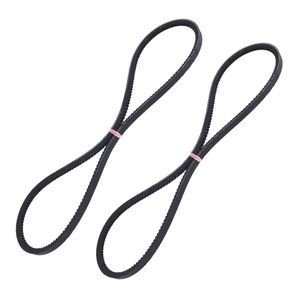
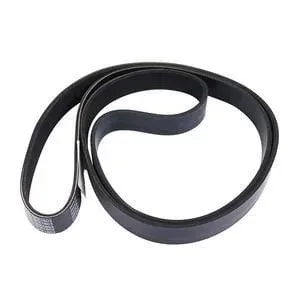
A: A complete front-end refresh typically includes the matched V-belt, tensioner pulley, idler bearings, and the front crankshaft seal. Supplying them together avoids tolerance stacking between old and new components and keeps the entire cooling loop on a single warranty clock.
Q: Must the belt and tensioner be replaced at the same time as the pulley?
A: Reusing a worn belt on a fresh pulley groove creates uneven seating and early sidewall cracking. Swapping the tensioner at the same time ensures correct sweep angle and prevents the new belt from fluttering at low idle speeds.
Q: Do different engine serials within the same Hyundai excavator model use the same pulley?
A: No. Cummins revised the front cover and hub dimensions across production runs. The engine serial number is the only reliable way to confirm whether the standard bore or a variant applies to your unit.
Q: How do I confirm which cross-reference number applies to my engine?
A: Provide the engine serial and the casting number from the old pulley. The technical team cross-references 3919624, 3908819, and 3903221 against your specific build and returns the confirmed interchange position before dispatch.
Q: What photos help identify the correct pulley when the data plate is unreadable?
A: A straight-on shot of the pulley face showing groove count, a caliper measurement across the hub bore, and a wide photo of the front cover with adjacent components visible all help the team lock the variant quickly.