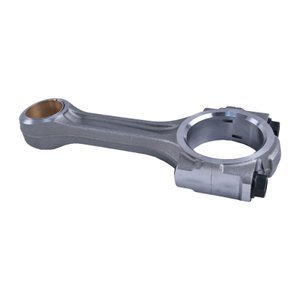
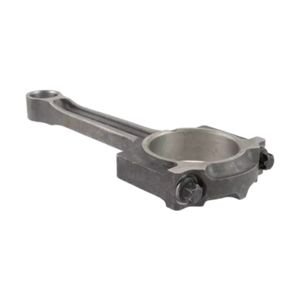
Matched Valve Train Sets — Rocker Lever 4065633 verified against QSK60 CM2150 and CM2350 build sheets to prevent geometry mismatch during overhaul.
Technical Specifications
| Parameter |
Value |
| Part Number |
4065633 |
| Product Type |
Rocker Arm |
| Cross-Reference |
4065633 (reference only) |
| Machine Fitment |
K19, QSK19 CM500, QSK19G, QSK45 CM500, QSK60 CM2150 K132M, QSK60 CM2150 MCRS, QSK60 CM2150 MCRS G, QSK60 CM2150 MCRS M, QSK60 CM2250 K112, QSK60 CM2350 K116, QSK60 CM2350 K117, QSK60 CM2350 K121, QSK60 CM2350 K135, QSK60 CM2350 K136, QSK60 CM2350 K149M, QSK60 CM500, QSK60 CM850 MCRS, QSK60 G CM2358 K110, QSK60G, AFE48-CQ, AFE48-CU, AFE48-CX, AFE48-DB, AFE48-DC, AFE48-DF |
| Part Name |
Rocker Lever |
| Condition |
New Aftermarket |
| Warranty |
3-12 months against manufacturing defects |
| Quality Standard |
ISO 9001 |
Application Suitability
| Engine System |
Related Components |
| Valve train – Cummins QSK60 CM2150 / CM2250 / CM2350 |
Crossheads, adjusting screws, push rod seats, valve bridges |
| Valve train – Cummins K19 / QSK19 CM500 |
Rocker lever bushes, locknuts, camshaft lobe interface |
| Valve train – Cummins QSK45 CM500 |
Push rods, valve stems, cylinder head gasket sets |
| Valve train – Komatsu AFE48 series haul trucks |
Complete overhaul gasket kits, valve seals, rocker shaft assemblies |
Why the Same Rocker Lever 4065633 Fails on One QSK60 but Works on Another
The engine serial variant determines whether this lever clears the cam lobe correctly.
I once saw a QSK60 CM2150 MCRS leave the stand with a fresh rocker lever installed, only to develop valve clatter within the first hundred hours. The lever had been sourced against a generic parts list that ignored the CM designation. On QSK60 variants, the cam contact face angle shifts between sub-models, and a lever cut for a CM500 profile will ride the CM2350 lobe off-center. The result is uneven loading on the valve bridge and accelerated crosshead wear. [NEED_CITE: Cummins QSK60 valve train geometry differences across CM designations]
Rebuild shops that pull a rocker lever without recording the exact engine serial and CM code risk repeating the same failure. The lever itself may be dimensionally within tolerance, yet the system around it — push rod geometry, crosshead sweep, valve lash baseline — expects a contact profile matched to that specific build.

Valve Train System Context for QSK60 and K19 Platforms
The rocker lever transfers camshaft motion through the push rod to the crosshead and valve bridge, opening and closing intake and exhaust valves in precise sequence. When a Rocker Lever 4065633 wears at the cam contact face, the fault rarely originates in the lever alone. Lubrication starvation at the rocker shaft, incorrect valve lash adjustment after a previous rebuild, or a camshaft lobe that has already developed spalling all transfer abnormal loads into the lever. Replacing only the lever without tracing the root cause leaves the next set of components exposed to the same failure mode.
Engine Serial Variants and Crosshead Matching
Across the QSK60 family, the CM2150, CM2250, and CM2350 designations represent different fuel system architectures and cylinder head castings. These differences alter rocker lever mounting geometry and the sweep arc of the crosshead. A lever that fits a K116 build may physically bolt onto a K135, yet the contact pattern on the valve bridge shifts enough to cause edge loading. [NEED_CITE: valve bridge edge loading effects on cylinder head service life] During any QSK60 overhaul, the build sheet must be matched against the lever variant to confirm the contact face angle and bush bore diameter align with the specific engine serial range. Previous rebuilds may have introduced non-standard clearances or substituted components from adjacent variants, compounding the mismatch risk.
Dimensional Tolerances and Contact Surface Integrity
The cam contact face on this rocker lever must maintain a specific profile radius to distribute load evenly across the camshaft lobe width. If the contact surface is ground to an incorrect crown or shows chatter marks from manufacturing, the concentrated stress accelerates lobe wear and generates metallic debris in the lubrication circuit. The bore diameter where the lever pivots on the rocker shaft bush must hold close concentricity to prevent oil film breakdown at operating temperature. Bore out-of-round conditions cause the lever to oscillate slightly on the shaft, introducing a secondary impact load each valve event that fatigues the adjusting screw threads over time. [NEED_CITE: rocker shaft bore concentricity requirements for heavy-duty diesel valve trains]
The Hidden Cost of Skipping System-Level Verification
A rebuild shop that installs a rocker lever without verifying the crosshead, push rod seat, and adjusting screw against the same engine build sheet often discovers the mismatch during valve lash adjustment. The lash will not stabilize, or one cylinder consistently runs tighter than the others. The head comes back off, the stand time doubles, and the customer absorbs the delay. [NEED_CITE: diesel engine overhaul rework frequency from component mismatch] This is not a defect in any single part — it is a sequencing gap where the valve train set was not verified as a matched group before assembly began.
Why Source the Valve Train Set Through One Account
Production lines for selected valve train components run in our own facility, with the remainder sourced from ISO 9001 manufacturing partners under identical quality control and warranty terms. This means a Rocker Lever 4065633 and its companion crossheads ship with the same dimensional inspection standard applied to both. Eight product categories mean the overhaul gasket set, valve seals, push rods, and rocker shaft bushes consolidate under one account. Minimum order starts at one piece, so a single emergency lever for a downed QSK45 does not require a bulk commitment. Part identification works from the engine serial plate, a photograph of the worn lever, or the machine model alone. Cross-reference verification covers superseded numbers across K19, QSK19, QSK45, and QSK60 variants. Samples ship for fitment confirmation before a full rebuild set is committed.
Documentation & Verification
- Commercial invoice listing each valve train component by position and quantity
- Cross-reference sheet mapping 4065633 against engine serial variants (reference only)
- Dimensional inspection record covering bore diameter and cam contact face profile
- Warranty terms covering manufacturing defects for 3-12 months
- Packing photographs showing lever protection and companion parts in same consignment
- HS code and customs documentation for international overhaul kit shipments
Installation & Rebuild Sequence
- Verify rocker lever variant against engine build sheet before removing protective coating
- Inspect rocker shaft for scoring and measure bush clearance prior to lever installation
- Torque rocker shaft mounting bolts to specification and confirm free pivot movement
- Set valve lash with engine at correct firing position for each cylinder
- Run initial break-in at reduced load to seat cam contact face pattern
Requesting the Right Valve Train Set
Provide the engine model, CM designation, and serial number so we can confirm the rocker lever variant and identify which companion components match your specific build. If a previous rebuild was performed, share any records of oversize or undersize parts installed. For engines with worn or unreadable nameplates, a photograph of the existing lever alongside the cylinder head casting number allows cross-reference verification before shipment.
Frequently Asked Questions
Q: What other valve train components should be replaced together with the rocker lever during an overhaul?
A: Crossheads, adjusting screws, locknuts, push rod seats, and rocker shaft bushes should be inspected and typically replaced as a set. Mismatched wear between a new rocker lever and worn crossheads causes uneven valve bridge loading. We supply the complete valve train group matched to your specific QSK60 or K19 build variant so the entire system goes together in one sequence.
Q: My QSK60 has a CM2350 designation — does rocker lever 4065633 fit all CM2350 sub-variants?
A: The CM2350 family includes K116, K117, K121, K135, K136, and K149M sub-variants, each with specific fuel system and cylinder head configurations that may affect rocker geometry. We verify the lever against your exact engine serial number and build sheet before dispatch to confirm fitment, rather than assuming a blanket CM2350 applicability.
Q: How do I determine whether previous rebuilds changed the valve train geometry?
A: Check for non-standard adjusting screw lengths, aftermarket crossheads of unknown origin, or rocker shaft bushes that show reaming marks indicating field fitting. Provide photographs of the existing components and any rebuild documentation. We cross-reference the installed parts against the original build specification to identify substitutions before supplying the replacement set.
Q: Can I order a complete valve train overhaul kit with matched rocker levers and companion parts in one consignment?
A: Yes. We consolidate rocker levers, crossheads, push rods, adjusting hardware, and gasket sets into a single shipment under one account and one warranty. Each component is verified against the same engine serial and CM designation so the entire valve train set arrives matched and ready for assembly without secondary orders.