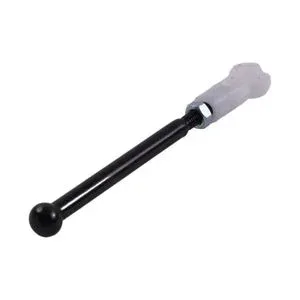
Engine Serial Variants Verified — Correct accelerator rod length and pivot spec confirmed against Toyota 1DZ, 4Y, and 1KD serial ranges before dispatch.
Technical Specifications
| Parameter |
Value |
| Part Number |
26607-26602-71 |
| Product Type |
Accelerator Rod |
| Cross-Reference |
26607-26602-71 (reference only), 266072660271 (reference only) |
| Engine Compatibility |
14Z, 1DZ, 3Z, 4Y, 1KD, 1FS, 1ZS, 2Z, N04C, 1FZ |
| Condition |
New Aftermarket |
| Warranty |
3–12 months against manufacturing defects |
| Manufacturing Standard |
ISO-certified facility |
Application Suitability
| Engine System |
Related Components |
| Throttle Control Assembly |
Throttle cable, return springs, pivot bushings |
| Fuel Delivery Interface |
Fuel pump linkage, governor arm connection |
| Intake Management |
Air intake gasket, throttle body mounting hardware |
| Engine Governing System |
Governor spring set, control lever pins |
Throttle Linkage Replaced but the Fault Returns Within Weeks
Replacing the accelerator rod without diagnosing the fuel system root cause turns a minor repair into a repeat teardown.
I have walked into workshops where the throttle linkage was swapped twice on the same forklift, yet the underlying wear in the fuel pump governor arm went unchecked. Each time the new Accelerator Rod engine replacement part took the mechanical stress until it deformed again. In my experience supporting Chilean copper mine fleets running Toyota-compatible forklifts, throttle failures traced back to the rod itself are rare; most originate from misadjusted cables, worn pivot bushings, or internal fuel pump wear that transfers abnormal load to the linkage [NEED_CITE: throttle linkage failure root cause analysis in industrial forklift engines].

The Accelerator Rod Inside the Complete Throttle Control System
This accelerator rod does not work alone. It transfers operator input through a chain of pivot points, return springs, and the fuel pump interface to regulate engine speed. When any element in that chain is worn, the Accelerator Rod engine replacement part absorbs forces it was not designed to carry, leading to accelerated wear at the pivot ends and eventual loss of throttle response.
Engine Serial Variants That Change the Rod Specification
Across the Toyota-compatible engine families — 1DZ, 1KD, 4Y, N04C, and others — the base part number may appear identical, but rod length, pivot diameter, and attachment geometry shift between serial ranges. I have encountered situations in Latin American operations where the serial plate indicated one variant while the engine had been swapped during a prior rebuild, making the build record the only reliable reference [NEED_CITE: engine serial variant identification for Toyota forklift powertrains]. Confirming the actual engine serial number before ordering prevents receiving a rod that physically bolts on but binds at full travel.
How Material and Geometry Affect Throttle Rod Service Life
The accelerator rod must maintain dimensional stability under continuous vibration and thermal cycling near the engine block. The pivot ends experience repeated rotational stress, so surface finish and hardness at these contact points determine how long the rod holds its adjustment. Proper rod length ensures the throttle plate reaches both idle and full-open positions without over-traveling, which protects the throttle shaft bearings and prevents the return spring from reaching solid bind.
What Happens When the Wrong Variant Ships to the Bay
A rod that is even slightly too long will prevent the throttle from returning to idle, creating a safety hazard the operator may not notice until the forklift creeps unexpectedly. A rod that is too short limits maximum engine speed, reducing hydraulic pump output and cycle times. In both cases, the engine runs, masking the misfit until a secondary component fails. The rework cost — draining fluids, removing covers, and repeating the timing calibration — far exceeds the time spent confirming the serial variant upfront [NEED_CITE: cost of repeat teardown for misidentified engine components].
Why Procurement Teams Source This Rod Here
Our selected production lines and qualified sourced supply both carry the same quality inspection and warranty terms, so the accelerator rod you receive meets consistent tolerances regardless of production batch. Eight equipment part categories ship under one account, meaning the return springs, pivot bushings, and gaskets for the same throttle job arrive in one consignment rather than splitting across multiple deliveries. Minimum order starts at one piece, which matters when a single forklift is down and the full overhaul is not scheduled yet. Our technical team verifies the engine serial variant against the build record, not just the catalog listing, catching mismatches that copied cross-reference tables often carry forward. Guangzhou warehouse stock on common throttle components supports fast dispatch when the machine cannot wait for a production run.
Documentation & Verification
- Commercial invoice listing accelerator rod part number and engine compatibility
- Cross-reference sheet mapping 26607-26602-71 to compatible Toyota engine serial ranges (reference only)
- Dimensional inspection record covering rod length and pivot diameter tolerances
- Warranty terms covering manufacturing defects for 3–12 months
- Packing photographs showing rod protection during transit
- HS code and customs documentation for international clearance
Installation & Rebuild Sequence
- Verify rod length against service manual specification before installing adjacent throttle linkages.
- Clean pivot bore surfaces to remove carbon deposits that accelerate bushing wear on the new accelerator rod.
- Check return spring tension and replace if the spring shows heat discoloration or length loss.
- Confirm full idle-to-wide-open throttle travel without binding after accelerator rod installation.
- Run engine at idle for initial warm-up and observe throttle response before returning to load duty.
Before You Request a Quote
Provide the engine model and serial number from the build plate, along with any prior rebuild records if available. If the nameplate is worn or painted over, send a photograph of the engine block casting marks and the existing throttle linkage assembly. This information lets us confirm the correct accelerator rod variant and identify any related components that should ship together.
Frequently Asked Questions
Q: What other parts should be replaced together with the accelerator rod during an engine service?
A: Pivot bushings, return springs, and linkage pins should be inspected and typically replaced at the same time. Worn bushings transfer irregular loads to the new accelerator rod, shortening its service life. Ordering these as a set ensures matched tolerances and avoids a second teardown for components that were already due for replacement.
Q: How do engine serial variants affect accelerator rod fitment on the same forklift model?
A: Toyota-compatible engine families such as 1DZ and 4Y may use different rod lengths or pivot geometries across serial ranges, even when the forklift model number is identical. Prior engine swaps during rebuilds further complicate identification. Providing the engine serial number ensures the correct variant ships.
Q: What caused the original accelerator rod to fail — and how do I prevent repeat failure?
A: Root causes include misadjusted throttle cables, worn pivot bushings, and internal fuel pump governor wear that overloads the rod. Replacing the rod without addressing these upstream faults leads to repeat failure. A system-level diagnosis during installation prevents recurrence.
Q: Can I get a complete throttle system kit instead of ordering individual components?
A: Yes. A matched kit including the accelerator rod, bushings, springs, and pins ships as one consignment. This approach ensures all wear items in the throttle control assembly are addressed simultaneously, reducing the risk of partial repairs that require follow-up teardowns within weeks.
Q: How do I confirm my engine model when the nameplate is worn or painted over?
A: Photographs of the engine block casting numbers, the existing throttle linkage geometry, and any visible serial stamps on adjacent components allow our technical team to cross-reference the correct engine variant. Build records from prior overhauls also serve as reliable identification sources.