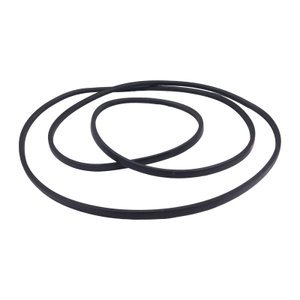
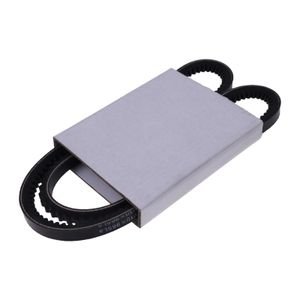
Engine Sequence Variants Verified — Deck Belt 108-7192 mapped to specific Toro Z480 serial ranges, preventing the fitment mismatch that plagues dual-belt deck systems across production runs.
Technical Specifications
| Parameter |
Value |
| Part Number |
108-7192 |
| Product Type |
Belt |
| Cross-Reference |
108-7192 (reference only), 087192 (reference only), 2011A136R (reference only) |
| Machine Fitment |
74352 (Z 480), 74353 (Z 480) |
| Nominal Length |
108 inch |
| Width |
0.5 inch |
| Dimensional Tolerance |
±0.02 inches |
| Cord Reinforcement |
High-modulus polyester |
| Compound |
Neoprene rubber |
| Hardness |
Shore A 70±3 |
| Operating Temperature |
-10°C to +60°C |
| Profile |
Molded cog |
| Condition |
New Aftermarket |
| Standards |
ISO 9001, ISO 4184, SAE J1459 |
Application Suitability
| Engine System |
Related Components |
| Dual-belt deck drive (48" cutting deck) |
Blade spindle assemblies, idler pulleys, tensioner springs |
| Engine-to-deck power transfer path |
PTO clutch, deck engagement cable, pulley bearings |
| Scheduled seasonal maintenance kits |
Matched belt pairs, spindle grease, air filter |
| Commercial landscaping fleet overhaul |
Complete deck rebuild hardware, spindle seals |
Why the Same Z480 Needs Different Belt Verification
The part number alone does not guarantee fitment across every Toro Z480 engine configuration.
Two Z480 mowers sitting side by side in a Riyadh service bay can carry different deck drive pulley geometries depending on their production sequence. A deck belt that seats perfectly on serial range A may ride too high or too low on the pulley groove of serial range B, causing tooth shear within the first operating cycle. [NEED_CITE: belt drive system variant identification for zero-turn mowers] This is not a rare edge case — production changes in pulley casting and tensioner arm length happen across model years without altering the machine badge. The deck belt engine rebuild replacement must match the exact spindle-to-pulley center distance and cog pitch that the specific engine output shaft demands.
The Dual-Belt Deck Drive as an Engine Accessory System
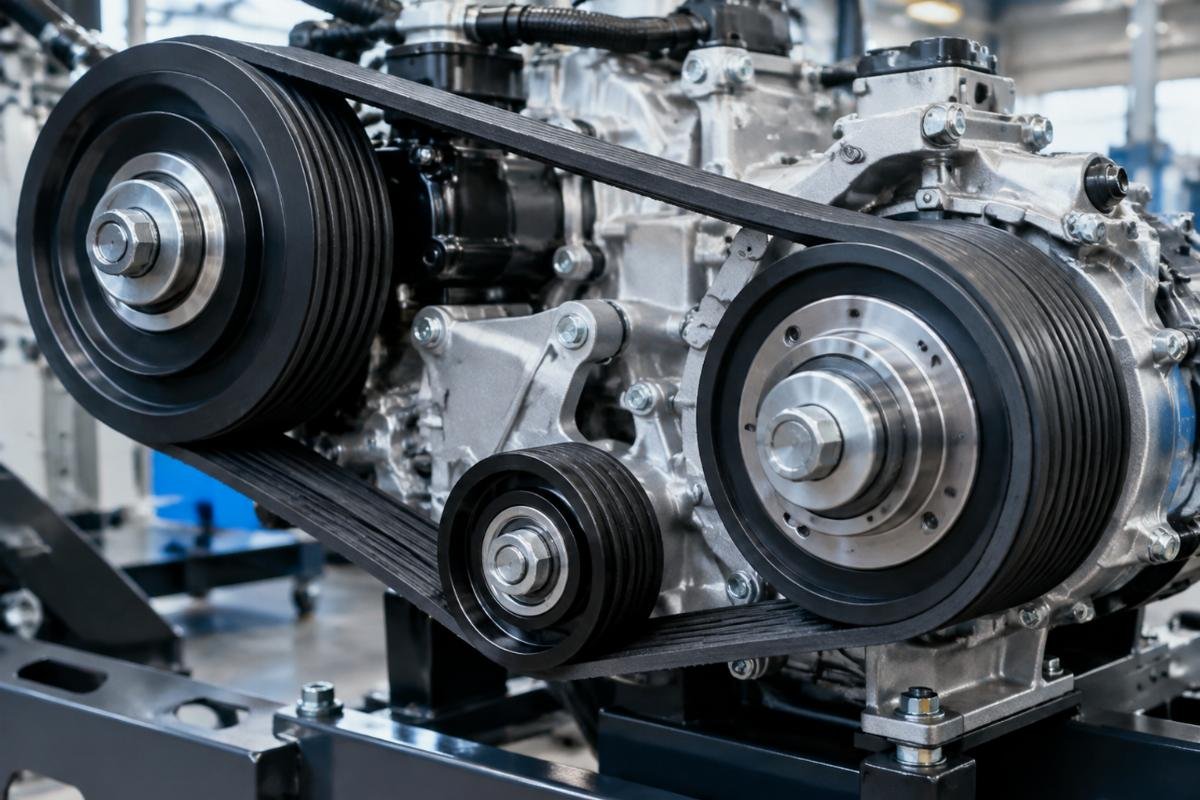
This deck belt engine rebuild replacement transfers rotational force from the engine crankshaft output through an electric PTO clutch into a dual-belt arrangement that spins both blade spindles on the 48-inch deck. The system functions as an engine accessory drive — much like an alternator or water pump belt on a diesel — where tension, alignment, and cog engagement must match the engine's torque curve under sudden blade load. When one blade hits dense grass or a hidden root mass, the shock travels back through the belt teeth into the engine-side pulley. A molded cog profile that does not match the OEM pitch will strip under this transient load, leaving the engine running but the deck dead.
Sequence Variants and the Risk of Wrong-Length Dispatch
Production sequence differences between machine model 74352 and 74353 can alter the routing path across the three-pulley deck system by a fraction of an inch — enough to push a belt outside its ±0.02-inch tolerance window. [NEED_CITE: dimensional tolerance impact on belt wrap angle in multi-pulley drives] The 108-inch nominal length must be verified against the specific serial range because even a correctly numbered belt may not achieve proper wrap angle if the tensioner arm geometry was revised mid-production. Sending a belt based solely on the model name without checking the serial range is how machines end up sitting idle while a replacement ships across borders.
Decoding the Material and Tolerance Specs
The high-modulus polyester cord reinforcement resists the elongation that cheaper nylon cords suffer under sustained heat and cyclic loading. Neoprene rubber compound maintains grip across the -10°C to +60°C range — critical because a deck operating in direct Middle Eastern sun easily exceeds 50°C at the belt contact surface. Shore A 70±3 hardness balances flexibility around the smaller idler pulleys with enough rigidity to resist rolling out of the pulley groove under lateral load. The ±0.02-inch dimensional tolerance ensures the belt seats at the correct depth in each of the three pulleys, maintaining the wrap angle that prevents slip-induced heat buildup and premature glazing.

The Hidden Cost of Skipping Root-Cause Diagnosis
Replacing only the failed belt without inspecting spindle bearing play, pulley groove wear, and tensioner spring fatigue is how the same deck belt engine rebuild replacement returns to the bench within weeks. A worn spindle bearing introduces wobble that loads one side of the belt teeth disproportionately, shearing cogs in a pattern that mimics a defective belt. [NEED_CITE: diagnostic checklist for recurring belt drive failures in commercial mowers] The failed belt is often the symptom; the system fault that killed it remains unaddressed. This means a second purchase, a second teardown, and a second round of downtime — all because the initial repair treated the component rather than the engine accessory system it belongs to.
Why Source This Belt Through XUNPO
Production lines and qualified sourcing partners operate under a single warranty and a single account, so matched belt pairs and adjacent spindle components ship together rather than from separate vendors on separate schedules. Part identification accepts a worn number, a machine serial plate photograph, or simply the model — the technical team cross-references against superseded numbers including 087192 and 2011A136R (reference only) to confirm the correct variant before dispatch. Minimum order starts at one piece for emergency single-unit repairs, with no artificial quantity floor blocking a workshop that needs just one belt today. Quality inspection records covering tensile strength and flex-cycle validation accompany each consignment, and sample supply is available for fitment confirmation before a fleet commits to bulk volume.
Documentation & Verification
- Commercial invoice listing belt part number, serial-range fitment, and HS code for customs clearance
- Cross-reference sheet mapping 108-7192, 087192, and 2011A136R with reference-only identification notes
- Tensile and flex-cycle test records confirming polyester cord integrity and neoprene compound adhesion
- Dimensional inspection report verifying 108-inch length and ±0.02-inch tolerance on each shipped belt
- Warranty terms covering manufacturing defects for 3 to 12 months from delivery date
- Packing photographs documenting belt coil condition and protective wrapping before crate closure
Installation & Rebuild Sequence
- Clean all three pulley grooves of rubber residue and debris before routing the new belt onto the deck system
- Check spindle bearing axial play and replace any assembly exceeding acceptable free-play thresholds
- Route the belt following the correct wrap path — cog side engaging pulley grooves, flat side contacting the tensioner
- Verify tensioner spring force and arm pivot freedom; a seized tensioner will destroy a new belt within hours
- Run the deck at idle engagement for initial seating, then inspect cog alignment after the first operating cycle
Request a Fitment Confirmation
Provide the full machine model number (74352 or 74353), the serial number from the frame plate, and any previous engine or deck rebuild history so the correct belt variant is confirmed before dispatch. If the existing belt number is worn or illegible, a photograph of the old belt's cross-section and the pulley groove profile is sufficient for cross-reference verification. Fleet operators managing multiple Z480 units should share the serial range list to receive a consolidated compatibility sheet covering every machine in the rotation.
Frequently Asked Questions
Q: What other components should be inspected when replacing the deck belt?
A: Spindle bearing play, pulley groove wear depth, tensioner spring force, and PTO clutch engagement condition all affect belt life. A worn spindle bearing introduces lateral wobble that shears belt cogs unevenly. Inspect these before installing the new belt — replacing only the belt while the root cause persists leads to premature re-failure within the same operating season.
Q: Does this belt match the dual-belt system for my specific Z480 serial range?
A: Fitment depends on the exact production sequence, not just the model badge. Provide the serial number from the frame plate so the correct pulley geometry variant is confirmed. Models 74352 and 74353 may carry different tensioner arm configurations that alter effective belt length requirements despite sharing the same nominal 108-inch designation.
Q: Can I order matched belt sets for both sides of the deck drive?
A: Matched pairs ensure both spindles experience identical tension and wear progression. Ordering two belts from the same production batch minimizes length variance between them, which is critical for balanced blade speed across the 48-inch deck. Indicate paired-set requirement when requesting a quote.
Q: What engine system faults cause premature belt failure?
A: Misaligned PTO clutch output, excessive crankshaft end-play, and seized idler pulley bearings all transfer abnormal loads into the belt. Heat from a slipping clutch can also degrade the neoprene compound beyond its 60°C operating limit. Diagnosing these faults before belt replacement prevents the new belt from failing under the same systemic conditions.
Q: How do I confirm the correct part number when my existing belt is unreadable?
A: Submit a photograph of the old belt's cross-section profile, the pulley groove shape, and the machine serial plate. The technical team cross-references against known variant configurations for your serial range to identify the correct belt without relying on the faded print.