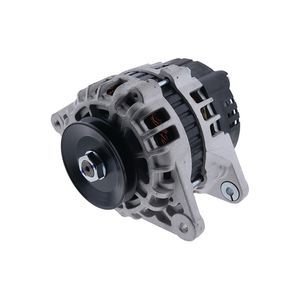
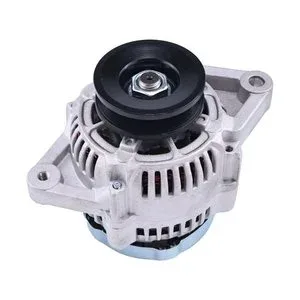
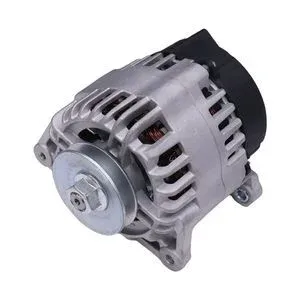
Matched Charging Components — Output verified against Yanmar 3TNE/3TNV and John Deere compact tractor engine electrical load profiles before dispatch.
Technical Specifications
| Parameter |
Value |
| Part Number |
AM877557 |
| Product Type |
Alternator |
| Cross-Reference |
AM877557, MIA10338, SE501822, SE501843, AM879144 (reference only) |
| Machine Fitment |
1070, 2210, 2243, 2320, 2520, 4010, 4110, 4115, 445, 770, F915, X495, 780, 785, 3375, 375, 665, 2500, 2500A, 2500B, 2500E, 2550, 2750, 2653A, 2653B, 3225B, F912, 670, 790, 870, 970, 990, 2305, 4100, 425, 322, 330, 332, 415, 455, 48C, 54HC, 60HC, X465, X475, X485, X575, X585, X595, X700, X710, X720, X724, X728, X729, X730, X734, X738, X739, X740, X744, X748 |
| Voltage |
12V |
| Current |
20A |
| Condition |
New Aftermarket |
| Warranty |
3-12 months against manufacturing defects |
| Standard |
ISO 9001 |
Application Suitability
| Engine System |
Related Components |
| Yanmar 3TNE74 / 3TNM72 / 3TNV76 Charging System |
Drive belts, tensioner assemblies, wiring harness connectors |
| John Deere Compact Tractor Auxiliary Drive |
Pulleys, battery terminals, mounting brackets |
| Kawasaki Engine Electrical Auxiliary |
Voltage regulators, stator windings, rectifier bridges |
Why the Same 12V 20A Alternator Ships in Multiple Variants
An alternator replaced without checking belt drive condition, battery state, or wiring harness often fails again within months.
In Chilean mining camps, I witnessed secondary teardowns caused entirely by tolerance mismatches between auxiliary components. Early in my career at a repair shop, a customer mixed an AM877557 alternator with mismatched Yanmar 3TNE74 batch components; the resulting voltage instability burned out the regulator. Today, verifying engine serial number variants ensures the 12V 20A alternator engine rebuild replacement output precisely matches the complete electrical load, preventing cascading system faults triggered by a single component variance [NEED_CITE: engine auxiliary system voltage stability during low-RPM operation].
The Charging System Within the Engine Rebuild Sequence
When an engine undergoes a complete overhaul, the auxiliary charging circuit must be evaluated as part of the broader system. A 12V 20A alternator engine rebuild replacement installed on a Yanmar 3TNE74 or John Deere compact tractor engine operates within a network of belts, tensioners, and wiring that collectively determine charging performance. Rebuilding the block and cylinder head while leaving worn auxiliary drive components in place invites premature failure of the new alternator.
Matching Output to Electrical Load Across Engine Variants
The 20A output rating serves the specific electrical demand profile of compact utility tractors and landscaping machinery operating at extended low RPM. Sealed bearing construction resists dust and moisture ingress typical in agricultural engine bays. Direct-fit mounting patterns and pulley dimensions maintain correct belt alignment with the accessory drive system. High-quality copper windings manage thermal loads during sustained operation. Engine serial variants may require different mounting configurations, making cross-reference verification essential before bulk commitment [NEED_CITE: alternator bearing sealing standards for agricultural equipment].
Output Rating and Thermal Behavior Under Sustained Load
The 12V specification aligns with the standard electrical architecture of John Deere and Yanmar compact engines, where the charging system must sustain battery voltage across lighting, instrumentation, and electronic control modules simultaneously. The 20A current capacity provides adequate headroom for accessories without overloading the stator windings during high-demand cycles. Copper winding conductivity directly influences heat generation; efficient power conversion reduces thermal stress on internal diodes and the voltage regulator. Sealed bearings prevent contaminant ingress that accelerates wear in dusty field conditions, extending service intervals between auxiliary system overhauls.

The Cost of Skipping Root-Cause Diagnostics
Replacing an alternator without tracing the original failure cause leads to repeat failures within the same season. A weak battery forces the alternator to operate at maximum output continuously, overheating windings. A slipping drive belt reduces charging efficiency while accelerating pulley wear. Wiring harness corrosion introduces resistance that the regulator compensates for by increasing output, eventually exceeding diode thermal limits. Addressing the failed component alone, without inspecting the complete charging circuit, guarantees the new 12V 20A alternator engine rebuild replacement will inherit the same destructive conditions [NEED_CITE: electrical system root-cause analysis for mobile equipment alternators].
System-Level Supply for Engine Rebuild Shops
Own production on selected lines and qualified sourced supply carry identical QC and warranty terms under one account. Eight categories allow a complete engine overhaul job list to ship as a single consignment, eliminating split freight and mismatched lead times. Minimum order starts from one piece for emergency single-unit repairs. Guangzhou warehouse stock enables fast dispatch on common auxiliary components. Part identification works from number, machine model, photograph, or nameplate image. Cross-reference verification covers superseded and alternate numbers, preventing fitment errors before shipment.
Documentation & Verification
- Commercial invoice listing each alternator variant with corresponding engine serial range
- Compatibility sheet cross-referencing AM877557, MIA10338, SE501822 against specific Yanmar and John Deere models (reference only)
- Output verification and load testing records included with each shipment
- Warranty terms covering manufacturing defects for 3–12 months with technical support
- Packing photographs showing alternator condition before crate closure
- HS code and customs documentation formatted for agricultural machinery parts import
Installation & Rebuild Sequence
- Verify mounting bolt pattern matches engine block before installing the alternator
- Inspect drive belt condition and tensioner specification to address root-cause failure
- Confirm pulley alignment with adjacent accessory drive components
- Torque mounting fasteners to engine manufacturer specification
- Test charging output across the full RPM range during initial engine run-in
Requesting a System-Matched Quote
Provide the engine model, serial number, and any previous rebuild history to confirm the correct alternator variant and associated auxiliary components. Rebuild shops can submit complete overhaul parts lists for consolidated system-level quotation.
Frequently Asked Questions
Q: What other engine auxiliary components should be inspected when changing the alternator?
A: The drive belt, tensioner assembly, battery terminals, and wiring harness connectors should all be evaluated. A worn belt or corroded connector forces the new alternator to compensate, accelerating failure. Inspect the voltage regulator and battery condition to confirm the complete charging system operates within specification before installing the replacement unit.
Q: How do I confirm the correct alternator variant for my Yanmar engine serial number?
A: Engine serial variants may require different mounting configurations or output ratings. Provide the complete engine serial number and nameplate photograph for cross-reference verification. This confirms the 12V 20A alternator engine rebuild replacement matches your specific engine build, preventing fitment issues during installation.
Q: Should the belt, tensioner, and pulley be replaced as a matched set?
A: Replacing these as a matched set addresses root-cause failure rather than treating symptoms. A worn tensioner allows belt slip that reduces charging efficiency and accelerates alternator bearing wear. Installing new auxiliary drive components alongside the alternator ensures the complete system operates within design tolerances.
Q: What causes premature alternator failure beyond the unit itself?
A: Weak batteries, wiring harness corrosion, and slipping drive belts all force the alternator beyond normal operating parameters. Continuous maximum output to compensate for battery weakness overheats windings. Corroded connectors introduce resistance that the regulator attempts to overcome, eventually exceeding diode thermal limits and causing repeat failures.