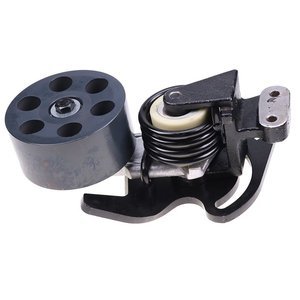
Matched Set Dispatch — Belt tensioner, idler pulleys, and drive belts verified as a system before shipment, preventing single-component comebacks during engine rebuilds.
Technical Specifications
| Parameter |
Value |
| Part Number |
320/08651 320/08657 |
| Product Type |
Belt Tensioner |
| Cross-Reference |
320/08584, 320/08651, 320/08657, 320/08759, 320/A8586 (reference only) |
| Machine Fitment |
1400B, 1550B, 1600B, 1700B, 214, 215, 216, 217, 3C, 3CX, 3D, 4CX, Hydradig |
| Brand Compatibility |
JCB |
| Condition |
New Aftermarket |
| Warranty |
3-12 Month |
| Quality Standard |
ISO 9001 |
Application Suitability
| Engine System |
Related Components |
| Accessory belt drive on JCB backhoe loader engines |
Drive belts, idler pulleys, fan pulley assemblies |
| Alternator and water pump drive circuit |
Alternator mounting brackets, water pump bearings |
| Auxiliary belt tensioning on excavator power units |
Serpentine belts, tensioner brackets, fastener sets |
| Scheduled service belt replacement |
Complete belt drive overhaul kits, seal kits for driven accessories |
Why a Belt Tensioner Fails Again Within Weeks of a Rebuild
The tensioner rarely fails alone — it fails because the belt drive system around it was never fully diagnosed.
Engine rebuild shops regularly encounter machines that return with belt squeal or accessory drive noise shortly after a tensioner swap. The root cause often sits elsewhere in the belt drive circuit: a glazed belt that was reused, a wobbling idler pulley with worn bearings, or a water pump shaft that has developed radial play. Replacing only the belt tensioner engine rebuild replacement component without addressing these adjacent faults sets up the next comeback before the machine even leaves the bay. [NEED_CITE: belt drive system diagnostic procedures for off-highway diesel engines]
A machine held up by a belt drive fault costs the same per hour as one with a major internal engine failure. The difference is that belt drive faults are largely preventable when the entire system is inspected and serviced as a matched set. Shops that adopt a system-level approach to the belt tensioner engine rebuild replacement cycle report noticeably fewer repeat visits for the same symptom.

System Context for the Belt Drive Circuit
The belt tensioner engine rebuild replacement component sits at the center of the accessory drive system, maintaining correct belt deflection across the alternator, water pump, and fan pulley circuit. When tension drops, belts slip, generating heat that accelerates glazing and accelerates bearing wear in every driven accessory. When tension is excessive, pulley bearings carry loads beyond their design envelope, leading to premature failure of components that were otherwise in acceptable condition.
Addressing the Fault That Caused the Failure
Before installing a new belt tensioner engine rebuild replacement unit, the full belt drive path warrants inspection. Belt glazing indicates sustained slip, pointing to a tensioner that was already losing pressure before it was removed. Pulley wobble when spun by hand suggests bearing wear in the idler or a driven accessory — fitting a fresh tensioner against a wobbling pulley transfers vibration into the new component. Checking the water pump shaft for radial play and confirming alternator bearing condition during the same intervention prevents a second teardown. [NEED_CITE: root cause analysis methodology for accessory drive failures in heavy equipment]
Decoding the Cross-Reference Numbers
The five OEM reference numbers — 320/08584, 320/08651, 320/08657, 320/08759, and 320/A8586 (cross-reference only) — reflect superseded part revisions and alternate listings across JCB engine generations. These numbers do not always indicate identical physical components; changes in arm geometry, spring rate, or pulley offset may differentiate one revision from another. Confirming the engine serial number and cross-referencing against the specific build record is essential before selecting which variant to install.
Specification Interpretation for the Belt Drive Environment
The tensioner arm geometry determines the arc through which belt tension is applied, and even slight differences in pivot-to-pulley center distance alter the effective tension across the belt span. The internal spring mechanism must deliver consistent pressure across the full range of belt stretch that occurs as a belt ages, maintaining adequate grip on the alternator and water pump pulleys without overloading their bearings. The pulley surface finish and diameter directly influence belt contact area and heat dissipation — a degraded pulley face generates localized hot spots that crack and shed belt material. Mounting bolt pattern and fastener grade must match the engine block or bracket specification to prevent loosening under the cyclic loads typical of diesel accessory drives.
The Hidden Cost of Ignoring the Belt Drive System
Fitting a new tensioner against a reused, glazed belt typically results in slip recurring within the first weeks of operation, bringing the machine back with the same noise complaint. Overlooking a worn idler pulley bearing transfers harmonic vibration into the fresh tensioner, accelerating internal spring fatigue. When the belt drive system is treated as a collection of independent parts rather than an interdependent circuit, each partial repair compounds the next, and cumulative downtime across a fleet becomes a measurable drag on machine availability. [NEED_CITE: total cost of repeat repairs in mobile equipment maintenance programs]
Procurement Advantages for Belt Drive System Rebuilds
Eight product categories under one account means the belt tensioner, matched belts, idler pulleys, and fastener sets ship as a single consignment rather than arriving from separate suppliers on different schedules. Part identification is available from a part number, machine model, photograph, or nameplate image, reducing the risk of ordering the wrong variant. Cross-reference verification covers superseded and alternate numbers, catching errors that copied tables often carry forward. A technical team confirms compatibility and grade suitability before bulk commitment. Sample supply is available for fitment confirmation, allowing shops to verify physical dimensions and mounting pattern before committing to a fleet-level order. Minimum order from one piece supports emergency single-machine repairs without forcing unnecessary stock.
Documentation & Verification
- Commercial invoice and packing list listing each belt drive component by verified part number
- Part compatibility and cross-reference sheet noting superseded number lineage (reference only)
- Dimensional inspection record covering pulley diameter, arm pivot geometry, and bolt pattern
- Warranty terms specifying coverage period and claim procedure for belt tensioner units
- Packing photographs documenting condition of tensioner, belts, and pulleys before crate closure
- HS code classification support for customs clearance of engine belt drive components
Installation & Rebuild Sequence
- Inspect all pulleys for bearing play and surface condition before fitting the new tensioner
- Verify belt routing against the engine diagram to prevent misalignment across the accessory drive
- Torque tensioner mounting fasteners to engine bracket specification using a calibrated tool
- Confirm belt deflection falls within the service manual tolerance after initial tensioner engagement
- Run the engine at idle and observe belt tracking for abnormal lateral movement or noise
- Re-check tension after a brief run-in period to confirm the tensioner arm holds position
Request a System-Level Quote
Provide the engine serial number, machine model, and any previous rebuild history so the correct tensioner variant and matched belt drive components can be confirmed. Photographs of the existing tensioner, belt routing, and nameplate help verify the cross-reference against your specific engine build. Specify whether the order is for a single machine repair or a fleet-level stocking requirement to receive appropriately structured documentation.
Frequently Asked Questions
Q: What other belt drive components should be replaced together with the tensioner?
A: Drive belts and idler pulleys should be replaced concurrently. A reused belt with glazing will slip against the new tensioner, while a worn idler pulley bearing introduces vibration that fatigues the fresh unit. Ordering belts, pulleys, and the tensioner as a matched set ensures compatible tolerances and single-consignment dispatch, eliminating the mismatched lead times that leave machines waiting on a second delivery.
Q: How do I confirm which cross-reference number matches my engine build?
A: The OEM reference numbers 320/08584, 320/08651, 320/08657, 320/08759, and 320/A8586 (cross-reference only) reflect revisions across engine generations. Provide the engine serial number and machine model so the correct variant is identified. Photographs of the existing part and its mounting arrangement help verify arm geometry and pulley offset against the specific build record.
Q: What root causes should I check before installing a new tensioner?
A: Inspect the belt for glazing, cracking, or material shedding. Spin each idler and driven accessory pulley by hand to detect bearing roughness or radial play. Check the water pump shaft and alternator bearings for lateral movement. Addressing these faults during the same intervention prevents the new tensioner from inheriting the load conditions that destroyed its predecessor.
Q: Can belts, pulleys, and tensioners ship as a matched set?
A: Yes. The full belt drive component list — tensioner, drive belts, idler pulleys, and fastener sets — can be sourced and dispatched together under one account. Matched supply ensures compatible tolerances across the accessory drive circuit and consolidates freight into a single shipment, avoiding the split deliveries that delay a machine return to service.
Q: How is engine serial variation handled for the same machine model?
A: Machine models such as 3CX or 4CX span multiple engine generations, and the belt tensioner variant may differ between builds. Confirming the engine serial number allows identification of the correct tensioner geometry and cross-reference number. This step prevents ordering a component that physically fits the mounting bracket but delivers incorrect belt tension for that specific engine configuration.