Matched Set Dispatch — This CVT belt ships alongside clutch springs, weights, and sheave bearings so the entire power transfer system is addressed in one verified order.
Technical Specifications
| Parameter |
Value |
| Part Number |
3211218 |
| Product Type |
Belt |
| Cross-Reference |
26C4057 (reference only) |
| Machine Fitment |
Ranger XP 1000 EPS Trail Boss (2021), Ranger XP 1000 EPS Premium Winter Prep (2020), Ranger XP 1000 EPS Premium (2020), Ranger SP 570 EPS Premium (2022-2023), Ranger SP 570 EPS NorthStar (2022-2024), Ranger SP 570 EPS (2022-2024), Ranger Crew XP 1000 EPS Premium (2020), Ranger Crew SP 570 EPS Premium (2022-2023), Ranger Crew SP 570 EPS NorthStar (2022-2024), Ranger Crew SP 570 EPS (2022-2024), Ranger Crew 1000 EPS Premium Winter Prep (2021-2022), Ranger Crew 1000 EPS Premium (2020-2024), Ranger Crew 1000 EPS (2020-2024), Ranger Crew 1000 (2020-2024), Ranger 530 EPS (2023), Ranger 1000 EPS Premium Winter Prep (2021-2022), Ranger 1000 EPS Premium (2020-2024), Ranger 1000 EPS (2020-2024), Ranger 1000 (2020-2024), Pro XD Mid-Size Gas (2022-2024), Pro XD Mid-Size Crew Gas (2022-2024), Pro XD Full-Size Gas (2022-2024), Pro XD Full-Size Crew Gas (2022-2024), Pro XD Full Size Gas, Pro XD 4000G (2020-2021), Pro XD 2000G (2020-2021) |
| Brand Compatibility |
Polaris |
| Condition |
New Aftermarket |
| Warranty |
3-12 months against manufacturing defects |
| Standards |
ISO 9001 |
Application Suitability
| Engine System |
Related Components |
| CVT Power Transfer |
Primary clutch weights, secondary clutch springs, driven clutch seals |
| Engine Output Routing |
Drive clutch sheave bearings, belt dust covers, cooling fan assemblies |
| Scheduled Overhaul Service |
Complete CVT service kits, engine oil filters, spark plugs |
Diagnosing Root Cause Before a Clutch Drive Belt 3211218 Engine CVT Replacement
The belt breaks because something else failed first.
In utility and commercial fleet environments, a snapped CVT belt is rarely the primary fault. The primary clutch weights wear down, altering the shift profile and forcing the belt to operate outside its designed pitch diameter. Weak secondary springs allow the driven clutch to slip under load, generating excess heat that degrades the rubber compound from the inside out. I have seen rebuild shops replace the belt three times before checking the sheave bearing axial play [NEED_CITE: CVT primary clutch inspection procedures for utility vehicles]. A proper system diagnosis prevents repeat failures.

System Context for the Power Transfer Assembly
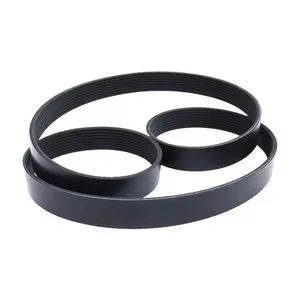
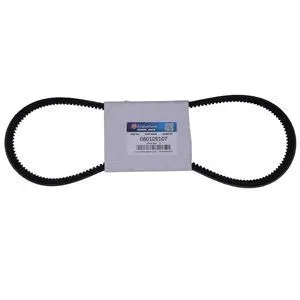
The Clutch Drive Belt 3211218 engine CVT replacement operates between the drive and driven clutches, transferring torque from the engine crankshaft to the transmission input. Its service life depends directly on the condition of adjacent components within this closed loop. Worn clutch shoes or glazed sheave surfaces introduce slippage that accelerates cord fatigue. Addressing the CVT system as a whole, rather than swapping the belt in isolation, is standard practice for professional engine rebuild shops handling Ranger 1000 and Pro XD platforms.
Sizing and Variant Differences Across Engine Displacements
The same base platform uses different belt profiles depending on whether the engine is a 570cc, 1000cc, or commercial-grade Pro XD variant. The top width and cog depth differ to match the torque curve of each displacement. A belt specified for a Ranger 1000 EPS will not seat correctly on a Ranger SP 570 EPS, even though the outer dimensions may appear similar [NEED_CITE: CVT belt sizing standards for displacement-specific UTV applications]. Confirming engine displacement and model year before ordering eliminates the risk of installing a dimensionally close but functionally incorrect variant.
Interpreting the Load and Compound Specifications
The reinforced rubber compound and precision-molded cogs are specified for the high-torque engagement cycles typical in utility work and construction site operation. The tensile cord rating is matched to 1000cc and 570cc engine output profiles to prevent stretching under sustained load. A belt designed for light recreational use would exhibit noticeable elongation when subjected to the constant-load profiles of a Pro XD 4000G running on a farm or ranch. The cog geometry also affects heat dissipation during low-speed, high-load crawling, which is where most premature failures originate.
The Cost of Missing the Underlying Fault
Installing a new belt without measuring primary clutch weight wear and secondary spring tension leads to predictable repeat failure. The new belt absorbs the same unresolved stress, and the machine returns with the same complaint within a short operating window. In a fleet maintenance context, this means pulling the clutch cover twice, doubling labor hours and eroding confidence in the parts supply [NEED_CITE: CVT belt failure root cause analysis methodology]. The diagnostic sequence must precede the parts order.
Procurement Advantages for Rebuild Shops
We supply this belt as part of a matched CVT service set, so the shop receives the belt, springs, weights, and seals under one account and one warranty. Our technical team confirms displacement and model year compatibility before dispatch, using cross-reference verification that covers superseded and alternate numbers. The Guangzhou warehouse holds stock on fast-moving items for consolidated dispatch. Minimum order is one piece, supporting both emergency single-unit repairs and planned fleet overhaul stocking. Sample supply is available for fitment confirmation before bulk commitment.
Documentation & Verification
- Commercial invoice and packing list with HS code for customs clearance
- Part compatibility and cross-reference sheet marked reference only for OEM 26C4057
- Quality inspection record covering dimensional checks on belt width and cog depth
- Warranty terms document specifying coverage period against manufacturing defects
- Packing photographs showing belt condition and protective packaging before sealing
Installation & Rebuild Sequence
- Clean CVT housing thoroughly before installing the new Clutch Drive Belt to prevent debris ingress
- Measure primary clutch weight wear and replace if below service limit specifications
- Verify secondary clutch spring tension matches the engine displacement variant
- Seat belt fully on both sheaves before applying initial rotation torque
- Run engine at idle for initial warm-up cycle before applying load
Technical Inquiry Details
To confirm correct fitment, provide the engine model, serial number, and any previous rebuild history. This allows us to verify the correct belt profile for your specific displacement and check if superseded part numbers apply. Supplying a photograph of the existing belt or the machine nameplate speeds up the identification process when the original number is worn.
Frequently Asked Questions
Q: What other CVT components should be inspected when replacing the drive belt?
A: Primary clutch weights, secondary clutch springs, drive and driven sheave bearings, and clutch cover seals should all be evaluated. Wear on any of these components alters the operating profile and causes premature failure of the new belt. Inspecting the full system ensures the replacement addresses the root cause.
Q: Does cross-reference 26C4057 apply to my specific Ranger model year?
A: The cross-reference 26C4057 covers specific Ranger and Pro XD sub-models but is not universal across all model years. We verify applicability against your engine serial number and model designation before dispatch to confirm the belt profile matches your machine's CVT variant.
Q: Are there different belt profiles for 570cc versus 1000cc engines within the same Ranger series?
A: Yes, the top width, cog depth, and tensile cord rating differ between displacement variants. A 570cc belt will not transfer torque correctly on a 1000cc engine and vice versa. Confirming engine displacement is essential before ordering.
Q: What system conditions cause premature belt failure even with a new replacement?
A: Worn clutch weights, weak secondary springs, glazed sheave surfaces, and contaminated CVT housing air flow all contribute to early degradation. The belt is the symptom carrier, not always the root cause. System-level inspection prevents repeat visits.