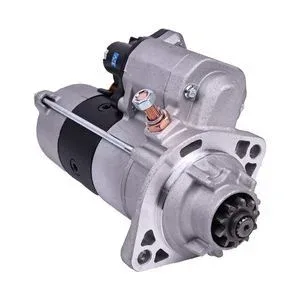
System-Matched Overhaul Supply — This 4996706 starter motor is verified against Cummins B, ISB, and QSB engine serial variants to prevent mismatched cranking components after rebuild.
Technical Specifications
| Parameter |
Value |
| Part Number |
4996706 |
| Product Type |
Starter Motor |
| Cross-Reference |
4996706 (reference only), 4280007090, 4280007091, 4280007092, 4380003110, 5128000980 |
| Machine Fitment |
Cummins 4B3.9, 6B5.9, 6C8.3, B3.3, B4.5, B6.7 CM2350, F3.8, G5.9, ISB/ISD6.7, ISB4.5, ISB6.7, QSB4.5, QSB5.9, QSB6.7 variants |
| Voltage |
12V |
| Pinion Gear Teeth |
10T |
| Pinion Gear Material |
20MnCr5 case-hardened steel |
| Winding Insulation Class |
H (180°C) |
| Bearing Type |
Sealed ball bearings (ABEC-3 grade) |
| Surface Treatment |
Zinc-nickel electroplating (≥12μm thickness) |
| Condition |
New Aftermarket |
| Quality Standard |
ISO 9001 |
Application Suitability
| Engine System |
Related Components |
| Cranking System |
Flywheel ring gear, starter solenoid, battery cables |
| Overhaul Assembly |
Complete gasket kit, main and rod bearings, piston rings |
| Electrical Circuit |
Alternator, voltage regulator, wiring harness terminals |
| Engine Block Integration |
Flywheel housing, mounting fasteners, heat shields |
Why the Rebuilt Cummins Engine Still Will Not Start After Overhaul
A Starter Motor engine rebuild plan fails when the cranking system is not treated as a complete electrical and mechanical circuit.
In desert rebuild environments, technicians often replace the starter without verifying the condition of the flywheel ring gear or the resistance in the solenoid control circuit. A worn 10-tooth pinion may engage, but if the ring gear has localized tooth damage from the previous failed starter, the new unit will shear teeth within the first month of operation. Similarly, high resistance in corroded battery cables forces the new starter to draw excessive amperage, causing premature brush wear that mimics the original failure. [NEED_CITE: electrical cranking circuit diagnostic procedures for heavy-duty diesel engines]. Treating the Starter Motor engine rebuild as an isolated swap rather than a system check leads to repeat teardowns and lost shop capacity.

The Starter Within the Cummins Cranking System Hierarchy
The starter motor is the first mechanical load the rebuilt engine must overcome. When Cummins B-series or QSB-series engines are reassembled with new bearings and piston rings, initial breakaway torque is higher than on a run-in engine. The Starter Motor engine rebuild component must therefore deliver rated cranking torque without thermal degradation, particularly when the insulation class is subjected to elevated under-hood temperatures during the initial run-in cycle.
Matching Overhaul Grade and Engine Serial Variants
Cummins engine families share base architectures but differ in flywheel housing depth and ring gear position across serial ranges. A starter that fits a B4.5 block may not achieve correct pinion-to-ring-gear mesh on an ISB6.7 variant due to housing offset differences. Rebuild shops that stock a single starter part number across multiple engine builds risk incorrect engagement depth. Verifying the exact engine serial number against the starter variant prevents mesh errors that cause tooth stripping. [NEED_CITE: Cummins engine serial range fitment cross-reference methodology].
Reading the Specifications Against Rebuild Conditions
The 20MnCr5 case-hardened pinion resists surface pitting during the high-torque engagement phase typical of fresh rebuilds where cylinder compression is at maximum. Class H insulation (180°C) provides thermal margin when engine compartment airflow is restricted by new heat shields and emission system routing common on CM2150 and CM2250 variants. Sealed ABEC-3 bearings prevent contaminant ingress from the flywheel housing environment, where oil mist and fine particulate are constant. The zinc-nickel plating at minimum 12μm thickness protects mounting surfaces and electrical contact points from the saline corrosion typical of port and marine applications.
The Hidden Cost of Skipping Root-Cause Diagnosis
Installing a new starter without tracing the original failure means the replacement inherits the same destructive conditions. A solenoid that chatters due to weak control-circuit voltage will burn the contacts in the new starter within weeks. A flywheel ring gear with three consecutive damaged teeth — invisible without inspection — will destroy the new pinion gear during engagement. [NEED_CITE: root cause failure analysis protocols for diesel engine cranking systems]. Rebuild shops that skip this diagnostic step absorb the warranty cost of a second teardown.
What This Supplier Verifies Before Dispatch
Own production lines and qualified sourced supply carry identical QC protocols and warranty terms under a single account. Eight product categories allow overhaul gasket kits, bearings, seals, and this starter motor to ship in one consignment rather than across multiple suppliers. Minimum order is one piece, so a single emergency starter can be confirmed before committing to fleet-quantity orders. Part identification works from the engine serial number alone when the starter nameplate is corroded or painted over. Cross-reference verification covers superseded and alternate numbers to catch catalog errors before shipment. The technical team confirms pinion tooth count and mounting pattern against specific engine build data.
Documentation & Verification
- Commercial invoice listing 4996706 with engine model and serial cross-reference notation
- Compatibility sheet showing verified Cummins variant fitment for this starter
- Full-load cranking test record with amperage draw and torque output
- Warranty terms aligned with standard engine rebuild service intervals
- Packing photographs showing unit condition and zinc-nickel coating integrity
- HS code and customs documentation support for international overhaul parts shipments
Installation & Rebuild Sequence
- Inspect flywheel ring gear teeth for pitting, chipping, or wear before installing the 10T pinion starter
- Verify solenoid control circuit voltage drop is within specification to prevent contact burn
- Torque mounting fasteners to housing specification to maintain pinion alignment
- Perform unloaded bench spin test before engine installation to confirm bearing and brush function
- Allow break-in cranking cycles without extended motor run to seat brushes properly
Request a Matched Overhaul Quotation
Provide the Cummins engine model, serial number, and any prior overhaul history so we can verify the correct starter variant and confirm compatibility with your flywheel housing. Include your complete overhaul parts list for consolidated shipment planning.
Frequently Asked Questions
Q: What other components should I inspect when replacing the starter during an engine rebuild?
A: Examine the flywheel ring gear for tooth damage, test the solenoid control circuit for voltage drop, check battery cable terminals for corrosion, and verify the flywheel housing mounting surface is clean and undamaged. A new starter installed against a damaged ring gear will fail prematurely, negating the rebuild investment.
Q: How do Cummins engine serial variants affect starter compatibility within the same family?
A: Different serial ranges within QSB6.7 or ISB4.5 families may use different flywheel housing depths or mounting patterns. Confirming the exact serial number ensures the pinion engagement depth and bolt pattern match your specific engine build, preventing mesh errors.
Q: What typically causes the original starter to fail, and how do I prevent repeat failure?
A: Common causes include solenoid contact burn from weak control voltage, flywheel ring gear tooth damage, and brush wear from excessive cranking cycles. Diagnosing the root cause before installing the replacement prevents the new unit from inheriting the same destructive conditions.
Q: Can the starter motor ship with my complete overhaul kit?
A: Yes, this starter can be consolidated with gasket kits, bearings, piston sets, and seals in a single shipment under one account and one warranty, eliminating split freight and mismatched arrival times.
Q: How do I identify the correct starter when my engine nameplate is unreadable?
A: Provide photographs of the old starter, the flywheel housing, and any visible casting numbers. Cross-reference verification against superseded part numbers and engine model data can confirm the correct variant without a readable nameplate.