Engine Auxiliary Components
12V Fuel Stop Solenoid for Thermo King Engines – Engine Grade
<p>Overhaul seal kit contents verified item-by-item before dispatch.</p>
View Details
<p><strong>16851-60014 Fuel Stop Solenoid, 12V</strong> — replacement for Kubota RTV900 series utility vehicles. This solenoid interfaces directly with the injection pump fuel rack, controlling fuel cutoff for safe engine shutdown during rebuild or system repair.</p> <ul> <li>Verify wiring harness voltage and connector type to prevent coil burnout</li> <li>Replace alongside fuel filters, lines, and gaskets for complete system refresh</li> <li>Cross-reference numbers 052600-4530, 16851-60010, and variants confirmed for fitment</li> </ul> <p>Overhaul kit contents reviewed to ensure matched fuel system components ship together.</p>
MOQ
1 Piece
Lead Time
2-5 Business Days
Shipping
120+ Countries
Warranty
3-12 Months
Compatible Brands
Matched System Supply — Fuel stop solenoid 16851-60014 verified against Kubota RTV900 engine serial variants for accurate rebuild kit completion.
| Parameter | Value |
|---|---|
| Part Number | 16851-60014 |
| Product Type | Stop Solenoid |
| Cross-Reference | 052600-453, 052600-4530, 052600-4531, 16851-60010, 16851-60012, 16851-60013, 16851-60015 (reference only) |
| Machine Fitment | RTV900G, RTV900G6, RTV900G9, RTV900R-SD, RTV900R-SDL, RTV900R6, RTV900R9, RTV900T, RTV900T5-H, RTV900T5-T2, RTV900T6, RTV900T9, RTV900W, RTV900W6, RTV900W6SE, RTV900W8SE, RTV900W9, RTV900W9SE, RTV900XTG, RTV900XTR, RTV900XTS, RTV900XTT, RTV900XTW |
| Voltage | 12V |
| Condition | New Aftermarket |
| Warranty | 3-12 months against manufacturing defects |
| Standards | ISO 9001 |
| Engine System | Related Components |
|---|---|
| Fuel Cutoff & Shutdown Control | Injection pump fuel rack, fuel lines, fuel filters, wiring harness connectors, shutdown relay |
| Post-Rebuild Fuel System Refresh | Overhaul gasket sets, injector return lines, primer pump, tank breather |
| Electrical Control Circuit | Ignition switch, safety interlock relays, fuse block, 12V coil power feed |
The 12V fuel stop solenoid is often the single component that turns a successful engine rebuild into an immediate callback.
I used to manage a mixed fleet where a utility vehicle came back to the shop three days after an engine overhaul because the technician reused the original stop solenoid without bench-testing it. The internal plunger was carbon-fouled from the previous engine's life, and it failed to seat properly against the injection pump fuel rack, causing the engine to run on after the key was turned off. That kind of post-rebuild incident destroys confidence in the entire job, even when the rotating assembly and cylinder head were assembled perfectly. [NEED_CITE: diesel engine fuel rack control and shutdown system reliability]
When planning a complete fuel system overhaul on Kubota RTV900 series vehicles, the solenoid sits at the intersection of the electrical system and the fuel delivery path. Its function is simple, but its integration is not: it must respond to the shutdown signal within milliseconds, move the fuel rack to the zero-delivery position, and hold that position against spring pressure and vibration. A solenoid that operates on the bench but fails under the thermal load of a running engine bay is a diagnostic nightmare that often leads to misdiagnosing the injection pump itself.
The fuel stop solenoid interfaces directly with the injection pump fuel rack, making it the final actuator in the shutdown sequence. In the RTV900 engine family, the injection pump metering is mechanical, and the solenoid provides the electrical override that forces the rack to the no-fuel position. If the solenoid stroke does not match the pump's rack travel specification, the engine either will not shut down or will experience restricted fuel delivery during normal operation, leading to power loss that gets blamed on the pump or injectors.
This is why evaluating a 12V fuel stop solenoid in isolation is a mistake. It must be considered alongside the injection pump condition, the governor spring tension, and the electrical signal quality reaching the coil.
The 12V coil in this solenoid must be matched to the vehicle's wiring harness connector and relay circuit. Across the RTV900 range, different production years and variants have used different connector configurations and relay logic for the shutdown circuit. A replacement solenoid with the correct mechanical stroke but a mismatched connector pin-out will either not operate or will draw excessive current, burning out the coil within days. [NEED_CITE: mobile equipment electrical connector standards and circuit protection]
Before replacing the solenoid, check for voltage drop across the wiring harness and relay contacts under load. A corroded connector or a failing relay can present as a solenoid fault, leading to unnecessary replacement and repeat failures. I once traced a repeat solenoid burnout on a work-site RTV900 back to a relay with pitted contacts that was only delivering partial voltage, causing the coil to overheat rather than pull the plunger fully home.
The 12V operating voltage defines the coil winding specification, which in turn determines the electromagnetic force available to move the plunger against the return spring and fuel rack friction. The stroke length must precisely match the fuel rack travel from full-fuel to zero-fuel position, typically verified during pump assembly or bench calibration.
An undersized stroke leaves the rack partially open, resulting in engine run-on after shutdown. An oversized stroke can bind the rack or damage the pump linkage. Quality inspection records for this solenoid confirm coil resistance within specification, response time testing, and stroke measurement before dispatch, ensuring the unit matches the mechanical requirements of the Kubota injection pump it will control.
Replacing a stop solenoid without investigating why the original failed is one of the most common errors in utility vehicle repair. Solenoid coils burn out due to voltage irregularities, mechanical plungers stick due to contamination in the pump housing, and connectors fail due to moisture ingress and vibration. Addressing only the solenoid leaves the root cause active, guaranteeing a repeat failure that may damage the replacement unit within weeks. [NEED_CITE: root cause analysis methodology for diesel fuel system component failures]
When a rebuilt engine returns with a fuel system fault, the cost extends beyond the replacement part. The vehicle is down again, the rebuild warranty is questioned, and diagnostic time multiplies. Confirming wiring integrity, relay function, and pump condition before installing the new solenoid protects the investment in the entire overhaul.
This solenoid is sourced and verified under the same quality terms as the engine overhaul gaskets, piston sets, and fuel system components it ships alongside. The production and sourcing lines operate under ISO 9001 with identical warranty coverage, meaning a complete fuel system refresh arrives under one account with consistent support.
Cross-reference verification covers the multiple superseded and alternate numbers associated with the RTV900 fuel system, reducing the risk of ordering the wrong variant. Technical support is available to confirm engine serial range compatibility and electrical connector type before dispatch. Single-piece orders are accepted for emergency repairs, and sample supply is available for fitment confirmation before bulk commitment by rebuild shops stocking common Kubota service components.
Provide the RTV900 variant designation, engine serial number if available, and a photograph of the existing solenoid connector and mounting flange. This allows confirmation of the correct cross-reference variant and connector type before the unit is dispatched, eliminating fitment surprises during the rebuild sequence.
Q: What other fuel system parts should I inspect or replace when changing the stop solenoid? A: Inspect the injection pump fuel rack for free movement, check fuel lines for degradation, and verify fuel filter condition. The solenoid operates within a system, and contamination or restriction elsewhere can cause repeat failures. If the engine is undergoing a full overhaul, replacing fuel hoses and the primer pump at the same time avoids second teardowns.
Q: How do I know which cross-reference number matches my specific RTV900 engine variant? A: The RTV900 range includes multiple variants with different production dates and electrical configurations. Provide the machine model, engine serial number, and a photograph of the existing solenoid and connector. Cross-reference verification against these identifiers confirms the correct variant from the listed replacement numbers.
Q: Is the solenoid failure the root cause, or could it be a wiring or relay issue? A: Solenoid failure is frequently a symptom rather than the cause. Voltage drop across corroded connectors or failing relays can burn out coils or prevent proper plunger operation. Measure voltage at the solenoid connector under load and inspect relay contacts before concluding the solenoid is at fault.
Q: Does the engine overhaul gasket kit include this solenoid, or is it ordered separately? A: Most standard overhaul gasket sets do not include the stop solenoid, as it is classified as an auxiliary electrical component rather than a sealing item. Verify kit contents against your job list and order the solenoid separately if not included, ensuring it arrives with the rest of the rebuild components.
<p>Overhaul seal kit contents verified item-by-item before dispatch.</p>
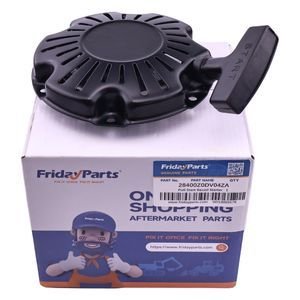
View Details<p><strong>Recoil Starter 28400Z0DV04ZA, PA66-GF30 Housing, ASTM A228 Spring</strong> — replacement for Mikasa MTX60, MTX70, MTX70HD and GX100 rammers. This engine auxiliary component integrates directly with the flywheel engagement system; correct housing geometry and spring return torque prevent repeated keyway damage during cold starts. Matched pulley tolerance of ±0.15 mm supports reliable operation across dusty compaction sites.</p> <ul> <li>Overhaul kit contents and adjacent auxiliary seals verified before dispatch</li> </ul>
View Details<p><strong>AT318141 Starter Motor 12V 1.8 kW</strong> — compatible with Yanmar 3TNV88, 4TNV88 engines and Hitachi Zaxis 35U/50U compact excavators.</p> <ul> <li>15-tooth pinion gear meshes with flywheel ring gear; inspect ring gear wear before installing during engine rebuild to prevent repeat failure</li> <li>Supplied as part of a complete starting and auxiliary system alongside overhaul gaskets, bearings, and fuel components for matched engine reassembly</li> <li>Overhaul kit contents verified item by item before dispatch to ensure no missing components for your specific engine build</li> </ul>
View Details<p><strong>Spark Plug 4955850/4937472/5473010, Iridium-Enhanced Electrode, 14 mm × 1.25 mm Thread</strong> — replacement for Cummins gas engines including ISB5.9G CM2180, ISC8.3 G, ISL G, and QSL9 G CM558.</p> <ul> <li>Triple-seal design prevents combustion leakage into plug well</li> <li>Gap tolerance 0.028–0.031 in matched to ignition control module calibration</li> <li>Addresses misfire-induced cylinder washdown and catalyst damage</li> </ul> <p>Overhaul kit contents verified per engine serial variant and rebuild history.</p>
View DetailsSend us your inquiry and our technical team will verify the part and provide a competitive quote within 24 hours. MOQ starts from 1 piece.
Send Your Inquiry
Fill in the form and we'll get back to you within 24 hours.