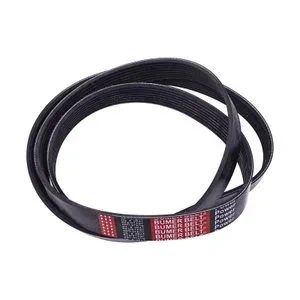
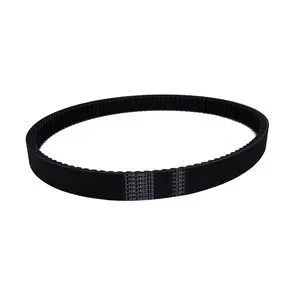
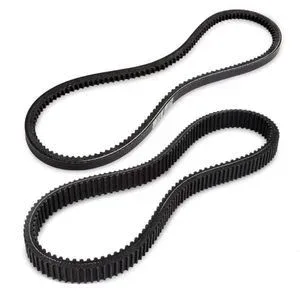
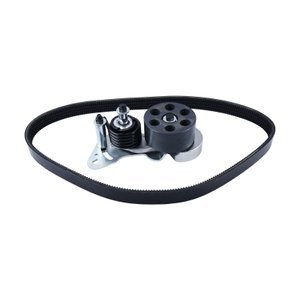
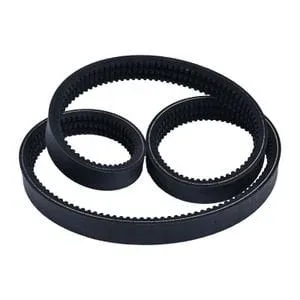
Matched Sets Shipped — Belt and adjacent tensioner verified against engine serial to avoid rebuild teardown repeats.
Technical Specifications
| Parameter |
Value |
| Part Number |
3288497 |
| Product Type |
Belt |
| Cross-Reference |
3288497 (reference only), C3288497 (reference only) |
| Machine Fitment |
ISB, QSB, 6CTA, ISC, QSC, 4B3.9, 6A3.4, 6B5.9, B Series, C Series |
| Material |
EPDM rubber compound with aramid cord reinforcement |
| V-Angle |
32.5° |
| Dimensional Tolerance |
±0.3 mm |
| Tensile Strength |
≥1,800 N |
| Temperature Resistance |
up to 120°C |
| Condition |
New Aftermarket |
| Warranty |
3–12 months against manufacturing defects |
| MOQ |
1 piece |
| Standards |
ISO 9001, SAE J1459, ISO 4184 |
Application Suitability
| Engine System |
Related Components |
| Alternator drive circuit |
Alternator pulley, tensioner arm, mounting bracket bolts |
| Water pump drive circuit |
Water pump pulley, coolant hoses adjacent to belt path |
| Air compressor drive circuit |
Compressor clutch pulley, refrigerant line clearances |
| Hydraulic pump accessory drive |
Pump drive gear, front cover gasket, seal kit |
| Full engine overhaul |
Overhaul gasket set, main bearings, piston rings, belt drive kit |
Why a Missed Belt Profile Derails a Cummins Overhaul
Confirm belt length against engine serial before the block goes back together.
An engine rebuild that reuses the old tensioner or assumes all B-series builds share the same belt profile frequently ends with a second teardown. Across Cummins ISB, QSB, and 6CTA platforms, the accessory drive layout shifts between generations — pulley spacing, tensioner arm travel, and belt routing differ enough that a V-Belt engine rebuild can fail fitment even when the base part number appears to match. I recall checking a batch intended for a 6CTA platform where the belt length was correct for early serials but too short for later variants with a revised alternator bracket. [NEED_CITE: Cummins B and C series belt drive routing revisions across serial ranges]
The Belt Drive System as a Whole Unit
This belt sits within a multi-accessory drive system on Cummins B and C series engines. It routes around the crankshaft pulley, alternator, water pump, and in many configurations the air compressor or hydraulic pump. Treating it as an isolated wear item ignores the system it operates in. When planning a V-Belt engine rebuild, the tensioner condition, pulley face wear, and alignment of each driven accessory must be evaluated together. A new belt running on a grooved or misaligned pulley will show edge wear within a few hundred hours, and the root cause will be blamed on belt quality rather than the untouched hardware.
Serial Variants and Rebuild History Matter
Cummins B and C series engines have been in production long enough that many units now entering overhaul have been rebuilt at least once. Previous rebuilds may have substituted components from adjacent serial ranges or altered the accessory bracket configuration. [NEED_CITE: engine rebuild practices and component substitution in aftermarket overhaul] When verifying fitment for this belt, the engine serial number is the reliable starting point — not the machine model alone. If the unit has been overhauled before, comparing the installed belt routing and tensioner type against the original build record helps confirm whether the current configuration still calls for part number 3288497 or if a variant length is now required. Dimensional tolerance of ±0.3 mm is tight enough that even a slightly different tensioner arm position changes the effective belt path.
EPDM Compound and Aramid Reinforcement in Context
The EPDM rubber compound used in this belt resists heat soak from the adjacent exhaust manifold and coolant passages, maintaining flexibility up to 120°C. Aramid cord reinforcement provides dimensional stability under load — the belt does not stretch appreciably as it ages, which means tensioner adjustment frequency stays low. The 32.5° V-angle is designed to seat fully in the pulley grooves of B and C series accessory drives. A shallower angle would ride higher in the groove, reducing contact area and accelerating wear on both belt and pulley faces. Tensile strength rated at ≥1,800 N provides margin above the steady-state drive loads encountered by alternator and compressor circuits on these platforms, accounting for the transient spike loads when a compressor clutch engages. [NEED_CITE: EPDM belt performance characteristics in high-temperature diesel engine bays]

The Cost of Ignoring System-Level Faults
Premature belt failure on ISB and QSB engines is often a symptom rather than the primary fault. A seized tensioner bearing, a water pump that has developed shaft play, or an alternator with a dragging bearing all impose loads the belt was not designed to carry. Replacing only the belt without diagnosing the drag source means the new belt absorbs the same abnormal forces and fails on a similar timeline. In a workshop environment, this presents as a comeback — the same machine returns within weeks for the same complaint. Checking each pulley for free rotation and axial play before installing the new belt takes minutes and prevents the repeat visit. [NEED_CITE: diagnostic sequence for accessory drive belt premature failure on diesel engines]
Sourcing That Addresses the Rebuild, Not Just the Part Number
Our selected production lines and qualified sourced supply operate under a single quality framework, so belt drive components and overhaul kits ship with the same inspection and warranty terms. Eight product categories mean a complete overhaul list — gaskets, bearings, piston sets, and belts — consolidates under one account. Minimum order from one piece supports the workshop that needs a single belt to close out a job today and the distributor building stock for planned fleet overhauls. Guangzhou warehouse inventory covers fast-moving B and C series belt drive items for prompt dispatch. Cross-reference verification covers superseded numbers and variant lengths, and our technical team confirms engine serial compatibility and grade selection before the order ships. Sample supply allows fitment confirmation before bulk commitment on larger overhaul kit programs.
Documentation & Verification
- Commercial invoice listing belt part number, engine serial reference, and quantity
- Compatibility sheet cross-referencing 3288497 and C3288497 against engine build records
- Dimensional inspection covering V-angle and length tolerance before dispatch
- Warranty terms covering manufacturing defects for 3–12 months from receipt
- Pre-shipment packing photographs showing belt condition and labeling
- HS code and customs documentation support for international belt shipments
Installation & Rebuild Sequence
- Verify pulley groove condition and tensioner arm travel before routing the new belt
- Route belt per engine serial-specific diagram to match correct accessory drive path
- Confirm tensioner applies specified preload after belt is seated in all grooves
- Run engine at idle and inspect belt tracking on each pulley for alignment
- Re-check tension after initial heat cycle as EPDM compound settles into grooves
Request a System-Matched Quotation
Provide your Cummins engine model, serial number, and any known rebuild history so we can verify the correct belt length and variant for your specific build. If you are planning a complete overhaul, share the full component list for matched pricing and consolidated dispatch.
Frequently Asked Questions
Q: What other components should be replaced alongside this V-Belt during an overhaul?
A: During a Cummins B or C series overhaul, we recommend replacing the tensioner assembly, inspecting all pulleys for groove wear and bearing play, and checking accessory brackets for alignment. A matched belt drive kit including these adjacent items prevents early belt failure caused by worn hardware that was left in place.
Q: Do all Cummins ISB and QSB variants use the same belt part number?
A: No. Belt length and routing differ across ISB and QSB serial ranges due to changes in alternator bracket position and tensioner design over production years. Confirming your exact engine serial number is necessary to verify that 3288497 is the correct length for your specific build configuration.
Q: How do I confirm the correct belt if my engine was previously rebuilt?
A: Previous rebuilds may have introduced components from adjacent serial ranges. Compare your current belt routing, tensioner type, and pulley layout against the original engine build record. Our technical team can cross-reference your configuration to confirm whether 3288497 or a variant part number applies.
Q: Can this belt be included in a complete engine overhaul kit quotation?
A: Yes. This belt is routinely included in Cummins B and C series overhaul kits alongside gasket sets, bearing shells, piston rings, and seal kits. Providing your full rebuild component list allows us to quote a matched set under one order with consolidated dispatch from our Guangzhou warehouse.
Q: What system faults cause this belt to fail prematurely on Cummins engines?
A: Common root causes include a seized or dragging tensioner bearing, water pump shaft play, alternator bearing drag, or pulley misalignment from a bent bracket. These faults impose loads beyond normal drive requirements, causing the belt to wear rapidly regardless of its material quality or specification.