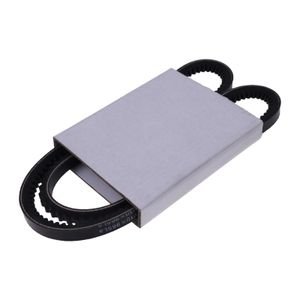
Engine serial variants confirmed — Cross-reference verification for 1G062-97012 ensures this V-belt matches the specific cooling drive requirements of your Kubota D905 through V1505 variant, preventing mismatched tension profiles during rebuild.
Technical Specifications
| Parameter |
Value |
| Part Number |
1G062-97012 |
| Product Type |
Belt |
| Cross-Reference |
1G062-97012 (reference only), 1G06297012 (reference only) |
| Machine Fitment |
F2680E, F2690, F2690E, F3080, F3680, F3990, ZD1511LF, ZD1511RL, ZD1511RLF, F2680, F2880, F3060, B2100, B7510, B7610, B8700, F2260, F2560 |
| Brand Compatibility |
Kubota |
| Material |
High-tensile synthetic rubber with polyester cord reinforcement |
| Condition |
New Aftermarket |
| Warranty |
6 months against manufacturing defects |
| Minimum Order Quantity |
1 piece |
| Standards |
ISO 9001, ISO 4184, SAE J1459 |
Application Suitability
| Engine System |
Related Components |
| Cooling System Drive |
Water pump, thermostat, radiator fan, tensioner pulley |
| Auxiliary Drive |
Alternator pulley, idler bearings |
| Engine Rebuild |
Cylinder head gasket, water pump seal, tensioner spring |
Addressing the Root Cause of Repeated Belt Failure
Replacing a broken fan belt without investigating the cooling system often leads to repeat failure.
A snapped or glazed V-belt fan belt engine rebuild replacement is rarely an isolated event. The underlying cause is frequently a failing water pump bearing, a seized idler pulley, or a thermostat that is allowing the engine to run hot. When the heat load exceeds the belt's thermal tolerance, the synthetic rubber compound degrades and cracks. I have seen many Kubota D-series engines come back for a second belt change because the rebuilder only swapped the belt and ignored the heat source [NEED_CITE: engine cooling system fault diagnosis and belt wear correlation].
Cooling System Integration and V-Belt Fan Belt Engine Rebuild Replacement
The cooling system on a Kubota D905 or V1505 relies on a precise tension balance. If the water pump pulley is wobbling due to a worn bearing, it creates a harmonic vibration that shreds the polyester cord inside the belt. A correct V-belt fan belt engine rebuild replacement must be installed into a system where the pulleys are true. This ensures the 14.5-degree V-angle seats deeply and evenly in the groove, preventing the slippage that causes rapid sidewall wear.
Engine Serial Variants and Oversize History
During an engine rebuild, the front cover and pulley alignment must be verified. Engines that have been rebuilt previously may have slight misalignments if the front oil seal was not driven in squarely. This misalignment pushes the belt to one side of the pulley groove. Checking the engine serial number is vital because Kubota introduced variations in the pulley spacing across the D1005, D1105, V1205, and V1305 ranges. A belt that is slightly too wide or too narrow for the specific variant will either bottom out or ride too high, leading to rapid failure [NEED_CITE: Kubota D/V series engine pulley spacing variations].
Material and Thermal Load Interpretation
The high-tensile synthetic rubber compound is chosen for its resistance to ozone cracking and oil mist, which are common in the engine bays of agricultural tractors and quarry loaders. The polyester cord reinforcement is the critical element that minimizes elongation. In a high-temperature environment, such as a rice paddy tractor working under heavy load, a standard rubber belt would stretch and lose tension within a few hundred hours. The synthetic compound maintains its structural integrity, ensuring the water pump spins at the correct speed to prevent overheating and subsequent cylinder head damage.

The Hidden Cost of Ignoring the System
Fitting a new belt onto a system with a failing tensioner is a false economy. The initial repair looks cheap, but the machine will be down again within weeks. The labor cost of removing the radiator and fan shroud a second time far exceeds the cost of a complete cooling system service. When a machine is working in a high-dust or high-humidity environment, the belt is under constant abrasive and thermal stress. A system-level approach to the V-belt fan belt engine rebuild replacement ensures the machine stays in the field [NEED_CITE: mobile equipment cooling system maintenance scheduling].
Why Source This Component Here
This supplier maintains a technical team that verifies cross-references against superseded part numbers. The selected part lines are produced in their own facility or sourced from qualified ISO-certified partners, carrying the same warranty terms. A single account handles the belt, the tensioner spring, and the water pump gasket, avoiding the delays of split deliveries. The Guangzhou warehouse stock allows for fast dispatch on common D-series and V-series components. Sample supply is available to confirm fitment before a fleet-wide commitment is made.
Documentation & Verification
- Commercial invoice and packing list detailing all cooling system components in the shipment.
- Part compatibility and cross-reference sheet verifying 1G062-97012 match to engine serial range.
- Quality inspection record confirming tensile strength and dimensional checks.
- Warranty terms covering manufacturing defects for the stated six-month period.
- Packing photographs showing the belt protected from ozone and moisture during transit.
Installation & Rebuild Sequence
- Inspect water pump pulley for wobble and bearing play before removing the old belt.
- Clean pulley grooves with solvent to remove rubber residue and ensure full belt contact.
- Verify tensioner spring pressure and idler bearing condition; replace if seized or weak.
- Check alignment of the fan hub and crankshaft pulley using a straightedge.
- Run the engine to operating temperature and re-tension the belt to specification.
- Monitor coolant temperature and belt tracking for the first hour of operation.
Inquiry Guidance for Rebuild Shops
To confirm the correct belt specification for your specific engine, provide the engine model and serial number. Detail any previous rebuild history, including oversize work or component replacements. Mention any recurring overheating or vibration symptoms to allow the technical team to recommend adjacent components. Request a compatibility check if the machine nameplate is worn or unreadable.
Frequently Asked Questions
Q: What other cooling system components should I inspect or replace when changing this belt?
A: You should inspect the water pump bearings for play, the thermostat for correct opening temperature, and the radiator for internal blockage. The tensioner spring and idler pulleys must be checked for seizure or weak tension. Replacing the belt without addressing these components risks a repeat failure.
Q: How do I confirm the correct belt for my specific Kubota engine serial number?
A: Provide the engine model (e.g., D1105) and the serial number from the engine block. The technical team will cross-reference this against the build records to verify the pulley spacing and belt profile. This is essential because Kubota used different tensioning arrangements across the D and V series variants.
Q: Can this belt be included in a complete engine overhaul gasket and seal kit?
A: Yes, this belt is often included in a cooling system refresh kit alongside the water pump gasket, thermostat housing seal, and front crankshaft oil seal. Sourcing these as a matched set ensures compatibility and prevents delays caused by missing small components during the assembly phase.
Q: What system-level faults cause premature belt failure beyond normal wear?
A: Premature failure is usually caused by a misaligned pulley, a failing water pump bearing, or excessive heat from a blocked radiator. Oil leaks from the front crankshaft seal can also degrade the rubber compound. Addressing these root causes is more effective than simply replacing the belt.
Q: How do I verify the engine model when the nameplate is worn or unreadable?
A: Send a clear photograph of the engine block casting numbers, the injection pump model, and the starter motor specification. The technical team can use these component identifiers to narrow down the engine family and serial range, allowing for accurate parts identification.