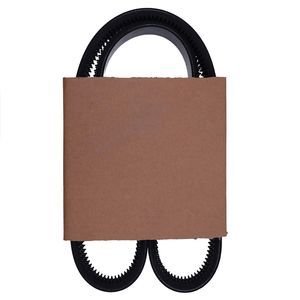
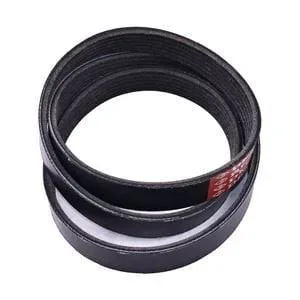
Matched sets verified — Every RE548027 belt tensioner ships with cross-reference validation against your specific engine serial prefix to prevent variant mismatch during overhaul.
Technical Specifications
| Parameter |
Value |
| Part Number |
RE548027 |
| Product Type |
Belt Tensioner |
| Cross-Reference |
RE548027 (reference only) |
| Machine Fitment |
John Deere Tractors (6403–7230R), Engines (4045, 3029, 6068, 6090, 6125, 6135), Backhoe Loaders (310J–710L), Combines (1076–W80), Excavators (120D–E400), Motor Graders (620G–672GP), Loaders (435–755K), Sprayers (STS 10–MAF 4080) |
| Condition |
New Aftermarket |
| Warranty |
3–12 months against manufacturing defects |
| Initial Tension |
85–95 N·m (source value — verify against manufacturer catalog) |
| Pivot Bushing Tolerance |
±0.01 mm (source value — verify against manufacturer catalog) |
| Surface Treatment |
Zinc-nickel electroplated (source value — verify against manufacturer catalog) |
| Operating Temperature Range |
-20°C to +110°C (source value — verify against manufacturer catalog) |
| Damping Isolator |
Integrated rubber isolator for 1,800–2,200 RPM harmonic resonance |
| Mounting Bracket |
Forged steel |
| Spring Type |
Dual-stage torsion spring |
| Standards |
ISO 9001, ASTM B117 |
Application Suitability
| Engine System |
Related Components |
| Front-end accessory drive (4045 / 3029) |
Poly-V belt, idler pulley assembly, fan hub bearing, alternator mounting bracket |
| High-output agricultural drive (6068 / 6090) |
Heavy-duty serpentine belt, crankshaft damper, water pump pulley, AC compressor clutch |
| Continuous-duty industrial drive (6125 / 6135) |
Matched belt set, tensioner arm pivot bushing, driven accessory bearings, harmonic balancer |
| Overhaul kit integration |
Cylinder head gasket set, front cover seal kit, accessory bracket hardware, belt alignment gauge |
Why Overhaul Kits Fail When the Belt Drive System Is Ignored
A belt tensioner replaced in isolation rarely solves the root cause of accessory drive failure.
Engine rebuild shops regularly encounter machines back on the stand within weeks of delivery, not because of piston ring or bearing failure, but because the accessory drive was treated as an afterthought. When a tensioner fails prematurely after rebuild, the teardown cost often exceeds the initial overhaul labor. [NEED_CITE: diesel engine accessory drive failure modes during post-overhaul operation] The belt drive system operates as a closed loop—vibration from a glazed belt transfers through the tensioner arm, accelerates pivot bushing wear, and loads the water pump bearing beyond design limits. Addressing the failed component without diagnosing the system that destroyed it guarantees a repeat visit.

The Belt Drive as a Rebuild-Critical System
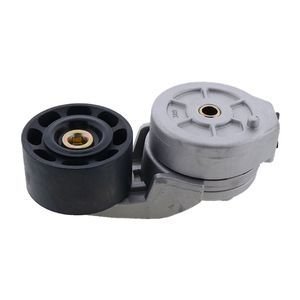
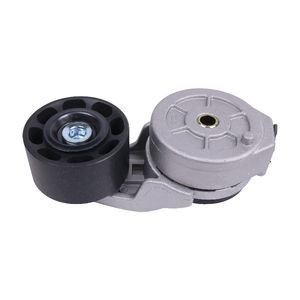
The belt tensioner RE548027 sits at the center of the front-end accessory drive, managing preload across the alternator, water pump, fan, and AC compressor circuits simultaneously. During an engine overhaul, this component must be evaluated alongside every driven accessory—not as a wear item to be swapped by rote, but as a system element whose spring rate and damping characteristics must match the torque signature of the specific engine serial variant. Mismatched spring force leads to belt flutter at operating RPM, which accelerates belt cord fatigue and generates harmonic vibration that damages adjacent bearing surfaces.
Serial Variants and Mounting Geometry Across Engine Families
John Deere 4045, 3029, 6068, 6090, 6125, and 6135 engine families share displacement naming conventions but carry distinctly different accessory bracket configurations across serial ranges. [NEED_CITE: John Deere engine serial prefix identification for accessory drive compatibility] A tensioner specified for an early 4045 block may not align correctly on a later-production variant where the fan hub height, idler position, and bracket bolt pattern were revised. Confirming the engine serial prefix—such as T04045 or CD6068—before ordering prevents the situation where the tensioner arm reaches full travel before achieving target belt preload, rendering the installation non-functional from the first startup.
Tension Specifications That Prevent Secondary Bearing Damage
The dual-stage torsion spring within this tensioner is calibrated to deliver controlled preload across the 1,800–2,200 RPM band where accessory drive harmonic resonance peaks. The integrated rubber damping isolator absorbs torsional pulses from the crankshaft before they propagate through the belt span. When a tensioner arrives at end-of-life, the isolator hardens and loses damping capacity—meaning the new belt now receives undampened crankshaft impulses that accelerate cord separation. The zinc-nickel surface treatment on the forged steel bracket provides corrosion resistance in humid and chemical-laden environments typical of agricultural and port-side operation, preventing pivot seizure that would eliminate tensioner movement entirely.
The Cost of Skipping Root-Cause Diagnosis
Replacing a failed belt tensioner without inspecting the idler pulley bearing for axial play, the belt surface for glazing or cord exposure, and the accessory bracket for misalignment virtually ensures the new tensioner inherits the same destructive conditions. [NEED_CITE: belt drive system root cause analysis for recurring tensioner failure] Shops that skip this diagnostic step report repeat failures within the first service interval, with each teardown consuming the same labor hours as the original rebuild. The tensioner is rarely the origin point—it is the symptom of a system imbalance that remains active until the full drive circuit is validated.
What Makes This Supply Source Different
Own production lines and qualified sourced supply operate under identical QC and warranty terms, meaning a belt tensioner carries the same accountability regardless of origin facility. Eight product categories ship under one account, so a complete overhaul parts list—tensioner, matched belt, gasket set, piston ring set, bearing shells—consolidates into a single consignment with one tracking reference. Minimum order starts at one piece, so a single emergency tensioner ships without MOQ barriers. Guangzhou warehouse stock covers high-turnover engine drive components for fast dispatch. Part identification works from engine model, serial number, or nameplate photograph when the worn part number is illegible. Technical support confirms spring rate match and mounting geometry before commitment, preventing the costly trial-fitment cycle.
Documentation & Verification
- Commercial invoice and packing list referencing engine serial prefix and tensioner variant confirmed
- Cross-reference sheet showing RE548027 (reference only) interchange numbers for 4045/6068/3029 families
- Dimensional inspection record covering pivot bushing tolerance and bracket bolt pattern verification
- Warranty terms covering manufacturing defects for the stated 3–12 month period
- Packing photographs showing protective foam insert and bracket surface condition before crating
- HS code classification and customs documentation for international engine parts shipment
Installation & Rebuild Sequence
- Clean accessory bracket mounting surface and verify bolt torque sequence before tensioner installation
- Inspect all driven accessory bearings for axial play before routing the new belt over the tensioner pulley
- Confirm pivot bushing moves freely through full travel arc without binding or lateral wobble
- Route belt according to engine-specific diagram, then release tensioner to apply preload and verify alignment
- Run engine to operating temperature and recheck belt tracking on all pulleys under load
- Document belt deflection measurement at specified span point for future service interval reference
Requesting a Matched Overhaul Quotation
Provide the engine model, serial prefix from the block nameplate, and any prior rebuild history including oversize grades already installed. This information enables confirmation of the correct tensioner variant alongside matched belt, idler, and pulley components as a verified set. Shops planning multiple engine builds can submit the full fleet list for consolidated system-level quoting across all eight component categories.
Frequently Asked Questions
Q: What else should I replace when servicing the belt tensioner on a 4045 engine?
A: Replace the serpentine belt, inspect the idler pulley bearing for play, and check the fan hub bearing condition simultaneously. The tensioner works as part of a closed system—worn adjacent components transfer destructive vibration into the new tensioner and accelerate its failure. A matched set eliminates the trial-fitment problem and ensures all drive elements reach service life together rather than staggered.
Q: How do I confirm RE548027 fits my specific engine serial number?
A: Provide the full serial prefix from the engine block nameplate, such as T04045 or CD6068. Accessory bracket configurations changed across production runs within the same engine family, affecting bolt pattern, pulley offset, and tensioner arm reach. Cross-reference verification against the build record confirms the correct variant before the order ships, avoiding on-site discovery of a geometry mismatch.
Q: Are tensioner specifications identical across 4045, 3029, and 6068 engines?
A: No. Each engine family carries distinct accessory drive loads, bracket geometries, and harmonic profiles. Spring rate, damping isolator tuning, and pivot bushing dimensions vary between families and across serial variants within each family. Ordering by engine family alone without serial confirmation risks receiving a tensioner with incorrect preload characteristics that cannot maintain belt tension at operating RPM.
Q: What caused the previous tensioner to fail and how do I prevent it from recurring?
A: Common root causes include a seized idler bearing transferring vibration, belt contamination from coolant or oil leaks, bracket misalignment from prior impact damage, and hardened damping isolator from heat aging. Inspect the entire drive circuit before installing the replacement. Addressing only the tensioner without resolving the upstream failure condition virtually guarantees a repeat teardown within the first service interval.
Q: Can I order a complete belt drive overhaul set as one kit?
A: Yes. A matched set including tensioner, belt, idler pulley, and related hardware consolidates under one part list and ships as a single consignment. This approach eliminates the situation where individual components arrive from different sources on different schedules, delaying the rebuild completion. Request a system-level quote with your engine serial information for verified compatibility across all included components.