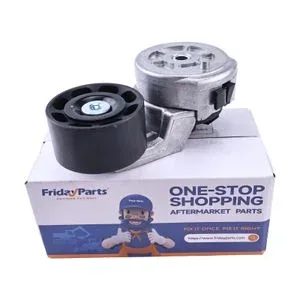
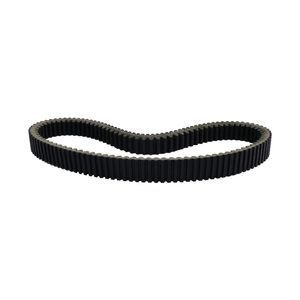
Engine Serial Variants Verified — belt profile and effective length confirmed against pump pulley geometry across 753, 763, 773, and 7753 engine builds before dispatch.
Technical Specifications
| Parameter |
Value |
| Part Number |
6660994 |
| Product Type |
Belt |
| Cross-Reference |
6660994 (reference only) |
| Machine Fitment |
753, 763, 773, 7753 |
| Material |
EPDM Rubber + Aramid Fiber Reinforcement |
| Profile Type |
3VX |
| Dimensions |
3 grooves × 10 mm pitch × 1550 mm effective length |
| Warranty |
12-month warranty against manufacturing defects |
| Standards |
ISO 9001, SAE J1459, ISO 4184 |
Application Suitability
| Engine System |
Related Components |
| Accessory drive on Bobcat 753 / 763 |
Tensioner assembly, idler pulley, pump shaft seal |
| Accessory drive on Bobcat 773 / 7753 |
Water pump coupling, alternator pulley, harmonic balancer |
| Hydraulic pump drive circuit |
Pump mounting gasket, drive coupler, belt guard hardware |
| Cooling system belt path |
Fan pulley, thermostat housing gasket, coolant hose clamps |
Why a Pump Drive Belt Fails Again Within Weeks of Replacement
The belt is rarely the root cause — the fault lives in the pulley, tensioner, or driven component it wraps around.
On a demolition site running a 773, I watched a crew swap only the belt after a snap. Three days later the new pump drive belt engine rebuild replacement shredded across the same grooves. The water pump bearing had seized partially, creating drag the belt could not absorb. Repeat failures like this consume more machine hours than the original breakdown [NEED_CITE: common root causes of accessory drive belt failure in skid steer loaders]. When an engine is already open for overhaul, overlooking the tensioner arm pivot or the idler surface finish means the replacement belt inherits the same misalignment that destroyed the last one. A system-level view of the accessory drive prevents the cycle from repeating.

The Accessory Drive Circuit and Where This Belt Sits
This belt transfers crankshaft output to the hydraulic pump and, depending on engine serial variant, to the water pump or alternator on Bobcat 753, 763, 773, and 7753 platforms. In an engine rebuild context, the pump drive belt engine rebuild replacement is one of the last components installed — meaning any fault in the pulleys, tensioner, or pump shaft must be corrected before the belt goes on. Miss a worn tensioner pivot at this stage and the belt absorbs the resulting oscillation, accelerating sidewall wear. Treating the belt as part of the accessory drive system rather than an isolated consumable keeps the entire rebuild sequenced correctly.
What a Previous Rebuild May Have Changed
Earlier overhaul work on these engines sometimes introduces non-standard pulleys or alters the tensioner arm geometry, particularly when aftermarket pump assemblies replace factory units. Belt effective length and profile must be re-verified against the actual hardware on the engine, not just the build sheet. A pump drive belt engine rebuild replacement ordered against the original specification can ride too high or too low in a changed pulley groove, generating heat at the cord line [NEED_CITE: accessory drive pulley substitution effects on belt tracking in compact loaders]. Confirming the current pulley diameters and tensioner travel before ordering eliminates the mismatch before the engine bay is reassembled.
Reading the Spec Sheet for Real-World Behaviour
The 3VX profile means three narrow wedge-shaped ribs that seat deep into matched pulley grooves, distributing load across a broader contact arc than a classical V-belt. EPDM rubber compound resists the sustained heat found in enclosed engine bays, where ambient temperatures around the accessory drive regularly exceed what natural rubber or SBR can tolerate. Aramid fiber reinforcement limits tensile elongation under the rated load, so the belt maintains tension across long service intervals instead of stretching and slipping. Slippage at the pump pulley causes cavitation inside the hydraulic circuit — a problem that surfaces as sluggish loader response rather than an obvious belt symptom. Correct 1550 mm effective length ensures the tensioner operates within its designed travel range, neither bottomed out nor fully extended.
The Cost of Missing the Adjacent Fault
Replacing the belt alone while a dragging water pump or a frozen idler bearing remains in the circuit guarantees a repeat failure — sometimes within the first operating shift. The second teardown costs more in labour and lost production than the first, because the machine was already committed back to the job. On a quarry loader running continuous shifts, an unplanned accessory drive failure halts not only the machine but the trucks queued beside it [NEED_CITE: downstream equipment idle time caused by single-machine accessory drive failure]. Inspecting every pulley, the tensioner pivot, and the pump shaft seal before closing the belt guard removes the hidden variable that causes premature belt destruction.
Why Procurement Runs Through XUNPO
Own production lines for selected belt profiles and qualified sourced supply for the remainder operate under the same QC protocol and the same 12-month warranty, so one account covers the full accessory drive list. Eight product categories allow the belt, tensioner, seals, and pulleys to ship in a single consignment, eliminating split freight. Orders from one piece upward mean a single emergency belt for a downed 763 does not require padding a minimum order quantity. Part identification works from the number, the machine model, or a photograph of a worn nameplate — useful when paint has covered the original data plate on older Bobcat machines. Cross-reference verification covers superseded numbers so a discontinued reference still maps to a current, available belt. A technical team confirms engine serial compatibility and grade before the order is locked, catching variant differences that cross-reference tables alone may miss.
Documentation & Verification
- Commercial invoice and packing list listing each belt by part number and machine fitment
- Part compatibility and cross-reference sheet marked reference only for 6660994
- Dimensional check record covering profile, groove count, and effective length
- 12-month warranty terms included in the dispatch package
- Packing photographs showing belt condition and protective wrapping before crate closure
- HS code and customs documentation support for cross-border engine parts shipment
Installation & Rebuild Sequence
- Inspect pulley grooves for scoring or polish before routing the 3VX belt onto the accessory drive
- Verify tensioner arm pivot freedom and spring pressure with the belt removed from the circuit
- Route belt around crankshaft pulley first, then idler, then pump pulley to maintain alignment
- Confirm 1550 mm effective length allows the tensioner to sit mid-travel after final tensioning
- Run engine at idle for initial break-in, then re-check tension after the first thermal cycle
- Log belt installation date and machine hours for the next scheduled accessory drive inspection
Preparing Your Enquiry
Provide the engine model and serial number from the Bobcat 753, 763, 773, or 7753 data plate, along with any rebuild history the engine has undergone. If the original belt is still in place, a photograph of the part number and pulley arrangement helps confirm profile and length. State whether adjacent components — tensioner, idler, pump seal — are also being replaced so the full accessory drive kit can be quoted together.
Frequently Asked Questions
Q: What other components should be inspected or replaced when changing this belt?
A: The tensioner assembly, idler pulley, and pump shaft seal should all be checked for free rotation and surface condition. A worn tensioner pivot or a scored pulley groove will destroy the new belt prematurely. We supply matched tensioners and seals alongside the belt so the full accessory drive circuit ships in one consignment.
Q: Does the same belt number apply across all engine serial variants for this machine model?
A: Not always. Production changes across the 753, 763, 773, and 7753 series can alter pulley diameter or tensioner travel, requiring a different effective length or profile. Provide your engine serial number so we verify the correct belt variant against the actual accessory drive configuration.
Q: How do I confirm whether a previous rebuild changed pulley or tensioner specifications?
A: Measure the current pulley groove profile and outer diameter, then compare against the factory build sheet for your engine serial. Aftermarket pump assemblies sometimes use different pulleys. Our technical team reviews your measurements and cross-references the belt specification before confirming the order.
Q: What system-level faults can cause premature belt failure beyond the belt itself?
A: Partial water pump seizure, a frozen idler bearing, or misaligned pulley brackets all transfer abnormal load into the belt. Heat from a failing pump bearing also degrades rubber compounds. Identifying and correcting the root cause before installing the new belt prevents repeat failure within the first operating cycle.
Q: Can I get a matched set of belt, tensioner, and seals in one consignment?
A: Yes. We consolidate the belt, tensioner assembly, idler, and associated seals under one order and one warranty. This eliminates split shipments and ensures every accessory drive component arrives together, so the engine bay closes on schedule without waiting on a second delivery.