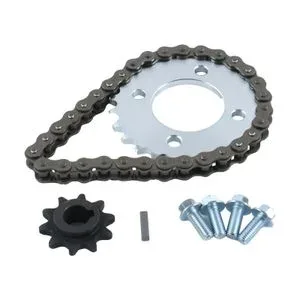
Matched Drivetrain Set — Heat-treated carbon steel sprocket and ANSI #420 chain shipped as a verified pair to prevent pitch mismatch during 196cc/212cc go kart engine rebuilds.
Technical Specifications
| Parameter |
Value |
| Product Type |
Timing Kit |
| Machine Fitment |
Coleman KT196, Coleman CK196, Predator 196cc, Predator 212cc (6.5hp) |
| Chain Standard |
ANSI #420 |
| Sprocket Tooth Count |
25T |
| Chain Link Count |
32-link |
| Material |
Premium carbon steel, heat-treated |
| Condition |
New aftermarket |
| Quality Standard |
ISO 9001 |
| Warranty |
6-month manufacturing defect coverage |
| Minimum Order |
1 piece |
Application Suitability
| Engine System |
Related Components |
| Go kart drivetrain chain path |
Clutch drum, jackshaft bearings, master link, rear axle sprocket |
| Engine output torque transfer |
Centrifugal clutch assembly, drive chain tensioner, crankshaft keyway |
| Small-displacement powertrain refresh |
Throttle cable linkage, engine mount hardware, chain guard |
Why Sprocket Wear Is Rarely Just Sprocket Wear
A worn tooth profile usually signals chain stretch, clutch drum scoring, or jackshaft bearing play that the standard teardown checklist overlooked.
When a Predator 212cc engine arrives with chain slippage, the instinct is to swap the sprocket and move on. In practice, the root cause often sits two or three components away — a worn jackshaft bearing allowing lateral runout, or a clutch drum that has developed an uneven friction surface. Replacing the 420 chain sprocket kit without addressing those adjacent failures means the new kit inherits the same misalignment and fails prematurely [NEED_CITE: go kart drivetrain wear cascade diagnostics for small displacement engines]. I have pulled sprockets off kart engines in field conditions where the tooth wear pattern clearly pointed to a bent jackshaft, not normal use. The rebuild only held once the full chain path was corrected.

Where This Kit Sits in the Drivetrain System
The sprocket occupies the critical transfer point between the centrifugal clutch and the rear axle in 196cc and 212cc go kart powertrains. As part of a complete engine rebuild, the 420 chain sprocket kit must be evaluated alongside the clutch drum inner surface, the jackshaft bearing set, and the chain master link. Supplying these as a matched set prevents the common failure mode where a new sprocket mates against a stretched chain, creating uneven load distribution across the tooth face.
What Your Engine's Serial Number Tells You About Fitment
Coleman KT196 and Predator 212cc engines share the same basic architecture but differ in crankshaft end configuration across production runs. Bore size, keyway width, and hub depth can shift between early and late serial blocks. Before committing to a bulk order, verify the engine displacement against the sprocket bore specification, and confirm whether the crankshaft has been previously machined. A previous rebuild that altered the shaft diameter means the standard bore will not achieve proper interference fit [NEED_CITE: small engine crankshaft reconditioning tolerances for kart applications]. Requesting a sample for physical fitment check eliminates costly mismatches when dealing with engines that have documented service history.
How Heat Treatment and Pitch Tolerance Affect Service Life
The ANSI #420 chain standard defines a specific roller diameter and pitch that must align precisely with the sprocket tooth profile. Heat-treated premium carbon steel addresses the high-cycle intermittent loading these kart engines produce — rapid acceleration and deceleration creates impact forces on individual teeth that untreated steel cannot sustain. Hub bore concentricity directly controls chain whip at higher RPM; any runout translates into lateral chain oscillation that accelerates wear on both the chain rollers and the sprocket flanks. The phosphate surface treatment provides corrosion resistance for karts stored outdoors or operated in humid conditions without adding dimensional buildup that would affect fitment.
The Cost of Missing the Root Cause
Fitting a fresh sprocket onto an engine with unresolved jackshaft play or a scored clutch drum produces early tooth deformation, often within the first few operating sessions. The kart returns to the bench, the drivetrain gets torn down again, and now both the new sprocket and chain show damage from running under misalignment. This pattern of repeat failure is common in rental fleet environments where turnaround pressure discourages thorough diagnosis [NEED_CITE: recurring drivetrain failure patterns in rental kart fleet maintenance]. Each unnecessary teardown consumes labour hours and erodes confidence in the replacement components, even when the components themselves meet specification.
Why Source This Timing Kit Through Our Supply Chain
Our own production lines and qualified sourced partners operate under a single warranty framework, so the 420 chain sprocket kit carries the same quality terms regardless of which facility produced it. Eight product categories across the drivetrain and engine system mean the adjacent bearings, seals, and hardware ship in one consignment rather than arriving from separate suppliers on different schedules. Orders start at one piece, so a workshop confirming fitment on a single Coleman KT196 before committing to a fleet quantity faces no minimum order barrier. The Guangzhou warehouse maintains stock on fast-moving kart drivetrain items for rapid dispatch. Part identification works from engine model, photograph, or existing sprocket markings, and the technical team verifies bore size and tooth count against the specific engine serial before release.
Documentation & Verification
- Commercial invoice listing engine compatibility for customs clearance on Predator and Coleman platform shipments
- Cross-reference sheet marking interchange numbers as reference only for Coleman KT196 and CK196 variants
- Dimensional inspection record covering 25T pitch tolerance, bore diameter, and hardness test results
- Warranty terms document specifying six-month coverage against manufacturing defects from dispatch date
- Packing photographs showing kit contents verified against order before crate closure
Installation & Rebuild Sequence
- Inspect crankshaft keyway for wear before pressing the sprocket hub onto the Predator 212cc output shaft
- Verify ANSI #420 chain master link orientation so the clip opens away from the direction of travel
- Check jackshaft bearing lateral play and replace if runout exceeds specification before fitting new chain
- Set chain tension with approximately half an inch of vertical deflection at the midpoint between sprockets
- Run the kart through a brief low-load break-in cycle before subjecting the heat-treated sprocket to racing loads
Request a Fitment-Verified Quote
Send the engine model designation and serial number from the Predator or Coleman block, along with any previous rebuild notes documenting crankshaft work or jackshaft replacement. If the original sprocket is still on hand, a photograph of the hub face and tooth wear pattern helps confirm bore size and identify whether adjacent drivetrain components need inclusion in the kit order.
Frequently Asked Questions
Q: What other drivetrain components should be replaced alongside this sprocket kit?
A: The chain and sprocket function as a wear pair, so replacing one without the other transfers damage to the new component. Jackshaft bearings, the clutch drum friction surface, and the chain master link should all be inspected and included in the order if wear is found. Shipping these together in one consignment avoids the second-order delay that stalls the rebuild.
Q: Does this kit fit both 196cc and 212cc Predator engines, or are there variant differences?
A: The ANSI #420 pitch is common across both displacements, but bore size and keyway width can differ between production runs. Confirming the exact engine model — Predator 196cc versus 212cc — and providing the serial number allows verification of the correct hub bore before dispatch.
Q: How do I confirm the correct tooth count and bore size for my specific engine serial?
A: Provide the engine model, serial number, and a photograph of the existing sprocket hub face if the original is available. The technical team cross-checks tooth count and bore dimensions against known Coleman and Predator serial ranges, returning a confirmed fitment note before the order ships.
Q: What caused the original sprocket to wear prematurely — and how do I prevent it recurring?
A: Premature wear typically traces to chain stretch exceeding the sprocket's tolerance, jackshaft bearing play causing lateral runout, or a scored clutch drum creating uneven load. Identifying and correcting the upstream fault before fitting the new 420 chain sprocket kit prevents the replacement from inheriting the same destructive pattern.
Q: Can I get a matched chain-and-sprocket package for a complete drivetrain overhaul?
A: Yes. The kit is supplied as a matched set with the 25T sprocket and 32-link chain verified for pitch alignment. Additional drivetrain hardware — master links, tensioners, jackshaft bearings — can be added to the same order so the full overhaul list ships as one consignment from the Guangzhou warehouse.