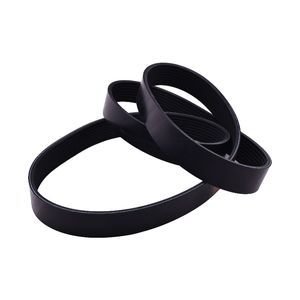
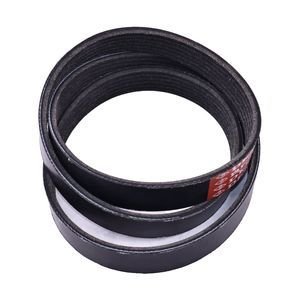
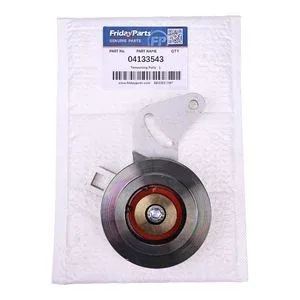
Matched System Sets — Each fan belt is verified against engine serial variants and supplied with tensioner compatibility data to prevent mismatched drive geometry.
Technical Specifications
| Parameter |
Value |
| Part Number |
84331239 |
| Cross-Reference |
84331239 (reference only) |
| Product Type |
Belt |
| Machine Fitment |
L221, L223, L225, L228, L230, C227, C232, C238 |
| Brand Compatibility |
Fits New Holland loaders |
| Material |
EPDM rubber compound with aramid tensile cords |
| Temperature Range |
–40°C to +120°C |
| Dimensional Tolerance |
±0.3 mm on pitch length and cross-section |
| Flex Life |
≥100,000 cycles |
| Standards |
ISO 9001, ISO 16848, SAE J1459 |
| Condition |
New Aftermarket |
| Warranty |
6 months against manufacturing defects |
| MOQ |
1 piece |
Application Suitability
| Engine System |
Related Components |
| Cooling drive circuit |
Water pump pulley, coolant hoses, thermostat housing gasket |
| Alternator drive loop |
Alternator mounting bracket, charge wire terminals |
| Front-end accessory drive |
Tensioner assembly, idler pulley bearings, serpentine routing guide |
| Scheduled maintenance kit |
Belt, tensioner, pulley bolts, front crankshaft seal |
Why the Same Belt Number Behaves Differently Across Engine Builds
A fan belt that fits the pulley grooves may still fail early if the tensioner or adjacent seals were not addressed during replacement.
When a belt drive system fails prematurely, the root cause often sits outside the belt itself. Pulley misalignment from a worn tensioner bearing, coolant contamination from a leaking water pump seal, or heat soak from a degraded thermostat housing gasket all accelerate cracking and rib wear on the EPDM compound. In engine overhaul work, I have seen rebuild shops replace the belt without checking idler runout or tensioner spring rate, only to have the new belt shred within a few hundred operating hours [NEED_CITE: engine accessory drive failure root cause analysis for off-highway diesel]. The Fan Belt engine replacement must be treated as a system event, not a single-component swap.
Loader models L221 through L230 and C227 through C238 share the same base engine family, yet belt routing and accessory bracket configurations can vary depending on the engine serial range and emission tier. A belt that seats correctly on an earlier-build C227 may sit slightly high in the pulley groove of a later unit if the alternator bracket was revised for a different regulator position.

Belt Position Inside the Cooling and Charging Circuits
This fan belt transfers crankshaft torque to the water pump and alternator, meaning its condition governs two systems critical to engine survival. Coolant circulation stops the moment the belt slips past a threshold, and the operator typically sees temperature rise before any electrical warning. During any engine service event where the front cover is opened, inspecting the belt routing path and confirming rib-to-groove contact pattern takes only minutes but prevents a callback. The Fan Belt engine replacement belongs on the same work order as the water pump and front seal.
Matching Tolerances to Engine Rebuild History
Engines that have undergone a previous rebuild may carry non-standard pulley spacing if the front cover was machined or if aftermarket brackets were substituted. The ±0.3 mm dimensional tolerance on pitch length and cross-section accommodates typical production variation, but it does not compensate for a bent tensioner arm or a pulley flange that was damaged during prior belt removal. Before ordering, compare the old belt's pitch length against the spec and check whether the engine serial number falls within a range that used a revised accessory layout [NEED_CITE: engine serial variant belt routing differences for loader diesel platforms].
Reading the Spec Sheet Against Real Operating Conditions
EPDM rubber compound resists heat aging far better than traditional neoprene, which matters because loader engine compartments routinely see ambient-plus-radiant temperatures approaching the upper bound of the –40°C to +120°C range. Aramid tensile cords carry the load without stretching under sustained alternator and water pump drag, preserving correct tension across the service interval. The ≥100,000 flex cycle rating reflects laboratory bending fatigue at controlled pulley diameters; in the field, actual life depends on pulley alignment, tensioner condition, and contamination exposure from coolant or hydraulic fluid leaks. SAE J1459 governs the dimensional and performance testing protocol for this belt class.

What an Unchecked Root Cause Costs on the Next Failure
Replacing the belt without diagnosing why the previous one failed is the most common reason for repeat visits. A tensioner that has lost spring force allows micro-slip, generating heat that hardens the EPDM ribs until they crack circumferentially. Coolant dripping from a failing water pump shaft seal swells the rubber and reduces grip. On a fleet level, these repeat failures accumulate into meaningful unplanned downtime across multiple machines [NEED_CITE: repeated belt drive failure patterns in loader fleet maintenance records]. The labor to access the belt on a compact loader is substantial enough that a second teardown doubles the cost of what should have been a one-visit repair.
Why Source This Belt Through One Account
Self-produced and qualified-sourced lines carry identical warranty terms, so a belt ordered alongside a tensioner, water pump, or overhaul gasket set all ships under one quality umbrella. The Guangzhou warehouse holds common fast-failure items for quick dispatch, and part identification is available from a part number, machine model, photograph, or nameplate image. Cross-reference verification covers superseded and alternate numbers, catching cases where a catalog entry was carried forward with errors. Sample supply lets a rebuild shop confirm fitment before committing to a bulk engine overhaul order. The technical team verifies compatibility and grade against engine serial data.
Documentation & Verification
- Commercial invoice listing belt part number, quantity, and engine fitment reference
- Cross-reference sheet marking 84331239 as reference only with alternate numbers
- Dimensional inspection record showing pitch length and cross-section within ±0.3 mm
- Warranty card covering manufacturing defects for six months from dispatch
- Packing photographs documenting box condition and label clarity before handover
- HS code classification support for customs clearance in destination market
Installation & Rebuild Sequence
- Clean all pulley grooves of old rubber residue before routing the new belt
- Verify tensioner arm travel and spring rate before installing the belt
- Confirm rib-to-groove seating on water pump and alternator pulleys by visual check
- Set tension to manufacturer specification and recheck after first warm-up cycle
- Run the engine at idle for a break-in period and inspect for lateral tracking drift
How to Get the Right Belt for Your Engine Build
Provide the engine model, serial number, and any prior rebuild history so we can confirm whether your unit uses the standard or revised accessory bracket layout. If the nameplate is unreadable, a photograph of the existing belt and the pulley arrangement is sufficient for cross-reference verification. Share the machine model and your overhaul kit list to receive a matched system quote.
Frequently Asked Questions
Q: What other engine components should be inspected when replacing the fan belt?
A: The tensioner assembly, idler pulley bearings, water pump shaft seal, and alternator mounting bracket should all be checked during belt replacement. Worn tensioner springs or contaminated pulley grooves cause premature belt failure. On loader engines, the front crankshaft seal and thermostat housing gasket are accessible at the same time and worth evaluating during the same service event.
Q: Does engine serial number affect belt fitment?
A: Yes. Within the L221 through L230 and C227 through C238 range, accessory bracket revisions and emission-tier changes can alter pulley spacing or belt routing. Providing the engine serial number allows us to confirm whether your build uses the standard-length belt or a variant. We cross-reference against superseded numbers to catch catalog errors [NEED_CITE: engine serial belt length variant confirmation process].
Q: How do I confirm the correct belt when the old one has no readable markings?
A: A photograph of the belt in place on the pulleys, combined with the machine model and engine serial number, is enough for identification. We can also verify pitch length and rib count from a laid-out measurement. Sample supply is available so your workshop can confirm fitment before ordering the full quantity.
Q: What system faults cause premature belt failure?
A: Common causes include tensioner spring fatigue, pulley misalignment from a bent bracket, coolant contamination from a leaking water pump seal, and heat soak from a restricted radiator. Replacing the belt without addressing these underlying faults leads to repeat failure. A system-level diagnosis during the initial repair prevents a second teardown and extended machine downtime.
Q: Is a matched tensioner available with this belt?
A: Matched tensioners and idler pulleys are available in the same order, shipped under one account and one warranty. Supplying the engine serial number ensures the tensioner arm geometry and spring rate match your specific engine build. Consolidated dispatch avoids the situation where the belt arrives but the tensioner is on a different lead time.