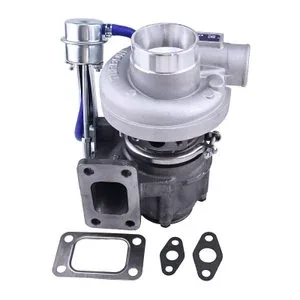
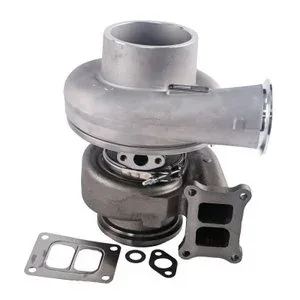
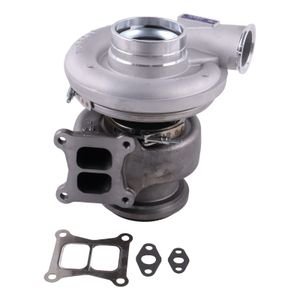
Engine Serial Match — C4.4 variant verification completed against build date and parts book before dispatch
Technical Specifications
| Parameter |
Value |
| Part Number |
T422417 |
| Product Type |
Turbocharger |
| Cross-Reference |
T422417 (reference only) |
| Machine Fitment |
CAT SPF343C |
| Condition |
New Aftermarket |
| Engine Fitment |
CAT C4.4 |
| Turbine Housing Material |
Forged steel |
| Turbine Wheel Material |
Nickel-alloy |
| Journal Bearing Precision |
±0.002 mm rotor balance |
| Sealing Surface Finish |
Ra ≤ 0.8 μm |
| Actuator Response Time |
0.8 seconds (0.5–2.5 bar control range) |
| Continuous Boost Pressure |
above 1.8 bar |
| Max Exhaust Gas Temperature |
750°C inlet |
| Warranty |
6 months against manufacturing defects |
| MOQ |
1 piece |
Application Suitability
| Engine System |
Related Components |
| Exhaust & Emission |
Exhaust manifold gaskets, clamp kits, heat shields |
| Intake & Boost |
Air inlet hoses, aftercooler O-rings, boost pressure sensor |
| Lubrication Feed |
Turbo oil feed line, oil return hose, restrictor fitting |
| Crankcase Breather |
Crankcase ventilation valve, breather hose |
Why C4.4 Turbos Fail Again Within Weeks of Replacement
A replacement turbo installed without addressing the root cause of the previous unit's failure will not survive the break-in period.
In the field, I have seen C4.4 engines go through two or three Turbocharger T422417 for CAT C4.4 engine rebuild units before anyone thought to trace the oil feed line for restrictions or check the exhaust manifold for cracks. The turbo is almost never the first thing to fail — it is the first thing to show the symptom. Oil starvation from a coked feed line, exhaust leakage past a warped manifold, or an actuator mismatch against the ECU map will destroy a new unit rapidly [NEED_CITE: common root causes of turbocharger failure in mid-range diesel engines]. Rebuild shops that swap the turbo without pulling the oil feed restrictor fitting and inspecting the crankcase breather valve are setting the next turbo up for the same fate.

The Turbo's Place in the C4.4 Exhaust and Intake System
The turbocharger on a C4.4 is not an isolated component — it sits at the intersection of the exhaust, intake, lubrication, and crankcase ventilation systems. When a Turbocharger T422417 for CAT C4.4 engine rebuild is specified for an overhaul, the adjacent gaskets, oil feed and return lines, and air inlet seals should be treated as a matched service set. Leaving a hardened oil return hose or a warped exhaust flange gasket in place while fitting a new turbo means the new unit inherits every unresolved problem from the old system.
Serial Variant Differences That Change the Build
The C4.4 platform has multiple serial ranges, and the actuator calibration across the 0.5–2.5 bar control range can differ between early and late builds. An actuator response time calibrated for one ECU map may cause wastegate hunting on another. Before confirming a Turbocharger T422417 for CAT C4.4 engine rebuild order, the engine serial number and build date must be checked against the parts book — variant differences in port orientation, gasket thickness, and oil feed restrictor diameter are documented in the serial-specific sections [NEED_CITE: C4.4 engine serial range variant identification procedures]. This step takes minutes and prevents a costly misfit.
Reading the Specifications That Matter on the Bench
The journal bearing precision of ±0.002 mm rotor balance is not a marketing number — it defines how well the rotor assembly handles the thermal cycling of a fire pump that starts cold and reaches full load quickly. The nickel-alloy turbine wheel material is selected for sustained exposure to exhaust gas temperatures up to 750°C at the inlet, which is typical under continuous boost above 1.8 bar during trailer-mounted pumper operations. The sealing surface finish of Ra ≤ 0.8 μm must match the OEM specification for the C4.4; a rougher finish allows compressor-side oil leakage that contaminates the aftercooler and ultimately the intake tract. Forged steel turbine housing provides the thermal mass needed to survive repeated heat-soak cycles without cracking at the volute.
What Happens When the Wrong Grade Goes In
Fitting a turbo without verifying the oil feed restrictor diameter or skipping the crankcase breather inspection means the new unit may experience oil seal overload within the first service interval. A mismatched actuator causes the wastegate to open late or early, pushing boost pressure outside the ECU map and triggering fault codes or overtemperature conditions. These failures do not show up on the bench — they appear after the SPF343C is back on station and under load. Shops that skip the system-level check end up pulling the turbo a second time, and the machine owner absorbs the downtime twice [NEED_CITE: diesel engine overhaul best practices for emission system reassembly].
What Makes This Supply Different
Our selected production lines and qualified sourcing partners operate under a single warranty account, so the Turbocharger T422417 for CAT C4.4 engine rebuild carries the same six-month terms whether it ships alone or with a full gasket set. Guangzhou warehouse stock covers common C4.4 exhaust and intake service items, allowing the turbo, manifold gaskets, oil feed fittings, and air inlet seals to leave in one consignment. Part identification works from the engine serial number, a nameplate photograph, or the old unit itself — no need to guess between serial variants. Cross-reference verification covers superseded numbers so an outdated listing does not result in a misfit. A sample unit is available for fitment confirmation before any fleet-level commitment.
Documentation & Verification
- Commercial invoice listing T422417 with engine serial and C4.4 variant noted
- Cross-reference sheet confirming interchange reference against C4.4 parts book
- Dimensional check on sealing surfaces and actuator range before dispatch
- Six-month warranty terms covering manufacturing defects on all turbo components
- Packing photographs showing protective caps on oil and air ports
- HS code and customs documentation prepared for emission system parts
Installation & Rebuild Sequence
- Verify oil feed restrictor fitting is clear and matches C4.4 serial specification
- Install new exhaust manifold gasket and torque flange bolts to sequence
- Pre-lube journal bearings with clean engine oil before first start
- Replace turbo oil return hose and inspect crankcase breather for blockage
- Run initial break-in at idle, then verify boost response across 0.5–2.5 bar range
Before You Request a Quote
Provide the C4.4 engine serial number and build date so we can confirm the correct serial variant and actuator calibration. If the engine has prior rebuild history, note any oversize components or non-standard gasket sets used. For fleet orders covering multiple SPF343C units, list each engine serial so we can verify variant coverage and bundle the matching overhaul gasket kits in one shipment.
Frequently Asked Questions
Q: What other engine components should be replaced when servicing this turbo on the C4.4?
A: The turbo oil feed line and restrictor fitting, oil return hose, exhaust manifold gasket, air inlet O-rings, and crankcase breather valve should all be inspected and replaced as a set. Leaving any of these in place transfers the failure cause directly to the new unit. We can bundle these items into a single consignment matched to your engine serial number.
Q: How do I confirm which C4.4 serial variant my SPF343C unit has?
A: The engine serial number is stamped on the block and recorded on the nameplate. Send us a clear photograph of the nameplate or the serial number itself, and we will cross-reference it against the parts book to confirm actuator calibration, port orientation, and gasket specification for your specific build.
Q: Does the overhaul gasket kit include the turbo oil feed and return gaskets?
A: Standard overhaul kits vary in content depending on the C4.4 serial range. We verify the kit contents against your engine's specific parts book listing to ensure the turbo oil feed restrictor gasket, return flange gasket, and exhaust flange gasket are all included. Missing items are added before dispatch.
Q: What systemic issues on the C4.4 cause premature turbo failure beyond the turbo itself?
A: Restricted oil feed lines from carbon buildup, cracked exhaust manifolds from thermal cycling, and blocked crankcase breathers are the most common causes. Each of these creates conditions — oil starvation, exhaust leak, or excessive crankcase pressure — that overwhelm the turbo seals. Identifying the root cause before installation is essential.
Q: Can I get a sample unit to verify fitment before committing to a fleet order?
A: Yes. We supply a single Turbocharger T422417 for CAT C4.4 engine rebuild as a sample for fitment and actuator response verification on one unit. Once confirmed, the fleet order ships with the same production batch and warranty terms, consolidated into one dispatch with all associated gaskets and seals.