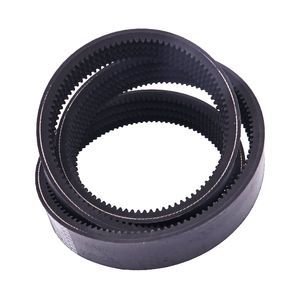
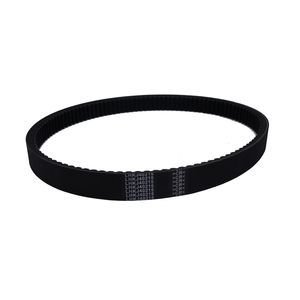
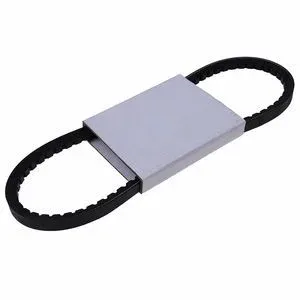
Matched Engine Rebuild Sets — Every drive pump belt order is cross-checked against your Bobcat loader's engine serial variant to confirm rib profile and routing before dispatch.
Technical Specifications
| Parameter |
Value |
| Part Number |
6662855 |
| Product Type |
Belt |
| Cross-Reference |
6662855 (reference only) |
| Machine Fitment |
853, 863, 864, 873, 883, A220, A300, S220, S250, S300, T200, T250, T300 |
| Belt Construction |
3VX Narrow Joined V-belt |
| Rib Configuration |
4 ribs × 10 mm pitch |
| Effective Length |
1760La |
| Compound Material |
Chloroprene rubber (CR) |
| Tensile Cord |
High-tensile polyester |
| Key Features |
Oil-resistant, heat-resistant, anti-static, wear-resistant |
| Condition |
New Aftermarket |
| Quality Standard |
ISO 9001 |
Application Suitability
| Engine System |
Related Components |
| Engine-driven hydraulic drive pump |
Automatic belt tensioner assembly, idler pulley |
| Front auxiliary drive system |
Crankshaft pulley, harmonic balancer, mounting hardware |
| Cooling and accessory drive loop |
Water pump pulley, alternator bracket, fastener kit |
| Complete hydraulic power delivery |
Hydraulic pump shaft seal, pump bearing, gasket set |
Why Replacing Only the Belt Rarely Fixes the Root Cause
A failed Drive Pump Belt 6662855 is often the symptom, not the disease.
In mining and quarry environments, loaders work through heavy dust and constant hydraulic fluid mist. I have seen crews swap a shredded belt on a Bobcat skid steer, only to have the replacement fail again before the next scheduled service. The real culprit was a weeping hydraulic pump shaft seal saturating the belt with fluid, combined with a worn tensioner that could no longer hold proper deflection. [NEED_CITE: root cause analysis methodology for repeated belt drive failures in mobile equipment] Repeating the same part swap without addressing the contamination source or tensioner wear simply guarantees another unplanned shutdown. Engine system-level thinking means tracing the failure back through every component that touches the belt's operating environment.

Engine System Context: Where This Belt Lives
The Drive Pump Belt 6662855 sits at the heart of the loader's engine-driven hydraulic system. It transfers rotational energy from the crankshaft directly to the hydraulic drive pump, which powers the machine's travel and work functions. When this belt slips or breaks, the loader loses all hydraulic capability — no lift, no tilt, no drive. Understanding this belt's position within the broader engine accessory drive system is essential for planning a repair that actually lasts beyond the first shift.
Oil Contamination and Tensioner Decay: The Two Killers
Hydraulic fluid exposure is the primary reason belts in this application degrade prematurely. The chloroprene rubber compound in this belt is formulated to resist oil swelling, but if the pump shaft seal is leaking, no belt material will survive prolonged saturation. [NEED_CITE: elastomer degradation mechanisms under hydraulic fluid exposure in drive systems] Equally destructive is a fatigued tensioner. Over thousands of operating hours, the tensioner spring loses force and the pivot bushing develops play. A belt running under insufficient tension generates heat through slip, accelerates rib wear, and eventually jumps the pulley groove. Inspecting both the seal and the tensioner before installing a new belt prevents the comeback job.
Spec Breakdown: What the Numbers Actually Mean on Site
The 3VX narrow joined V-belt configuration uses four ribs at a 10 mm pitch, which distributes load across multiple contact surfaces rather than concentrating force on a single wide belt. This joined construction keeps all ribs tracking together, preventing individual rib turnover under shock loads common in demolition and quarry work. The 1760La effective length must match the specific engine variant's pulley spacing — Bobcat loaders within the same model family sometimes use different engine builds with distinct drive loop lengths. The polyester tensile cord provides dimensional stability through thermal cycling; unlike nylon, it does not stretch permanently when the engine bay reaches peak operating temperature. Chloroprene rubber was selected over standard SBR for its resistance to both oil mist and the elevated ambient temperatures typical of enclosed loader engine compartments. [NEED_CITE: V-belt material selection criteria for high-temperature engine compartment applications]
The Cost of Skipping System-Level Diagnosis
Ordering a replacement belt without checking the surrounding system leads to predictable outcomes. If the pulley grooves are worn to a polished finish, the new belt will not seat properly and will glaze within days. If the previous rebuild used an incorrect belt length because the engine serial variant was never confirmed, the tensioner will either bottom out or fail to reach minimum deflection. These are not rare edge cases — they represent a significant portion of repeat belt failures reported by field service teams. [NEED_CITE: field failure pattern data for engine accessory drive belts in compact loaders] Each repeat failure means another shift of lost production, another round of freight costs, and another entry in the machine's downtime log.
Why Procurement Teams Source This Through Our Engine System Desk
Our own production lines and qualified sourced supply operate under a single warranty, so whether the belt or the matched tensioner comes from our facility or a certified partner, the QC terms are identical. Eight product categories sit under one account, meaning the belt, gasket set, shaft seal, and pulley hardware ship as one consignment rather than three separate orders. Minimum order is one piece, which matters when a single loader is down and waiting. Our technical team verifies engine serial variants against belt routing diagrams before confirming the order, catching the kind of superseded-number errors that copied cross-reference tables carry forward. [NEED_CITE: cross-reference verification practices for superseded part numbers in aftermarket supply] Sample supply is available for fitment confirmation before you commit to a bulk stocking order.
Documentation & Verification
- Commercial invoice and packing list referencing belt part number and matched components
- Part compatibility sheet confirming engine serial variant and cross-reference (reference only)
- Dimensional inspection record covering effective length tolerance and rib pitch verification
- Warranty terms covering manufacturing defects for the stated coverage period
- Packing photographs documenting belt condition and kit completeness before crate closure
- HS code and customs classification support for international belt and rubber goods shipments
Installation & Rebuild Sequence
- Verify engine serial number matches the belt routing diagram before removing guards
- Inspect all pulley grooves for polished wear or nick damage; replace if rib profile is degraded
- Replace hydraulic pump shaft seal if any fluid residue is present on the old belt
- Install the new Drive Pump Belt 6662855 and set tensioner to manufacturer deflection specification
- Run the engine at idle for initial bedding, then re-check tension after the first thermal cycle
Request a System-Matched Quote
Provide your Bobcat loader model, engine serial number, and any previous rebuild history so we can confirm the correct belt length variant and identify which adjacent components should be included in the kit. If the nameplate is worn, send a photograph of the existing belt and pulley arrangement.
Frequently Asked Questions
Q: What other drive system components should be replaced with the belt?
A: The automatic tensioner assembly, idler pulley, and hydraulic pump shaft seal should all be evaluated during the belt replacement. If the tensioner spring shows fatigue or the idler bearing has axial play, replacing them together prevents a second teardown. We supply these as a matched set under one order.
Q: How do I identify the root cause of repeated belt failures?
A: Check for hydraulic fluid contamination on the belt surface, which points to a failing pump shaft seal. Inspect pulley grooves for glazing or wear that prevents proper rib seating. Measure tensioner deflection against specification. These three checks reveal the majority of systemic issues behind repeat failures.
Q: Does the same belt fit all engine serial variants within a loader model?
A: Not always. Bobcat loaders in the same model series sometimes use different engine builds with varying pulley spacing and belt routing. Confirming the engine serial number ensures the 1760La effective length and rib configuration match your specific drive loop. We verify this before dispatch.
Q: What oil contamination signs indicate a system-level issue beyond the belt?
A: A belt that feels soft, swollen, or has a spongy texture has absorbed hydraulic fluid, indicating a leak at the pump shaft seal or a nearby hydraulic fitting. Simply replacing the belt without fixing the leak guarantees premature failure of the next belt. Address the seal first.
Q: Can I get a matched belt and tensioner set in one order?
A: Yes. We consolidate the belt, tensioner, idler pulley, shaft seal, and any required gaskets into a single shipment under one account and one warranty. This eliminates mismatched lead times and ensures every component for the drive system job arrives together.