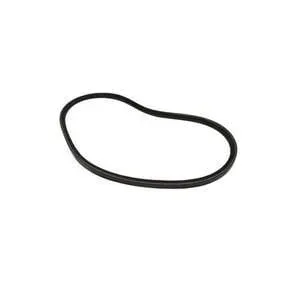
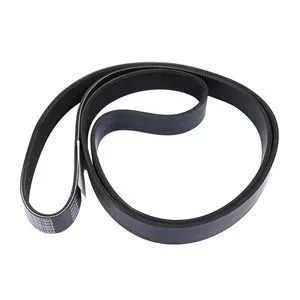
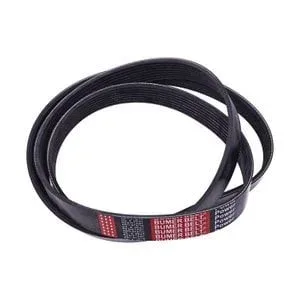
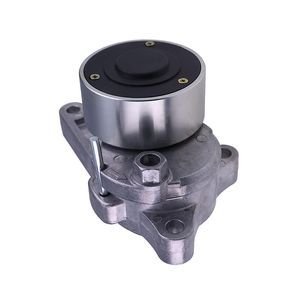
Matched Set Dispatch — EPDM aramid-cord V-belt verified against Mitsubishi L3E tensioner and pulley groove wear before shipping.
Technical Specifications
| Parameter |
Value |
| Part Number |
MD145156/16692 |
| Product Type |
Belt |
| Cross-Reference |
MD145156 (reference only), 16692 (reference only) |
| Machine Fitment |
Mitsubishi T120SS light tower, Generac MLT3060MV light tower |
| Material |
EPDM rubber compound with aramid cord reinforcement |
| Included Angle |
14.5° |
| Dimensional Tolerance |
±0.3 mm across length and cross-section |
| Profile |
Trapezoidal |
| Condition |
New Aftermarket |
| Static Discharge Resistance |
Meets ISO 1817 standards |
| Warranty |
3–12 months against manufacturing defects |
| MOQ |
1 piece |
Application Suitability
| Engine System |
Related Components |
| L3E Belt Drive |
Pulleys, automatic tensioner, alternator bearings |
| L3E Cooling |
Water pump, thermostat housing gaskets |
| L3E Charging |
Alternator mounting bolts, wiring harness connectors |
| Light Tower Power Transfer |
Voltage regulator, slip rings |
Why a Belt Failure is Rarely Just a Belt Failure on the L3E
Replacing the V Belt MD145156 engine replacement for Mitsubishi L3E without inspecting the tensioner and pulley alignment invites a repeat failure within the first operating cycle.
A frayed or glazed belt often points to a worn tensioner arm that no longer maintains correct deflection, or a pulley that has shifted out of plane due to alternator bracket wear. I have seen light tower engines come back with a second belt failure because the root cause—a seized tensioner bearing—was ignored during the first service event. Addressing the failed component without diagnosing the system that killed it simply resets the clock. [NEED_CITE: belt drive system failure analysis for small diesel engines]

The Belt Drive System: More Than Just a Loop of Rubber
The V Belt MD145156 engine replacement for Mitsubishi L3E sits at the front of a chain that transfers crankshaft rotation to the alternator and, in some light tower configurations, the cooling fan. When the belt slips under variable electrical load, voltage output becomes unstable, which can affect the entire lighting array on a night work site. This belt is one node in a system where every adjacent component—the tensioner spring rate, the pulley surface finish, the alternator bearing preload—contributes to its service life.
Matching the Belt to the Engine Serial Variant and Rebuild History
The Mitsubishi L3E has been produced across several serial ranges, and the belt drive geometry can shift depending on whether the engine block is original or has been through a prior overhaul. An engine that has been rebuilt with a different alternator bracket may require verification of pulley center-to-center distance before confirming belt length suitability. We check the engine serial and, where available, the rebuild history to confirm the trapezoidal profile and 14.5° included angle match the groove geometry on your specific pulley set. [NEED_CITE: Mitsubishi L3E engine serial variant differences in belt drive configuration]
Reading the Specs: What the Numbers Actually Mean for Your Engine Bay
The EPDM rubber compound is selected for its resistance to the heat, ozone, and oil mist that accumulate in a diesel engine compartment over thousands of operating hours. Standard SBR rubber hardens and cracks under these conditions, while EPDM retains flexibility across a wider temperature band. The aramid cord reinforcement inside the belt body handles the tensile load without stretching, which is what keeps the 14.5° included angle seated fully in the pulley groove rather than riding high and slipping. The ±0.3 mm dimensional tolerance across length and cross-section ensures the belt does not bottom out in the groove—a condition that would transfer load to the belt base rather than the sidewalls, accelerating wear. Static discharge resistance per ISO 1817 prevents spark generation in dusty or fuel-vapor-rich environments common around light tower fuel tanks.
The Cost of Skipping the System Check
A belt that snaps during night operations on a remote infrastructure project does not just stop the engine—it kills the lighting for the entire work zone, potentially halting a concrete pour or a critical lift. When a distributor stocks this belt without also stocking the matched tensioner and pulley, the repair shop ends up placing a second order and paying split freight, while the machine sits idle. The hidden cost is not the belt price; it is the unplanned downtime and the second mobilization of the service crew. [NEED_CITE: cost of unplanned downtime in remote construction site lighting operations]
Why Sourcing This Belt Through Our Engine Systems Desk
Our own production lines and qualified sourced supply operate under one account and one warranty, so the V Belt MD145156 engine replacement for Mitsubishi L3E and its associated tensioner ship with the same QC terms. We carry eight categories so a complete belt drive service—belt, tensioner, pulley, alternator bearings—consolidates into one consignment. Minimum order starts at one piece for emergency single-unit repairs. Our Guangzhou warehouse holds stock on fast-failure items for rapid dispatch. We verify cross-reference numbers including superseded references to catch alternate part markings on older belts. Technical staff confirm compatibility and dimensional grade before dispatch.
Documentation & Verification
- Commercial invoice listing V Belt MD145156/16692 with HS code for customs clearance
- Cross-reference sheet mapping MD145156 and 16692 as reference only identification numbers
- Dimensional inspection record confirming ±0.3 mm tolerance on length and cross-section
- Warranty terms covering 3–12 months against manufacturing defects
- Packing photographs showing belt condition and protective wrapping before dispatch
- Part compatibility confirmation sheet matching L3E engine serial to belt profile
Installation & Rebuild Sequence
- Verify crankshaft and alternator pulley groove surfaces are free of scoring before fitting the new trapezoidal belt
- Check tensioner arm spring force and bearing play; replace tensioner if lateral movement exceeds specification
- Seat the belt fully in all pulley grooves and confirm 14.5° sidewall contact before applying tension
- Torque alternator mounting bolts to specification to prevent bracket shift under vibration
- Run the L3E engine at idle for initial break-in, then recheck belt deflection after the first operating hour
Send Us Your Engine Details for a Matched Set Quote
Provide your Mitsubishi L3E engine serial number, any prior rebuild documentation, and the machine application (light tower model, operating environment). We will confirm the correct belt profile, check for superseded reference numbers, and quote a complete belt drive service kit including tensioner and pulleys where applicable.
Frequently Asked Questions
Q: What other belt drive components should I inspect when replacing this V-belt?
A: Beyond the belt itself, check the automatic tensioner arm for spring fatigue and bearing play, inspect both crankshaft and alternator pulley grooves for wear or scoring, and verify alternator bracket mounting bolt torque. A worn tensioner or glazed pulley surface will cause the new belt to slip or fail prematurely, negating the replacement entirely.
Q: Does this belt fit all Mitsubishi L3E engine variants or only specific serial ranges?
A: The L3E has been produced across multiple serial ranges with minor belt drive geometry differences. Confirm your engine serial number so we can verify the pulley center-to-center distance and groove profile match this belt's length and 14.5° included angle. Prior rebuild history may also alter the alternator bracket configuration.
Q: How do I confirm the correct reference number if my old belt has a different marking?
A: Send us a photograph of the old belt markings along with your engine model and serial number. We cross-reference MD145156 and 16692 (reference only) against superseded and alternate numbers in our database. Belt markings from different manufacturers often differ even when the dimensional specifications are identical.
Q: Can I order a matched set of belts and tensioner together for a complete belt drive service?
A: Yes. We consolidate the V-belt, tensioner assembly, and any associated pulleys or hardware into a single shipment under one warranty. This eliminates split freight and ensures all components arrive together, so the repair shop completes the belt drive service in one session without waiting for a second delivery.
Q: What causes premature V-belt failure on L3E-powered light towers and how do I prevent it?
A: Common root causes include a seized or weak tensioner bearing, pulley misalignment from a loose alternator bracket, and contamination from oil mist or excessive dust ingress. Prevention requires inspecting the entire belt drive system at each belt replacement interval, not just swapping the belt. Addressing the underlying fault extends the service life of every component in the system.