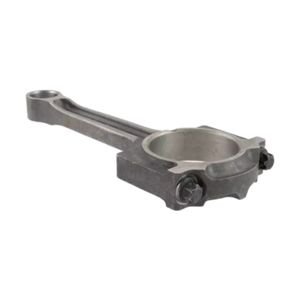
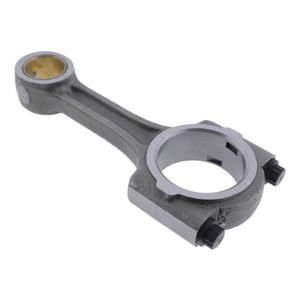
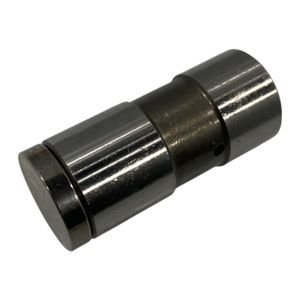
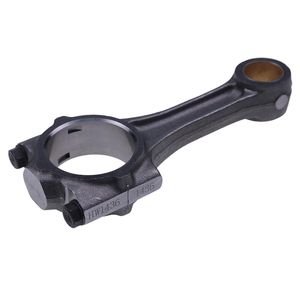
Matched Rotating Assembly Dispatch — Connecting rod paired with corresponding bearings and piston set verified against your specific 2.3L L4 engine serial variant before packing.
Technical Specifications
| Parameter |
Value |
| Part Number |
1L5Z-6200-A |
| Product Type |
Connecting Rod |
| Cross-Reference |
1L5Z-6200-A (reference only), 1L5Z6200A (reference only) |
| Machine Fitment |
Ford Fusion (2006–2009), Ford Ranger (2009–2011), Lincoln MKZ (2007–2009), Lincoln Zephyr (2006), Mercury Milan (2006–2009) |
| Engine Application |
2.3L L4 NA Petrol Engine |
| Material |
Forged SAE 1045 Steel |
| Surface Treatment |
Shot-peened surface finish with anti-rust passivation |
| Assembly State |
New Aftermarket |
| Warranty |
3–12 months against manufacturing defects |
| MOQ |
1 piece |
| Quality Standard |
ISO 9001 |
Application Suitability
| Engine System |
Related Components |
| Block & Rotating Assembly |
Con rod bearings, piston, wrist pin, ring set |
| Lubrication System |
Oil pump, oil filter, crankshaft journal surfaces |
| Cylinder Head & Valvetrain |
Head gasket, head bolts, valve stem seals |
| Cooling System |
Thermostat, coolant passages in block, freeze plugs |
| Crankcase & Lower Block |
Main bearings, thrust washers, rear main seal |
Why an Overhaul Kit Arrives Incomplete for Your Engine Build
A connecting rod is never an isolated replacement — it sits inside a system of matched tolerances that must all align to the same grade.
Shops regularly encounter a situation where the rod arrives, but the correct-grade bearing shells or the matching oversize piston set remain on backorder from a different supplier. The engine block sits open on the bench, accumulating contamination and consuming billable hours while the rest of the job list trickles in from separate sources [NEED_CITE: engine overhaul workflow delays from multi-supplier parts sourcing]. I have seen rebuilds delayed because a previous crankshaft regrind changed the journal diameter, and the new rod bearings ordered at standard grade could not close the clearance gap. The Connecting Rod engine rebuild parts you source must arrive alongside verified, grade-matched companions — not as a lone line item disconnected from the rest of the rotating assembly.

Where This Rod Sits Inside the 2.3L L4 Rebuild Sequence
The 2.3L L4 Duratec-family engine places this connecting rod at the center of a rotating assembly that includes the forged crankshaft, matched piston, wrist pin, and rod bearing shells. During a full overhaul, the rod is removed after the cylinder head and oil pan come off, and it goes back in only after the crankshaft journals have been measured and the correct bearing grade has been confirmed. Sourcing the Connecting Rod engine rebuild parts as a matched set — rod, bearings, piston, and rings together — prevents the situation where one component arrives in standard grade while the crankshaft has already been cut to 0.25 oversize.
Matching Grade and Oversize Across the Entire Rotating Assembly
After a crankshaft regrind, every mating surface must shift to the same oversize designation. If the journals were cut to 0.50 undersize, the bearing shells must match, and the connecting rod big-end bore must fall within the specified range for that shell thickness. The piston-to-bore clearance follows the same logic — a cylinder that has been honed oversize demands a matching piston diameter [NEED_CITE: engine bearing clearance specifications for reground crankshafts]. I once traced a repeated bearing failure in a 2.3L engine back to a mismatch: the rod had been replaced, but the bearing shells were still standard grade on a reground journal. The oil film could not hold, and the shell wiped within the first hundred kilometers.
Reading the Specifications That Matter for Rebuild Outcomes
Forged SAE 1045 steel gives this connecting rod a tensile strength suited to the combustion pressures of a naturally aspirated 2.3L petrol engine — it resists the cyclic bending loads transmitted from the piston through the wrist pin. The shot-peened surface finish introduces compressive residual stress across the rod beam and the big-end cap, which reduces the likelihood of fatigue crack initiation at the parting line or the bolt bore. Anti-rust passivation protects the machined surfaces during storage and transit, so the bore dimensions remain untouched by corrosion pitting before assembly. These material and treatment choices directly influence how the rod performs under sustained thermal cycling in fleet vehicles that run daily urban routes.
What Happens When the Root Cause Is Never Identified
Replacing a failed connecting rod without diagnosing why it failed is a reliable path to a second failure. Oil starvation from a clogged pickup screen, detonation from incorrect ignition timing, or chronic over-revving from a faulty governor each leave distinct marks on the original rod — stretched big-end bore, cracked beam, or spun bearing [NEED_CITE: connecting rod failure modes and root cause diagnosis in four-cylinder engines]. Installing a new rod into an engine that still carries the original fault simply resets the clock on the same failure. Shops that skip the diagnosis step tend to see repeat comebacks within weeks, damaging customer trust and consuming warranty budget.
Sourcing System-Matched Rebuild Components from One Account
Our own production lines and qualified sourced partners operate under one warranty and one quality protocol, so the connecting rod and its companion bearings carry the same inspection standard. Eight product categories sit under a single account, meaning the overhaul gasket set, the piston ring set, and the seal kit all ship in the same consignment rather than arriving on separate freight schedules. Minimum order is one piece, which matters when a single cylinder needs attention rather than a full engine teardown. The Guangzhou warehouse stocks common 2.3L L4 rotating assembly items for fast dispatch, and the technical team verifies compatibility against your engine serial number before anything leaves the shelf [NEED_CITE: aftermarket engine parts quality verification protocols].
Documentation & Verification
- Commercial invoice listing each matched component by part number and grade designation
- Cross-reference sheet mapping 1L5Z-6200-A (reference only) to your specific engine build variant
- Dimensional inspection record covering big-end bore, small-end bore, and center distance
- Warranty terms covering manufacturing defects for 3–12 months from dispatch
- Packing photographs showing anti-rust coating integrity before crate closure
- HS code classification and customs documentation support for international shipments
Installation & Rebuild Sequence
- Verify crankshaft journal diameter and select bearing shells matching the same oversize grade as the connecting rod big-end bore
- Clean all oil passages in the block and crankshaft before assembly to prevent immediate bearing starvation on first start
- Torque the rod cap bolts in the specified sequence and confirm side clearance with a feeler gauge after final tightening
- Prime the oil system before initial cranking and monitor oil pressure during the first thirty minutes of break-in operation
- Check for abnormal noise or temperature rise during the initial run cycle, which can indicate a clearance or alignment issue
Request a Matched Component Quote
Provide your engine model designation, serial number, and any known crankshaft regrind history so we can confirm the correct bearing grade and oversize alignment across the full rotating assembly. If the engine nameplate is worn or painted over, a photograph of the block casting number and the existing rod stamping is enough for identification. We will return a consolidated quote covering the connecting rod, matched bearings, piston set, and overhaul gasket kit verified against your specific engine build.
Frequently Asked Questions
Q: What other components should be replaced together with the connecting rod during a rebuild?
A: The connecting rod works alongside bearing shells, piston, wrist pin, ring set, and rod bolts in the rotating assembly. During an overhaul, the head gasket, head bolts, and valve stem seals should also be replaced since the cylinder head is already removed. We supply these as a matched kit so all components arrive in compatible grades.
Q: How do I confirm the correct bearing grade after a previous crankshaft regrind?
A: Measure the crankshaft journal diameter with a micrometer at multiple points along its length. Compare the reading against the engine manufacturer's specification chart to determine whether standard, 0.25, or 0.50 undersize shells are required. Our technical team can cross-check your measurements against the matching connecting rod big-end bore.
Q: Does the overhaul kit include every seal and gasket my specific engine build needs?
A: Engine variants within the same 2.3L L4 family sometimes carry different freeze plug counts, oil pan gasket profiles, or timing cover seal dimensions. We verify the complete kit contents against your engine serial number before dispatch, so no additional seals need to be sourced locally after the teardown begins.
Q: Can I get matched pistons and rings in the same oversize grade as the connecting rod?
A: Yes. When a cylinder has been honed oversize, the piston diameter and ring end gap must match that same oversize designation. We supply the piston, rings, and connecting rod together with grade alignment confirmed, preventing the mismatch that causes blow-by or ring scuffing during break-in.