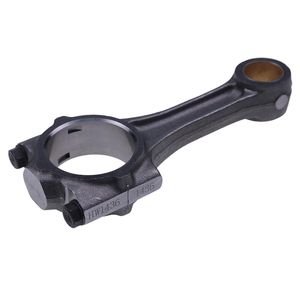
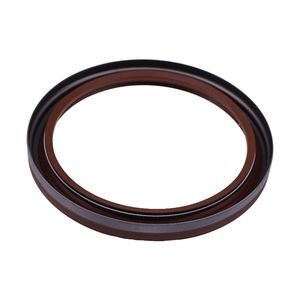
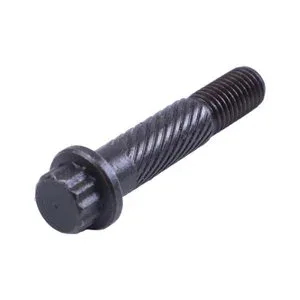
Matched Rebuild Sets — Rod bearings, piston rings, and full gasket kits ship together so your D1703 or V2203 overhaul does not stall on a missing grade or variant.
Technical Specifications
| Parameter |
Value |
| Part Number |
17311-22014 |
| Product Type |
Connecting Rod |
| Cross-Reference |
17311-22014, 1731122014, 17311-22012, 17311-22013, 17331-22010 (reference only) |
| Machine Fitment |
KX121-2, KX121-3, KX161-3, U35, R420, L3240, L4240, M5030, MX5000 |
| Material |
42CrMo alloy steel |
| Surface Treatment |
Phosphate coating |
| Assembly State |
New Aftermarket |
| Engine Compatibility |
Kubota D1403M, D1403, D1703, D1803, D1803MDI, V1903, V2003, V2203 |
| Certification |
ISO 9001 |
| Warranty |
3–12 months against manufacturing defects |
| MOQ |
1 piece |
Application Suitability
| Engine System |
Related Components |
| Bottom-end rotating assembly |
Rod bearings, main bearings, crankshaft thrust washers |
| Cylinder and piston group |
Piston sets, piston rings, cylinder liners |
| Lubrication circuit |
Oil pump, oil filter, nozzle jets for piston cooling |
| Sealing and gasket system |
Overhaul gasket set, crankshaft front and rear seals |
Why a Single Connecting Rod Replacement Often Fails the Engine
System-level matching prevents the second teardown. When workshops treat a rod knock as an isolated event, they often replace the damaged connecting rod without verifying the crankshaft journal condition or the piston-to-rod clearance history. The result is a rebuilt engine that sounds wrong within the first fifty hours [NEED_CITE: engine rebuild failure root cause analysis for diesel power units].
I recall a V2203 unit that came back with bearing noise just weeks after a rod swap. The crankshaft had been reground to 0.25 oversize during a prior repair, but the shop ordered standard bearings with the new connecting rod. The oil film collapsed under load. This is why we treat every connecting rod engine rebuild replacement request as the start of a system conversation, not a single-line item dispatch.

The Bottom-End Assembly as a Matched System
A connecting rod engine rebuild replacement is never truly a standalone job. The rod, its bearing shells, the piston pin, and the piston itself form a balanced rotating mass. If any one element is out of grade or tolerance, the others absorb the stress. We supply matched piston-to-rod assemblies so that compression ratio and oil control ring seating remain within specification from first startup.
Crankshaft History Determines Your Bearing Grade
Before ordering, confirm whether the crankshaft journals are standard, 0.25, or 0.50 oversize. A previous regrind changes the required bearing shell thickness for both the connecting rod big end and the main journals. Missing this step is one of the most common causes of repeat bearing failure [NEED_CITE: crankshaft journal regrind standards and bearing grade selection]. Our technical team can verify the correct oversize grade when you provide the engine serial number and any prior overhaul records.
Reading the 42CrMo Material Choice
The connecting rod is forged from 42CrMo alloy steel, a medium-carbon chromium-molybdenum grade selected for its fatigue strength under the repeated tensile and compressive loads of a diesel power stroke. The phosphate coating provides initial break-in lubrication and corrosion resistance during storage. This material selection matters because a lower-grade carbon steel rod may stretch at the big-end bore under sustained high-rpm operation, accelerating bearing wear and eventually causing cap walk.
The Hidden Cost of Skipping the Overhaul Kit
Replacing a connecting rod without the matched gasket set invites coolant or oil leaks that force a partial disassembly to correct. Workshops that source the rod alone often discover mid-assembly that the sump gasket or rear main seal is not available locally, adding days of downtime while the engine sits open on the bench [NEED_CITE: downtime accumulation from incomplete overhaul parts kits in field repair operations]. A matched kit that includes rod bearings, main bearings, piston rings, and all gaskets keeps the rebuild moving in a single sequence.
Sourcing From One Account With One Warranty
We produce selected part lines in our own facility and source the remainder from qualified ISO 9001-certified manufacturing partners, so both self-produced and sourced supply carry identical QC and warranty terms. Eight product categories allow a complete overhaul list — from connecting rod to gasket set to piston rings — to ship as a single consignment under one invoice. Minimum order is one piece, which matters when a single rod has failed and the rest of the bottom end is within tolerance. Our Guangzhou warehouse holds stock on fast-moving engine families including the D1703 and V2203, and our technical team confirms compatibility and grade before dispatch.
Documentation & Verification
- Commercial invoice listing each rod and matched bearing grade separately
- Cross-reference sheet confirming superseded numbers as reference only
- Dimensional inspection record covering big-end bore and small-end bush diameter
- Warranty terms printed per component with claim procedure
- Packing photographs showing rod and bearing set sealed together
- HS code and customs support for engine parts export clearance
Installation & Rebuild Sequence
- Verify crankshaft journal size with micrometer before fitting new bearing shells to the connecting rod
- Plastigauge each rod big-end to confirm oil clearance falls within engine manual specification
- Torque rod cap bolts in the specified two-stage sequence using new fasteners where required
- Check piston-to-rod assembly for lateral rock before installing into the cylinder liner
- Prime lubrication system and confirm oil pressure at idle before applying load during break-in
Confirm Your Engine Build Before Ordering
To ensure the correct connecting rod, bearing grade, and piston set reach you in one shipment, share your engine model, serial number, and any known crankshaft regrind history. If the nameplate is worn, a photograph of the engine block casting number allows our team to verify the variant.
Frequently Asked Questions
Q: What else must be replaced when changing a connecting rod?
A: At minimum, replace the rod bearing shells, piston pin circlips, and the full sump and head gasket set. If the crankshaft journal shows scoring or has been previously reground, matching oversize bearings are required. We recommend a matched overhaul kit that includes main bearings and piston rings to avoid mid-rebuild delays.
Q: How do I determine STD versus oversize bearing grade?
A: Measure the crankshaft connecting rod journal with a micrometer and compare against the engine manual specification table. A journal that has been reground will require 0.25 or 0.50 oversize shells. Share your measurements or engine serial with our team for grade confirmation before dispatch.
Q: Does the overhaul kit cover all gaskets for my engine variant?
A: Gasket contents vary between engine serial ranges even within the same model family. We verify the specific engine build against our cross-reference database and adjust the kit contents — including valve cover, sump, and rear main seal — to match your exact variant before packing.
Q: Can different engine serials within the same model use identical rods?
A: Not always. Dimensional revisions and bearing grade changes occur across production runs of the D1703 and V2203 families. Provide your engine serial number so we can confirm whether the connecting rod and associated bearing shells match your specific build configuration.
Q: What typically causes connecting rod bearing failure in these engines?
A: Common root causes include oil starvation from clogged pickup screens, incorrect bearing grade after a prior regrind, and extended oil drain intervals allowing abrasive contamination [NEED_CITE: diesel engine bearing failure modes and lubrication contamination thresholds]. Addressing the cause, not just the failed component, prevents repeat teardowns.