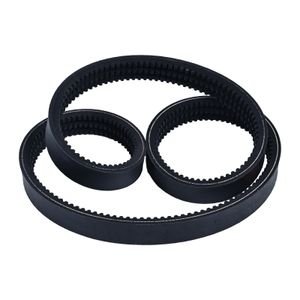
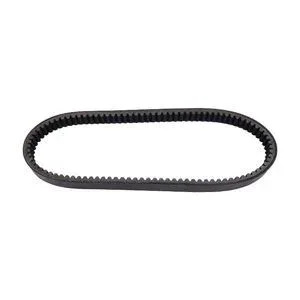
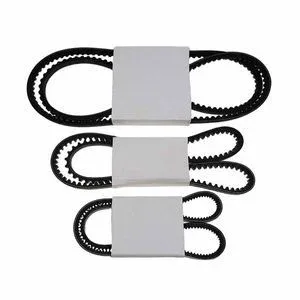
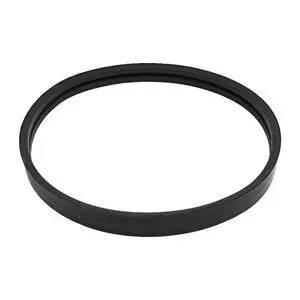
Matched Set Dispatch — Every drive pump belt ships with verified tensioner and pulley compatibility data for your specific Bobcat loader serial range.
Technical Specifications
| Parameter |
Value |
| Part Number |
6726898 |
| Cross-Reference |
6726898 (reference only) |
| Product Type |
Belt |
| Machine Fitment |
Bobcat 753, 763, 773, S130, S150, S160, S175, S185, S205, T140, T180, T190 (compatible with) |
| Design Type |
Flat, cogged drive belt with 3 grooves |
| Length |
57.4 inches (1458 mm) |
| Width |
1.19 inches (30.2 mm) |
| Material |
Fiber-loaded backing with additional cord support |
| Condition |
New Aftermarket |
| Warranty |
3–12 months against manufacturing defects |
| Minimum Order |
1 piece |
| Quality Standard |
ISO 9001 |
Application Suitability
| Engine System |
Related Components |
| Hydraulic drive pump actuation |
Tensioner assembly, idler pulleys, pump shaft seal |
| Primary power transmission from engine to hydraulic pump |
Drive belt sheaves, mounting hardware, alignment shims |
| Auxiliary drive circuit on S-series and T-series loaders |
Adjacent V-belts, serpentine routing guides, belt guard fasteners |
Why a New Drive Pump Belt Fails Before the Next Service Interval
Most premature belt failures trace back to a worn tensioner or misaligned pulley that was never replaced during the last service.
In my years managing parts inventory for Southeast Asian repair operations, I watched crews swap out belts repeatedly without ever inspecting the tensioner bearing or checking pulley run-out. The result was predictable: a replacement belt would shred within weeks, sometimes days, because the root cause sat untouched in the drive cavity. Bobcat skid steer and track loaders place continuous thermal and mechanical stress on this belt path, and ignoring adjacent components turns a simple service into a recurring expense [NEED_CITE: hydraulic drive system belt failure root cause analysis for mobile equipment].
This drive pump belt (cross-reference 6726898 for identification) belongs to the hydraulic drive system, not an isolated accessory circuit. Addressing the system as a whole during replacement is what separates a lasting repair from a repeat visit.

The Belt's Position Within the Hydraulic Drive Circuit
The hydraulic pump on Bobcat loaders depends on this belt as its sole mechanical link to engine output. Unlike accessory belts that run intermittently, a drive pump belt transmits torque continuously whenever the engine operates, making its role critical to machine movement and implement function. When a drive pump belt replacement is planned, the tensioner spring force, pulley bearing condition, and pump shaft seal integrity all deserve equal inspection. Skipping these checks means the new belt inherits the same destructive forces that killed its predecessor.
What the Drive System Demands During Rebuild Sequencing
During a full hydraulic drive system service, the belt is typically one of several components on the bench. Tensioner assemblies lose their spring rate over time, especially in high-ambient-temperature environments common across Southeast Asian job sites. Pulley grooves wear unevenly, creating tracking errors that accelerate edge wear on any belt riding them. Confirming that replacement tensioners and pulleys match the original groove profile and center distance ensures the new drive pump belt seats correctly from the first startup [NEED_CITE: belt drive system alignment tolerance standards for construction machinery]. Bundling these matched components into a single service kit eliminates the risk of partial shipments arriving out of sequence.
How Cogged Geometry and Material Composition Affect Field Performance
The three-groove cogged design reduces harmonic resonance that standard V-belts generate under the cyclic loading of a hydraulic pump. Each cog allows the belt to flex around smaller-diameter sheaves without internal heat accumulation, which is a common failure origin in flat-back belt designs. The fiber-loaded backing resists the longitudinal stretching that gradually reduces tension in continuous-duty applications, while the cord reinforcement layer handles the tensile load spikes produced during rapid acceleration cycles on S-series and T-series machines. Matching the 57.4-inch length and 1.19-inch width precisely to the machine model prevents the misalignment that causes premature edge fraying and groove deformation.
The Cost of Ignoring System-Level Root Causes
Replacing only the belt while leaving a fatigued tensioner in place guarantees that the new component will absorb uncontrolled vibration and inconsistent wrap pressure. In fleet operations across Jakarta and Surabaya, I documented cases where machines returned for a second belt replacement before the first service invoice was even settled. The compound cost of repeat labor, additional downtime, and secondary damage to the pump shaft seal adds up quickly [NEED_CITE: repeated component replacement cost impact in fleet maintenance operations]. A system-matched approach — replacing belt, tensioner, and worn pulleys together — eliminates the cycle of reactive repairs that drains both parts budgets and machine availability.
Why Procurement Through This Channel Works for Engine System Rebuilds
Selected part lines are produced in our own facility while the remainder is sourced from qualified ISO 9001-certified manufacturing partners, and both carry identical warranty terms — so a drive pump belt and its matching tensioner arrive under one accountability. Eight product categories mean a complete drive system service kit, including seals and fasteners, ships as a single consignment rather than scattered across multiple suppliers. Orders start from one piece, which matters when a single machine is down and waiting. Part identification works from the OEM reference number, the machine model plate, or even a photograph of the worn component. Cross-reference verification covers superseded numbers that may appear on older machine generations. For bulk commitments, sample supply lets you confirm fitment on the actual machine before committing to fleet-scale quantities.
Documentation & Verification
- Commercial invoice and packing list specifying belt length, width, and groove count per line item
- Cross-reference compatibility sheet linking reference 6726898 to confirmed Bobcat loader models (reference only)
- Dimensional inspection record covering belt length tolerance and groove profile accuracy before dispatch
- Warranty terms document stating coverage period and defect claim procedure for drive system components
- Packing photographs showing protective packaging and reinforced box condition prior to crate sealing
- HS code and customs classification support for cross-border shipment of rubber drive components
Installation & Rebuild Sequence
- Clean all pulley grooves and tensioner contact surfaces before routing the new belt to prevent debris-induced tracking errors
- Verify tensioner spring rate and pulley bearing play before installing the drive pump belt to address root failure causes
- Route the belt following the three-groove alignment pattern and confirm even seating across all sheave contact faces
- Apply manufacturer-specified tension value and re-check after the initial warm-up cycle for stretch settlement
- Run the hydraulic system under no-load conditions first, then monitor belt tracking and temperature during the break-in period
- Inspect adjacent pump shaft seal for weeping during the break-in run, as seal failure contaminates the belt path
Requesting a System-Matched Quote
Provide your Bobcat loader model designation and serial number so we can confirm the correct belt variant and cross-reference associated tensioner and pulley assemblies. If the machine has undergone a prior drive system rebuild, share any oversize or modified component details so we can match the current configuration. For fleet-level requirements, include the full machine list and preferred service schedule to receive a consolidated drive system kit proposal.
Frequently Asked Questions
Q: What other components should be inspected or replaced when changing this drive pump belt?
A: The tensioner assembly, idler pulleys, and pump shaft seal should all be evaluated during belt replacement. Worn tensioner springs and grooved pulleys introduce misalignment that destroys new belts rapidly. We supply matched tensioners and pulleys alongside the belt so the entire drive path is refreshed in one service event, preventing premature repeat failures.
Q: How do I confirm the correct belt variant for my specific Bobcat machine serial number?
A: Provide your machine model and serial number so we can cross-reference the applicable drive system configuration. Some Bobcat loader generations use different belt lengths or groove counts within the same model family. Our verification process covers superseded part numbers and variant differences to ensure the replacement matches your exact build.
Q: Can this belt be supplied as part of a complete drive system service kit?
A: Yes. We assemble drive system kits that bundle the belt with compatible tensioners, pulleys, shaft seals, and mounting hardware. Consolidating these into a single shipment eliminates partial deliveries and ensures every component needed for the repair arrives together, reducing machine downtime and simplifying inventory management.
Q: What causes premature belt failure beyond normal wear, and how do I address it?
A: Common root causes include worn tensioner bearings, misaligned pulleys, contaminated belt paths from leaking shaft seals, and incorrect tension adjustment. Simply replacing the belt without addressing these conditions leads to rapid repeat failure. A system-level inspection during service identifies and corrects the underlying issue alongside the belt swap.
Q: How do I confirm my machine's engine and drive system configuration before ordering?
A: Share the engine serial number and machine data plate photograph along with any prior rebuild documentation. Engine variants within the same Bobcat loader model can use different drive belt specifications. Our technical team verifies the configuration against cross-reference data to supply the correct matched set for your specific machine build.