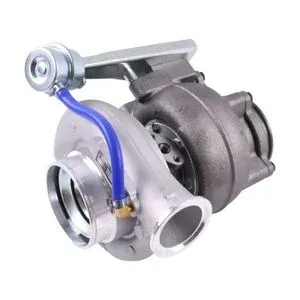
Engine Sequence Variant Confirmed — TD04L4 turbocharger matched to Kubota V3307-DI-TE3-Q and V3307-DI-T-E3B serial variants, verified against production-run part number supersessions before dispatch.
Technical Specifications
| Parameter |
Value |
| Part Number |
1J774-17010 |
| Product Type |
Turbocharger |
| Cross-Reference |
1J774-17012, 1J774-17013, 1J774-17014, 1J774-17015, 1J774-17016, 49177-03250, 49177-03251, 49177-03252, 49177-03253, 49177-03254 (reference only) |
| Machine Fitment |
SVL75-2, SVL75-2C Loader |
| Turbo Model |
TD04L4, TD04L4-09T, TD04L4-09TK3-5.0 |
| Compatible Engine Number |
V3307-DI-TE3-Q, V3307-DI-T-E3B |
| Condition |
New Aftermarket |
| Warranty |
3-12 months against manufacturing defects |
| Sourcing Standard |
ISO-certified factory |
Application Suitability
| Engine System |
Related Components |
| Intake & Forced Induction |
Oil feed lines, oil return hose, air filter assembly |
| Exhaust & Emission Control |
Exhaust manifold gasket, exhaust clamp, heat shield |
| Lubrication Circuit |
Oil cooler, oil filter element, crankcase breather |
| Cylinder Head & Valvetrain |
Valve stem seals, injector sleeve, head gasket set |
Why the Same TD04L4 Reference Ships in Multiple Variants Across V3307 Production Runs
Turbocharger TD04L4 for Kubota V3307 engine rebuild requires engine serial confirmation — the same base designation covers distinct internal configurations that are not interchangeable.
Over the years I have pulled turbochargers off V3307-DI engines where the data plate showed one part number but the internal cartridge belonged to a later supersession. The OEM reference numbers 1J774-17010 through 1J774-17016 span multiple production runs, each with updated compressor wheel trim or bearing housing oil port geometry. A cross-reference table copied from one listing to the next often carries these errors forward [NEED_CITE: turbocharger supersession tracking in diesel engine service bulletins]. When the wrong variant bolts on but the oil feed angle is offset, the bearing starves within the first fifty hours and the unit fails again — same symptom, different root cause.
Intake and Exhaust System Placement Within the V3307-DI
This turbocharger TD04L4 for Kubota V3307 engine rebuild sits at the junction of the intake and exhaust circuits. Its failure is rarely isolated; contaminated oil from a degraded cooler or restricted air from a collapsed filter element transfers load directly to the turbine bearing. Treating the turbocharger as a standalone swap without inspecting the upstream and downstream system invites a second teardown within months. Engine rebuild sequencing demands that turbo condition assessment align with cylinder head, piston, and valve train inspection so partial repairs do not mask the actual fault path.
Oil Feed Geometry and Bearing Life in Rebuild Context
The TD04L4-09TK3-5.0 variant uses a specific oil inlet port clocking relative to the mounting flange. When an engine has been rebuilt previously with an aftermarket block or head casting, the oil gallery alignment can shift enough to reduce feed pressure at the turbo bearing. I have seen shops in the Panyu district replace the turbocharger twice before tracing the issue to a misaligned oil feed banjo fitting left over from a prior overhaul [NEED_CITE: turbocharger bearing failure root cause analysis in rebuilt diesel engines]. During any turbo replacement on a V3307-DI, the oil feed line, banjo bolt mesh screen, and oil cooler condition should all be verified as a matched set — not assumed serviceable because they look intact.
Decoding the Spec Sheet: What TD04L4 Model Codes Actually Mean
The three turbo model designations — TD04L4, TD04L4-09T, and TD04L4-09TK3-5.0 — encode compressor wheel trim, turbine housing A/R ratio, and wastegate actuator calibration. The 09T suffix indicates a specific turbine trim optimized for the V3307-DI displacement and firing order, while the TK3-5.0 designation references the wastegate spring pressure setting that governs boost onset. Fitting a TD04L4 with incorrect wastegate calibration causes either chronic under-boost or exhaust gas temperature spikes under load, both of which accelerate piston crown erosion over time. The compatible engine numbers V3307-DI-TE3-Q and V3307-DI-T-E3B represent distinct emission calibration tiers, and the turbocharger variant must match the engine's injection timing map to maintain correct air-fuel ratio across the operating range.

The Hidden Cost of Skipping System-Level Diagnosis
Replacing a failed turbocharger without inspecting the lubrication and air filtration circuits means the original failure mechanism remains active. I have watched rebuilt V3307-DI engines come back to the bay within weeks because the oil cooler was still passing degraded coolant into the oil gallery, destroying the new turbo bearing before the first oil change interval [NEED_CITE: lubrication system cross-contamination effects on turbocharger bearing life]. Each repeat teardown adds labor hours, new gasket sets, fresh oil and coolant, and cumulative crankshaft bearing wear from repeated assembly cycles. The cost is never just the turbocharger — it is the compounding damage to every adjacent system that was not addressed during the first repair.
Why Engine Rebuild Shops Source This Line Here
Own production on selected turbocharger lines and qualified sourced supply for the remainder both carry the same inspection protocol and warranty terms, so shops do not need to manage separate vendor accounts. Eight product categories under one order mean a V3307-DI overhaul kit — turbo, gasket set, piston assembly, bearing shells, seal kits — ships as one consignment rather than staggered deliveries from different suppliers. Minimum order is one piece, which matters when a single machine is down and the shop needs exactly one TD04L4 unit for cross-reference verification before committing to a larger batch for fleet stock. Part identification is confirmed from the engine serial number, a photograph of the old unit's data plate, or the machine model when the nameplate is worn or painted over. The technical team verifies variant match and bearing grade before dispatch, catching supersession conflicts that copied cross-reference tables miss.
Documentation & Verification
- Commercial invoice listing each turbocharger variant with its specific OEM cross-reference number (reference only)
- Part compatibility sheet confirming V3307-DI-TE3-Q or V3307-DI-T-E3B engine serial match
- Dimensional inspection record covering oil port clocking, flange bolt pattern, and compressor housing orientation
- Warranty terms document specifying coverage period and manufacturing defect conditions
- Packing photographs showing protective crating around compressor wheel and actuator rod
- HS code and customs declaration support for cross-border engine parts shipment
Installation & Rebuild Sequence
- Verify oil feed banjo bolt mesh screen is clear before connecting TD04L4 oil inlet line
- Pre-lube turbocharger bearing with clean engine oil through the feed port before first cranking
- Torque exhaust manifold-to-turbo flange fasteners to specification to prevent gasket leak and backpressure loss
- Check wastegate actuator rod travel against TD04L4-09TK3-5.0 calibration spec during assembly
- Run engine at idle for initial warm-up to confirm oil return flow before applying load
- Re-torque exhaust clamps after first heat cycle to compensate for thermal expansion
Preparing Your Inquiry
Provide the engine serial number — V3307-DI-TE3-Q or V3307-DI-T-E3B — along with any previous rebuild documentation so the correct TD04L4 variant and adjacent system components can be confirmed. If the data plate is illegible, a photograph of the old turbocharger's compressor housing casting number and oil port orientation is sufficient for identification. Include the machine model (SVL75-2 or SVL75-2C) to cross-check application records against known supersession paths.
Frequently Asked Questions
Q: What causes a turbocharger to fail prematurely on the V3307-DI engine?
A: Premature failure most often traces to contaminated oil from a failing oil cooler, restricted oil feed from a clogged banjo bolt screen, or exhaust backpressure from a cracked manifold gasket. Each of these conditions damages the turbo bearing before the unit itself reaches its design service life. Replacing the turbocharger without resolving the root cause simply resets the clock on the same failure mode.
Q: How do I confirm which TD04L4 variant matches my engine serial number?
A: The compatible engine numbers V3307-DI-TE3-Q and V3307-DI-T-E3B represent distinct emission calibrations with different turbocharger internal specifications. Providing your exact engine serial number allows verification against the supersession chain from 1J774-17010 through 1J774-17016 (reference only). A photograph of the old unit's casting marks further confirms the correct variant when data plates are unreadable.
Q: Should I inspect or replace adjacent intake and lubrication components when changing the turbo?
A: Yes. The oil feed line, oil return hose, banjo bolt screen, air filter element, and exhaust manifold gasket should all be inspected during turbo replacement. Any of these components in degraded condition will transfer stress to the new turbocharger bearing. Treating the replacement as a system-level repair rather than a single-part swap prevents early repeat failure.
Q: What other engine system parts should be evaluated during a turbo replacement?
A: The oil cooler, crankcase breather, cylinder head valve stem seals, and injector sleeves should be evaluated as part of a turbocharger replacement on the V3307-DI. Oil cooler degradation introduces coolant into the lubrication circuit, while worn valve stem seals increase oil consumption through the intake tract — both conditions directly affect turbo bearing life and should be addressed during the same service window.
Q: Can I get a sample to verify fitment before committing to a bulk order?
A: Sample supply is available for fitment confirmation before larger commitments. This is particularly useful when dealing with V3307-DI engines that have undergone previous rebuilds with non-standard components, as physical trial fitting confirms oil port alignment and flange compatibility before the full order ships.