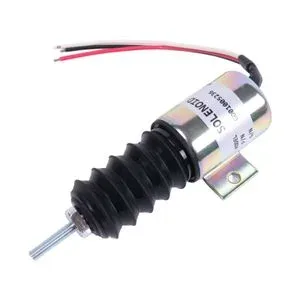
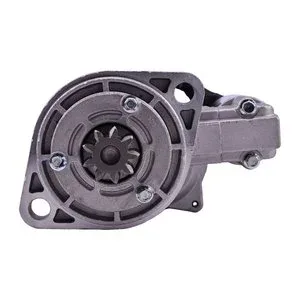
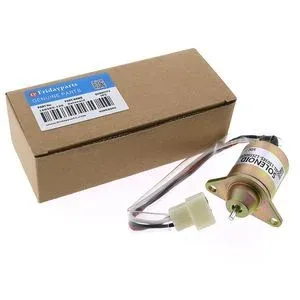
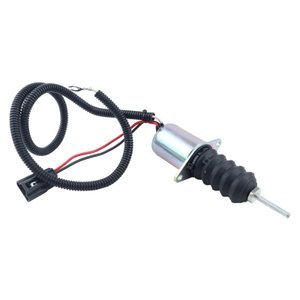
Engine Sequence Variants Verified — Trombetta-style 12V stop solenoid cross-referenced against engine serial ranges to prevent mismatched stroke lengths during diesel overhaul projects.
Technical Specifications
| Parameter |
Value |
| Part Number |
P610-B1V12 |
| Product Type |
Stop Solenoid |
| Cross-Reference |
P610-B1V12 (reference only), P610B1V12 (reference only) |
| Machine Fitment |
Excavators, Loaders, Bulldozers, Tractors, Harvesters requiring Trombetta-style pull solenoid |
| Voltage |
12V |
| Solenoid Action |
Pull Type With Springs |
| Part Name |
Fuel Shut Off Solenoid |
| Condition |
New Aftermarket |
| Warranty |
3-12 months against manufacturing defects |
Application Suitability
| Engine System |
Related Components |
| Fuel shut-off control circuit |
Wiring harness, relay, fuse block |
| Engine management system |
Throttle linkage, fuel rack mechanism |
| Diesel fuel delivery system |
Injection pump, fuel lines, filters |
| Electrical control panel |
Ignition switch, control module |
Diagnosing Root Cause Before Installing a New 12V Fuel Shut Off Solenoid Engine Rebuild
A burned coil on a pulled solenoid almost always points upstream to wiring degradation or relay contact failure.
In my years sourcing auxiliary components for diesel rebuilds across Central Asian mining fleets and European contractor workshops, I have watched technicians swap stop solenoids only to see the replacement fail within weeks. The pattern is consistent: the original failure was a symptom, not the cause. Voltage drop across corroded harness connectors, a sticking relay that fails to release, or a short in the control circuit will destroy a new coil just as quickly. [NEED_CITE: diesel engine electrical system diagnostic procedures for fuel shut-off circuits] Replacing the solenoid without tracing the fault back through the entire control loop is how warranty claims multiply and workshop credibility erodes. A proper 12V fuel shut off solenoid engine rebuild approach treats this component as part of a system, not a standalone fix.

The Fuel Management System and Where This Solenoid Fits
The stop solenoid sits at the boundary between the electrical control circuit and the mechanical fuel rack on the injection pump. When energized, the pull-type coil retracts the plunger against spring pressure, allowing fuel delivery to continue. De-energizing the coil releases the spring, driving the plunger home to cut fuel flow and shut the engine down. This means the 12V fuel shut off solenoid engine rebuild must match both the electrical characteristics of the control circuit and the mechanical stroke requirements of the specific fuel rack mechanism.
Engine Serial Variants and the Dimensional Traps They Hide
Within a single engine model family, manufacturers frequently change the fuel shut-off linkage geometry across production runs. An earlier serial range might use a shorter stroke with lighter spring tension, while a later variant demands a longer pull with stiffer return springs. Sending the wrong variant to a rebuild shop means the solenoid either cannot fully open the fuel rack or slams shut with enough force to damage the linkage. Always verify engine serial number against the solenoid specification before confirming the order. [NEED_CITE: diesel injection pump fuel rack solenoid stroke and spring rate specifications by engine serial variant]
Pull Solenoid Specifications and Their Real-World Implications
The 12V rating means this solenoid is designed for standard mobile equipment electrical systems, but voltage at the coil terminals can sag significantly under cranking conditions or when long wiring runs introduce resistance. The pull-type action with integrated springs defines both the energized behavior and the fail-safe shutdown response — if the spring tension does not match the fuel rack return force, shutdown becomes unreliable. New aftermarket condition means the coil winding and plunger surfaces have not been subjected to prior thermal cycling, which matters because reconditioned solenoids often carry insulation degradation invisible to visual inspection. The warranty window against manufacturing defects provides coverage for material or winding faults that surface during early operation.
The Hidden Cost of Skipping System-Level Diagnosis
When a workshop installs a fresh stop solenoid without checking the relay, harness continuity, and voltage delivery at the connector, the new unit inherits whatever electrical abuse killed its predecessor. Overvoltage from a failing voltage regulator cooks the coil insulation. A relay with welded contacts holds the solenoid energized continuously instead of in the intended duty cycle. The result is a repeat failure that gets blamed on part quality rather than installation practice. [NEED_CITE: electrical fault tracing methodology for mobile diesel engine shut-off solenoid circuits] Shops that absorb these comebacks lose more in labor and reputation than the component cost.
Why Procurement Through This Channel Works
Selected part lines are produced in our own facility, with remaining inventory sourced from ISO-certified manufacturing partners — both carry identical quality control and warranty terms for every 12V fuel shut off solenoid engine rebuild order. Eight component categories operate under a single account, so solenoids, seal kits, gaskets, and overhaul hardware consolidate into one shipment with matching dispatch timelines. Orders start at one piece, which matters when a rebuild shop needs a single replacement to complete a job already on the bench. Compatibility verification covers cross-reference numbers including superseded references, and the technical team confirms voltage, stroke, and spring specification against your engine serial number before anything ships.
Documentation & Verification
- Commercial invoice listing solenoid part number, voltage rating, and engine compatibility
- Cross-reference sheet mapping P610-B1V12 to alternate industry references (reference only)
- Dimensional inspection record covering stroke length and mounting interface
- Warranty terms specifying coverage scope for coil and mechanical components
- Packing photographs confirming unit condition before dispatch
- HS code and customs documentation support for cross-border shipments
Installation & Rebuild Sequence
- Verify wiring harness continuity and relay function before connecting the new solenoid coil
- Match spring tension and stroke length against the removed unit on the bench
- Confirm mounting bracket and fuel rack linkage show no wear that would affect operation
- Apply specified torque to mounting fasteners and check plunger free travel before energizing
- Run initial engine start cycle and verify clean shutdown response on first key-off event
Request a Compatibility Confirmation
Provide your engine make, model, and serial number along with any existing solenoid markings or photographs of the removed unit. If the machine nameplate is worn, a photo of the injection pump and linkage area helps identify the correct variant. This information allows precise matching of voltage, stroke, and spring configuration before any commitment.
Frequently Asked Questions
Q: How do I confirm this solenoid matches my engine's fuel shut-off system?
A: Share your engine make, model, and serial number so we can cross-reference the correct stroke length, spring tension, and mounting configuration. Photographs of the removed unit and the fuel rack linkage help verify the variant when nameplates are illegible. We supply a compatibility sheet covering applicable engine ranges.
Q: What other components should I inspect when replacing a failed stop solenoid?
A: Check the relay, wiring harness connectors, and control circuit voltage under load before installing the replacement. Inspect the fuel rack linkage and mounting bracket for wear or binding that could overload the new solenoid. Addressing the root electrical or mechanical fault prevents repeat coil failure.
Q: Can different engine serial variants within the same model use different solenoid types?
A: Yes. Manufacturers frequently revise fuel rack geometry across production runs, changing stroke requirements and spring rates while keeping the same base engine model designation. Always verify against your specific serial range rather than assuming interchangeability within a model family.
Q: What electrical checks should I run before installing the new solenoid?
A: Measure voltage at the solenoid connector during cranking and running conditions to detect excessive drop. Verify relay contacts open and close cleanly without sticking. Confirm harness continuity and check for corrosion at terminals that could introduce resistance and thermal load on the new coil.