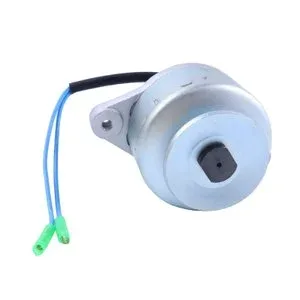
Engine serial variants confirmed — AT318141 cross-reference checked against Yanmar 3TNV88 and 4TNV88 sub-model build sheets before dispatch, ensuring terminal orientation and mounting pattern match your specific engine sequence.
Technical Specifications
| Parameter |
Value |
| Part Number |
AT318141 |
| Product Type |
Starter Motor |
| Cross-Reference |
AT318141 (reference only) |
| Machine Fitment |
Zaxis 35U-2, Zaxis 35U-3, Zaxis 35U-5N, Zaxis 50U-2, Zaxis 50U-3, Zaxis 50U-5N, 3TNV88-BNHB, 3TNV88F, 3TNV88-NHBB, 4TNV88-BNHB, 4TNV88C, 4TNV88-NHBB |
| System Voltage |
12 Volts |
| Drive Engagement |
15 Teeth/Splines |
| Condition |
New Aftermarket |
| Warranty |
3–12 months against manufacturing defects |
| Quality Standard |
ISO 9001 certified production |
Application Suitability
| Engine System |
Related Components |
| Compact excavator starting circuit |
Battery cables, solenoid relay, ignition switch |
| Yanmar 3TNV88/4TNV88 overhaul |
Alternator, flywheel ring gear, glow plugs |
| Electrical system refresh |
Wiring harness sections, terminal connectors, fuses |
| Scheduled fleet maintenance |
Starter and alternator matched sets for Hitachi Zaxis35U/50U |
Why a Second Starter Motor Fails Before the First Warranty Expires
The replacement starter motor rarely fails on its own — the fault lives elsewhere in the starting circuit.
In our Guangzhou warehouse, we process return reports on starter motors that were replaced twice or three times on the same machine. The pattern repeats: the first unit is pulled because it will not crank, a replacement is fitted, and within a short operating window the second unit shows identical symptoms. The root cause in most cases traces to degraded wiring harness resistance, a weak solenoid relay, or flywheel ring gear tooth damage that destroys successive starter drives [NEED_CITE: common root causes of repeated starter motor failure in diesel engines]. A Starter Motor engine rebuild must address the entire starting system, not only the component that stopped turning.

The Starting System as a Circuit, Not a Single Part
When a Yanmar 3TNV88 or 4TNV88 engine refuses to crank, the starter motor is the most visible suspect but often the last component to actually fail. Battery condition, cable corrosion at terminal crimps, solenoid contact wear, and ignition switch resistance all sit upstream of the Starter Motor engine rebuild. Each degraded connection robs cranking amperage, forcing the motor to operate under partial-load conditions that overheat the armature. Replacing the motor without measuring voltage drop across the circuit simply transfers the stress to the new unit.
Serial Variants That Change the Mounting and Terminal Layout
The Yanmar 3TNV88 family spans multiple sub-models — 3TNV88-BNHB, 3TNV88F, 3TNV88-NHBB — and each can carry different starter mounting configurations depending on the equipment manufacturer's adaptation. Terminal post orientation, mounting bolt spacing, and drive housing depth vary between builds. When we supply a Starter Motor engine rebuild component for a Hitachi Zaxis35U-2 versus a Zaxis 50U-3, we verify the exact engine serial variant to confirm that the terminal direction aligns with the existing wiring harness reach and the drive housing seats correctly against the flywheel housing [NEED_CITE: Yanmar 3TNV88 sub-model starter variant differences].
Reading the Specifications That Matter in the Field
The 12-volt system rating aligns with the standard electrical architecture of compact excavators in the Zaxis35U and Zaxis50U weight classes. This voltage must be delivered at adequate amperage; undersized or corroded cabling drops available cranking current below the threshold the motor needs to achieve engagement speed. The 15-tooth drive spline matches the flywheel ring gear pitch specified for 3TNV88 and 4TNV88 platforms. Incorrect tooth count causes partial engagement — the drive gear contacts only the tips of the ring gear teeth, producing a grinding noise and accelerated wear on both components. New aftermarket condition means the unit has not been subjected to prior heat cycles or brush wear, eliminating the unknowns that accompany reconditioned cores. ISO 9001 sourcing ensures that manufacturing processes follow controlled procedures for winding consistency, bearing alignment, and solenoid calibration.
What Happens When the Wrong Variant Goes In
Fitting a starter motor with reversed terminal orientation forces the installer to reroute heavy-gauge battery cables beyond their designed reach. Stretched cables develop resistance at the crimp, generating heat under cranking loads. A drive housing that sits even slightly off-center against the flywheel housing causes the pinion gear to engage at an angle, wearing the ring gear teeth asymmetrically. The machine may start for a period, masking the misalignment until tooth damage progresses to the point where engagement becomes unreliable. Diagnosing this failure chain on site typically means pulling the starter again, inspecting the ring gear through the inspection port, and discovering damage that now requires a second repair scope [NEED_CITE: flywheel ring gear damage from misaligned starter engagement].
Why Source This Starter Motor Through XUNPO
Our production lines and qualified sourcing partners operate under a single warranty umbrella, so whether this starter motor comes from our own facility or a partner line, the QC protocol and warranty terms remain identical. Eight product categories mean the alternator, solenoid, wiring connectors, and seal kits for your starting system repair ship under one account and one consignment. One-piece minimum order eliminates the barrier when you need a single replacement for a down machine. Guangzhou warehouse stock on common engine electrical items supports fast dispatch. Part identification works from a part number, machine model, photograph, or nameplate image — useful when the existing starter label is illegible. Our technical team verifies engine serial variant compatibility and confirms the correct terminal and mounting configuration before the unit leaves.
Documentation & Verification
- Commercial invoice and packing list referencing starter motor part number and engine application
- Cross-reference sheet confirming AT318141 (reference only) interchange against engine serial variant
- Quality inspection record with cranking torque and no-load RPM test results
- Warranty terms covering manufacturing defects for 3–12 months
- Packing photographs showing terminal protection and drive gear cover before crating
- HS code and customs documentation for engine electrical component export
Installation & Rebuild Sequence
- Verify battery voltage and cable integrity before fitting the new starter motor to eliminate upstream faults
- Compare terminal orientation and mounting bolt pattern against the removed unit before installation
- Torque mounting bolts to specification to ensure drive housing seats square against the flywheel housing
- Check pinion-to-ring-gear backlash after fitting to confirm proper 15-tooth engagement depth
- Perform initial cranking test with a voltmeter on the battery terminal to verify acceptable voltage drop under load
Request a Matched Starting System Quote
Provide your engine model and serial number — for example, 3TNV88-BNHB or 4TNV88C — along with any rebuild history on the starting circuit. If the nameplate is worn or painted over, send a photograph of the mounting flange and terminal block so we can confirm the correct variant. We will return a compatibility-verified quote covering the starter motor and any adjacent electrical components your repair requires.
Frequently Asked Questions
Q: What other starting system components should I inspect when replacing this starter motor?
A: Check the battery load capacity, measure voltage drop across both positive and negative cables under cranking conditions, inspect the solenoid relay contacts for pitting, and examine the flywheel ring gear teeth through the inspection port. Damage in any of these areas will shorten the service life of your replacement starter motor and should be addressed during the same repair window.
Q: How do engine serial variants within 3TNV88 and 4TNV88 affect starter compatibility?
A: Sub-models such as 3TNV88-BNHB, 3TNV88F, and 4TNV88C can carry different terminal orientations, mounting bolt patterns, or drive housing depths depending on the equipment manufacturer's adaptation. Providing the full engine serial number allows us to confirm the exact variant and supply a unit that matches your existing wiring harness reach and flywheel housing interface.
Q: My replacement starter keeps failing — could the problem be elsewhere in the system?
A: Repeated starter failure typically points to an upstream fault: high-resistance cable connections, a weak battery that cannot sustain cranking amperage, or worn solenoid contacts that deliver partial voltage. A systematic circuit test measuring voltage drop at each connection under load usually identifies the root cause that successive starter replacements alone cannot resolve.
Q: Can I order a matched set of starter, alternator, and solenoid for a complete electrical refresh?
A: Yes. We supply starter motors, alternators, solenoid relays, and wiring components across eight product categories under one account. Ordering the full electrical refresh as a single consignment ensures component compatibility, consolidates freight, and keeps the entire starting and charging system under one warranty.
Q: How do I confirm my engine model when the nameplate is unreadable?
A: Send a photograph of the engine block casting number, the existing starter motor terminal layout, or the machine data plate. Our technical team cross-references these identifiers against Yanmar build records and equipment manufacturer adaptation data to determine the correct engine variant and the matching starter motor configuration.