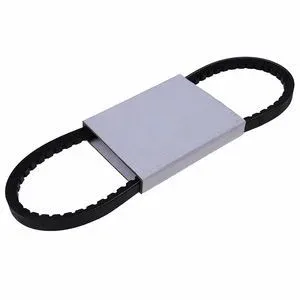
Matched Set Dispatch — belt and tensioner verified against Thermo King engine serial before packing to prevent grade mismatch on arrival.
Technical Specifications
| Parameter |
Value |
| Part Number |
78-1492 |
| Product Type |
Belt |
| Cross-Reference |
78-1492, 78-1426, 78-336, 77-2848, CP10537 (for identification purposes only) |
| Machine Fitment |
TK249, TK370, TK374E, KD-II, MD-200, MD-300, MD-II 100, MD-II TCI, MD-II TLE, MD-MT, T-500R, T-570R, T-580, T-580R, T-590, T-600, T-600M, T-600R, T-680R, T-680S, T-690, T-800, T-800 SPECTRUM, T-800M, T-800R, T-800R Spectrum, T-880R, T-880S, T-890, TriPac APU, TS-200, TS-300 |
| Material |
EPDM rubber compound with high-temperature-resistant fiber reinforcement |
| Tensile Cord |
Aramid fiber |
| Operating Temperature |
Sustained surface temperature above 120°C |
| Condition |
New Aftermarket |
| Warranty |
3–12 months against manufacturing defects |
| Production Standard |
ISO 9001 |
Application Suitability
| Engine System |
Related Components |
| Cooling system drive |
Water pump assembly, coolant hoses, thermostat |
| Belt tensioning system |
Automatic or manual tensioner, idler pulleys |
| Accessory drive |
Alternator belt, compressor clutch, fan hub |
| Engine overhaul |
Timing belt or gear set, front crankshaft seal |
The Real Reason a Replacement Belt Fails Within Weeks
A water pump belt engine replacement for Thermo King that snaps or glazes within the first few hundred hours rarely points to the belt itself. Root cause usually lives in the tensioner, the pulley alignment, or an incorrect cross-reference variant. In the Yangtze Delta fleet maintenance circles, I watched crews swap belts three times in a single season before someone finally measured the tensioner travel and found it bottomed out [NEED_CITE: belt drive system failure root cause analysis for transport refrigeration engines]. The failed belt was a symptom; the worn tensioner was the disease. Ordering a water pump belt engine replacement for Thermo King without verifying the tensioner condition and pulley runout is like replacing a piston without checking the cylinder bore — you will be back on the same job before long.

Where This Belt Sits in the Cooling Drive System
The water pump belt transfers crankshaft rotation to the coolant pump on Thermo King T-series, TS-series, and TriPac APU engines. It belongs to the front-end accessory drive group, sharing the same pulley plane as the idler and tensioner. When a fleet maintenance team schedules a cooling system overhaul, this water pump belt engine replacement for Thermo King should ship alongside a matched tensioner and a set of idler pulleys so that every wear surface in the drive loop is renewed at once. Skipping adjacent components leaves old bearing surfaces to destroy the new belt prematurely.
Engine Serial Variants That Change the Belt You Need
Thermo King engines across the T-600, T-800, and TS-300 families went through pulley and tensioner revisions over successive production runs. The same base unit model may carry a different belt pitch or tooth count depending on engine serial range. Cross-reference numbers such as 78-1426, 78-336, 77-2848, and CP10537 each correspond to specific build variants, not interchangeable alternates in every case [NEED_CITE: Thermo King belt drive supersession history across T-series engines]. Confirming the engine serial number before ordering prevents receiving a belt that appears identical but differs in tooth profile by a fraction of a millimeter — enough to jump teeth under cold-start torque surge.
Reading the Material Specs for Real-World Heat Load
EPDM rubber compound withstands sustained surface temperatures above 120°C without hardening or cracking, which matters because the water pump belt sits close to the exhaust manifold on most Thermo King installations. The aramid fiber tensile cord provides dimensional stability under cyclic loading — it resists stretch far better than polyester cords when the compressor clutch engages and throws a sudden torque spike into the drive train. Precisely calibrated tooth pitch ensures full engagement with the pulley grooves, preventing the ratcheting slip that strips teeth off lesser belts during cold starts when coolant viscosity places maximum load on the pump. The surface texture is finished to reduce noise and minimize abrasive wear on idler pulley faces [NEED_CITE: EPDM versus chloroprene belt compound performance in transport refrigeration duty].
The Cost of Not Checking What Killed the Last Belt
Installing a new belt without diagnosing why the previous one failed leads to repeat teardowns within weeks. A tensioner that has lost its damping force allows the belt to flutter at certain RPM ranges, wearing the sidewalls unevenly. A misaligned pulley scours one edge of the belt until the tensile cords are exposed. In cold chain operations where cargo temperature compliance is non-negotiable, each unplanned belt failure means a reefer load at risk and a technician dispatched at premium rates [NEED_CITE: cold chain cargo loss from transport refrigeration drive failure]. These downstream costs dwarf the price difference between replacing the belt alone and replacing the belt with its matched tensioner and idler set together.
Why Sourcing Through This Channel Works for System-Level Orders
Selected part lines are produced in our own Guangzhou facility while the remainder is sourced from ISO-certified manufacturing partners, and both carry the same quality control standards and warranty terms. A complete belt drive overhaul — belt, tensioner, idler pulleys, front seal — ships under one account with one warranty, eliminating the finger-pointing between multiple vendors when something does not fit. Minimum order starts at one piece, so a workshop verifying fitment on a single T-800 can order a sample before committing to fleet-wide replenishment. Cross-reference verification covers superseded and alternate numbers, catching the variant errors that copied tables carry forward. Our technical team confirms belt grade and tensioner match against your specific engine serial, not just the unit model on the nameplate.
Documentation & Verification
- Commercial invoice listing every drive system component with individual part numbers
- Cross-reference sheet mapping 78-1492 to alternate numbers, marked reference only
- Dimensional inspection record covering belt width, tooth pitch, and thickness
- Warranty terms covering manufacturing defects for the stated warranty period
- Packing photographs showing belt and matched components before crate closure
- HS code guidance for customs clearance on refrigeration engine parts
Installation & Rebuild Sequence
- Remove tensioner first to release belt load before sliding the water pump belt off the pulleys
- Clean all pulley grooves with solvent to remove rubber residue that causes tracking errors
- Verify tensioner travel and damping — replace if the arm shows free play beyond specification
- Install new belt with correct tooth engagement at every pulley before applying tension
- Torque tensioner mounting fasteners to specification and confirm belt deflection at midpoint
- Run engine to operating temperature and recheck belt tracking alignment under load
Inquire with Engine Serial and Rebuild History
Provide the Thermo King unit model along with the engine serial number so we can verify which belt variant your specific build requires. If the engine has been rebuilt previously, note any oversize or undersize components already installed, as these can affect accessory drive geometry. For fleet orders, share the mix of unit models in your operation so we can consolidate the correct cross-reference variants into a single matched shipment.
Frequently Asked Questions
Q: What other components should I inspect or replace when changing this water pump belt?
A: Inspect the automatic tensioner for damping force and arm travel, check idler pulley bearings for play or roughness, and verify pulley alignment with a straightedge. If any component shows wear, replace it alongside the belt to prevent premature failure of the new part. The water pump itself should also be checked for shaft play and seal condition since it is already exposed.
Q: How do I confirm which cross-reference number applies to my unit?
A: Share the engine serial number from your Thermo King nameplate. Cross-reference numbers like 78-1426, 78-336, 77-2848, and CP10537 each correspond to specific engine build variants. We verify the correct match against production records rather than relying on copied interchange tables that may carry errors forward between listings.
Q: My previous belt failed early — could the tensioner or pulley be the real problem?
A: Very likely. A worn tensioner allows belt flutter that scours sidewalls, and a misaligned pulley strips teeth unevenly. Both conditions destroy a new belt quickly. We recommend sending photos of the failed belt wear pattern along with tensioner condition notes so we can advise whether a system-level replacement kit is the correct order.
Q: Are belt specifications the same across all T-series and TS-series engine variants?
A: No. Pulley revisions across production runs mean tooth count, pitch, and width can differ even within the same model family. The engine serial number determines which variant fits. Ordering by unit model alone risks receiving a belt that looks correct but differs in tooth profile enough to jump under load.
Q: Can I get a sample to verify fitment before ordering for my full fleet?
A: Yes. Minimum order is one piece. We recommend ordering a single belt along with its matched tensioner to confirm fitment on one unit before releasing a fleet-wide order. This catches any variant discrepancy at minimal cost and avoids having an entire shipment sitting unused.