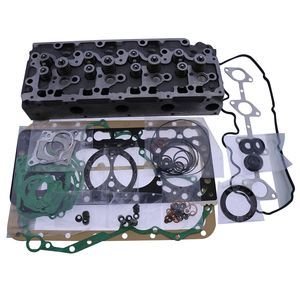
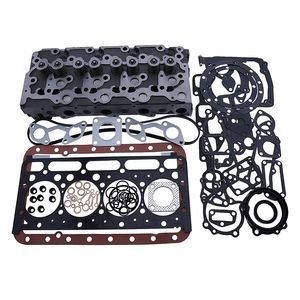
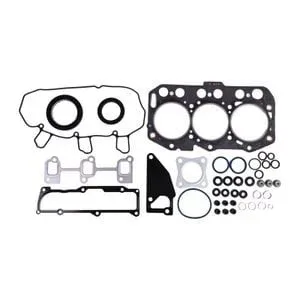
Matched Set Dispatch — Cylinder head, gaskets, and valvetrain components verified against the same engine serial variant before shipping.
Technical Specifications
| Parameter |
Value |
| Part Number |
1G545-0302-8 |
| Cross-Reference |
1G513-0302-0, 1G546-03024, 1G545-03028, 1G546-03020, 1G546-03022 (reference only) |
| Machine Fitment |
Kubota M8200, M8200-CAB, M8200DT, M8200DT-CAB, M8200DTN, M8200HD, M8200HDC, M8200SDTN, M8200SDTN-CAB, M9000, M9000-CAB, M9000DT, M9000DT-CAB, M9000DTL, M9000DTM, M9000DTMC, M9000HD, M9000HDC, M9000HDL-F |
| Material |
ASTM A536 65-45-12 ductile iron |
| Valve Seat Hardness |
48–52 HRC |
| Deck Surface Flatness |
0.05 mm |
| Injector Boss Thread |
M14×1.5 |
| Pressure Test |
12 bar hydraulic |
| Condition |
New Aftermarket |
| Warranty |
3–12 months against manufacturing defects |
Application Suitability
| Engine System |
Related Components |
| Combustion and Valvetrain |
Head gasket, valve stem seals, intake and exhaust valves |
| Fuel Injection System |
Injector sleeves, copper washers, return line fittings |
| Cooling Circuit |
Coolant passage seals, thermostat housing gasket, bypass hose |
| Lubrication Return |
Oil drain tube O-ring, camshaft gallery plug seals |
When the V3300 Cylinder Head Fails Without Warning
Thermal fatigue cracks rarely announce themselves until coolant pressurizes the combustion chamber.
A V3300 cylinder head engine rebuild often begins with a machine that was running fine yesterday, then lost compression on a single bank this morning. In high-ambient environments where tractors pull continuous PTO loads, the thermal gradient across the deck surface cycles thousands of times per shift. [NEED_CITE: thermal cycling fatigue limits in ductile iron cylinder heads for industrial diesel engines] Over seasons of operation, micro-cracks propagate from the injector bore toward the nearest coolant passage. By the time white smoke appears at the stack, the damage extends beyond a simple gasket swap.
Where This Component Sits in the V3300 Rebuild Sequence
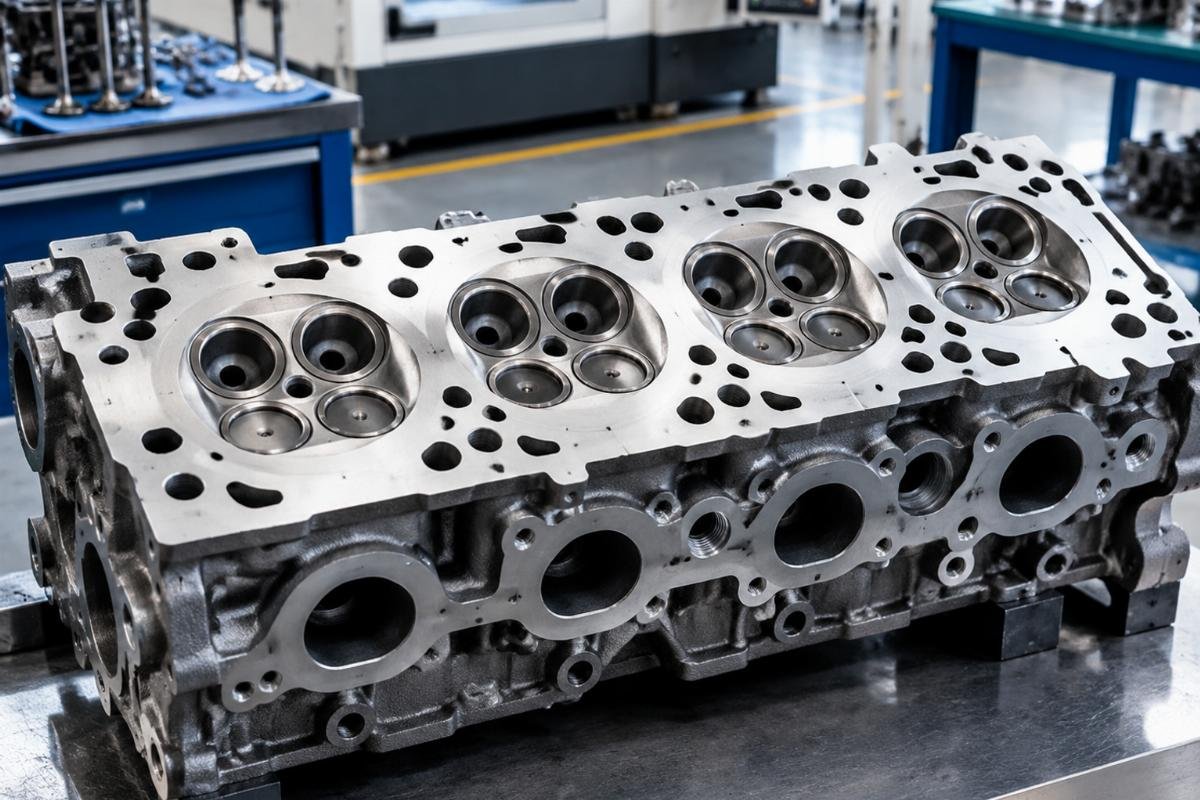
The cylinder head is the gateway to the entire upper engine assembly. Removing it exposes the piston crowns, cylinder bore condition, and head gasket mating surface on the block. For a V3300 cylinder head engine rebuild, this single component dictates whether the job stays as a top-end refresh or escalates into a full teardown. When the head comes off and reveals scored liners or cracked piston crowns, the scope doubles immediately.
Matching the Head to the Block's Machining History
Every block that has been resurfaced during a prior overhaul sits closer to the crankshaft centerline, reducing the distance between piston crown and deck. A standard-thickness head gasket on a resurfaced block may compress the combustion chamber enough to alter valve-to-piston clearance. This V3300 cylinder head engine rebuild part ships with standard gasket specifications, but confirming the block's machining history before installation prevents interference failures [NEED_CITE: effects of block resurfacing on valve-to-piston clearance in four-cylinder diesel engines]. Serial variants across the V3300 family also differ in port layout and coolant passage routing, making engine number verification essential before dispatch.
What the Specification Sheet Means in the Workshop
The ASTM A536 65-45-12 ductile iron specification balances tensile strength with elongation capacity, allowing the casting to absorb thermal expansion without brittle fracture at the fire ring. Deck surface flatness held to 0.05 mm ensures the head gasket seals uniformly across all four cylinders, even when the block has minor warpage from sustained high-load operation. Valve seat hardness at 48–52 HRC resists recession under continuous exhaust gas temperatures, which is particularly relevant for turbocharged variants running sustained boost. The M14×1.5 injector boss thread must match the retention clamp specification exactly; cross-threading here causes fuel leakage into the valve cover gallery.

The Hidden Cost of Incomplete Overhaul Kits
Ordering the cylinder head alone and sourcing gaskets, valve stem seals, and fasteners separately creates tolerance stack-up risk. A head gasket from one supplier may specify a different compression recovery rate than the head casting expects, leading to localized leakage at cylinder three or four after a few hundred hours. [NEED_CITE: head gasket compression recovery requirements for ductile iron diesel cylinder heads] When the V3300 cylinder head engine rebuild requires valve guides or seat inserts, mismatched interference fits can shift under thermal load and drop a valve into the piston bowl.
How Supply Consolidation Supports the Rebuild
XUNPO produces selected engine component lines in-house and sources complementary items from ISO-certified partners under unified quality control and warranty terms. This V3300 cylinder head and its associated gaskets, seals, and fasteners ship as a single matched set from the Guangzhou warehouse, reducing the chance of receiving incompatible variants from separate orders. Part identification is available from the engine serial plate, a photograph of the old component, or the machine model alone. Cross-reference verification covers superseded part numbers across all V3300 production generations. A sample unit can be supplied for port layout and thread fitment confirmation before committing to fleet-level quantities. The technical team confirms compatibility, oversize grades after prior rebuilds, and correct gasket thickness for resurfaced blocks.
Documentation & Verification
- Commercial invoice listing each matched component by individual part reference
- Cross-reference sheet mapping superseded V3300 head numbers with reference-only notation
- Dimensional inspection record covering deck flatness and injector boss thread verification
- Pressure test certificate at 12 bar confirming coolant passage integrity before packing
- Packing photographs showing the head secured with deck surface protection in place
- HS code classification and customs documentation support for international engine parts shipment
Installation & Rebuild Sequence
- Clean the block deck surface to bare metal and verify flatness before positioning the new head gasket
- Confirm head bolt thread condition and replace any fasteners showing torque-to-yield stretch marks
- Torque the cylinder head in the manufacturer's specified sequence using a calibrated wrench
- Verify injector protrusion and spray pattern after fitting injectors into the M14×1.5 bosses
- Fill the cooling system and pressure-test to 12 bar before initial start-up
- Run the engine through a graduated warm-up cycle, retorque head bolts at the specified interval
Preparing Your Enquiry
Share the V3300 engine serial number, any known block resurfacing history, and the specific machine model to confirm gasket thickness and port configuration. Photographs of the existing head casting number and valve cover nameplate speed up the cross-reference process and ensure the matched overhaul kit arrives complete.
Frequently Asked Questions
Q: Which gaskets and seals should ship together with this cylinder head?
A: A complete top-end kit includes the head gasket, valve stem seals, intake and exhaust manifold gaskets, injector sleeve O-rings, and thermostat housing seal. Specify your engine serial variant so the correct port configuration and coolant passage layout are matched before dispatch.
Q: How do V3300 serial variants affect cylinder head compatibility?
A: Production variants differ in coolant passage routing, port spacing, and injector boss orientation. Providing the full engine serial number allows verification against the casting drawing, preventing fitment issues that only become visible after the head is torqued down.
Q: Does prior block resurfacing change the gasket I need?
A: Yes. A resurfaced block reduces deck height, which may require a thicker head gasket to maintain correct compression ratio and valve-to-piston clearance. Always report any previous machining work when requesting the overhaul kit.
Q: What typically causes the original head to fail?
A: Common root causes include coolant passage blockage from degraded antifreeze, sustained thermal overload in high-ambient conditions, or valve train wear transferring stress to the seat area. Identifying the failure cause prevents the replacement head from suffering the same damage.